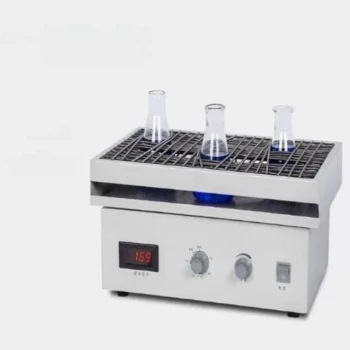
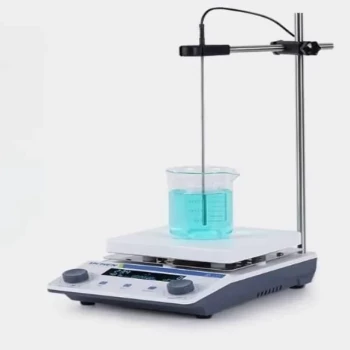
A thermostatic shaker acts as a catalyst for efficiency by strictly synchronizing thermal energy with mechanical agitation during the acid hydrolysis process. By maintaining temperatures between 60-120°C while keeping the mixture in constant motion, the device prevents the phosphoric acid from stagnating around the solid biomass. This dynamic environment ensures uniform chemical exposure, significantly accelerating the breakdown of complex structures into simple sugars.
By integrating constant motion with strictly controlled heat, a thermostatic shaker overcomes the mass transfer limitations inherent in solid-liquid reactions. This results in faster glycosidic bond cleavage and higher overall glucose recovery compared to static heating methods.
Enhancing Reaction Dynamics
Eliminating Concentration Gradients
In a static environment, acid can become depleted in the immediate vicinity of a biomass particle, creating a "dead zone" where the reaction slows down.
Continuous agitation ensures that fresh phosphoric acid is constantly circulating.
This prevents localized concentration imbalances, ensuring the catalyst remains active and available throughout the entire mixture.
Improving Mass Transfer Efficiency
The physical movement of the shaker facilitates better contact between the liquid acid and the solid biomass fibers.
This mechanical action reduces the boundary layer resistance that often hinders chemical reactions in heterogeneous mixtures.
By maximizing the surface area interaction, the system ensures that the acid penetrates the biomass structure more effectively.
The Impact of Thermal Control
Optimizing Reaction Kinetics
The thermostatic component maintains a precise high-temperature environment, typically ranging from 60-120°C.
This consistent heat provides the activation energy required to drive the hydrolysis reaction at an optimal rate.
Without precise thermal regulation, temperature fluctuations could stall the reaction or lead to unwanted byproducts.
Accelerating Bond Cleavage
The ultimate goal of hydrolysis is the catalytic cleavage of glycosidic bonds within the biomass.
The combination of kinetic energy (heat) and mechanical energy (shaking) accelerates this molecular breakdown.
This results in a significantly higher yield of glucose within a shorter timeframe than heat alone could achieve.
Understanding the Trade-offs
Energy Consumption
Operating a device that delivers continuous mechanical agitation alongside high-heat generation is energy-intensive.
You must evaluate whether the marginal increase in sugar yield justifies the higher electrical costs compared to static incubation methods.
Scale-Up Challenges
Thermostatic shakers are highly effective at the laboratory or pilot scale.
However, replicating this specific type of agitation in large industrial reactors can be mechanically complex and expensive.
Optimizing Your Hydrolysis Process
To derive the most value from a thermostatic shaker, align your equipment settings with your specific production goals.
- If your primary focus is maximizing reaction speed: Prioritize high agitation speeds to drive mass transfer and minimize the time required to reach peak glucose concentration.
- If your primary focus is reproducibility: Focus on the stability of the heating element to ensure that the 60-120°C range is maintained without fluctuation across different batches.
Integrating a thermostatic shaker transforms a passive chemical soak into a dynamic, high-yield production process.
Summary Table:
| Feature | Impact on Hydrolysis | Benefit for Sugar Yield |
|---|---|---|
| Mechanical Agitation | Eliminates concentration gradients | Prevents 'dead zones' and ensures uniform catalyst exposure |
| Precise Thermal Control | Maintains optimal activation energy (60-120°C) | Accelerates glycosidic bond cleavage while preventing byproducts |
| Enhanced Mass Transfer | Reduces boundary layer resistance | Maximizes surface area interaction between acid and biomass |
| Dynamic Environment | Continuous reactant circulation | Faster reaction kinetics and higher overall glucose recovery |
Elevate Your Laboratory Productivity with KINTEK
At KINTEK, we understand that precision is the foundation of breakthrough research. Whether you are optimizing biomass hydrolysis or advancing battery chemistry, our high-performance thermostatic shakers and homogenizers provide the stability and agitation required for maximum yields.
Our comprehensive portfolio supports every stage of your workflow:
- High-Temperature Solutions: Muffle, tube, and vacuum furnaces for advanced material processing.
- Precision Reactors: High-temperature high-pressure reactors and autoclaves for demanding chemical syntheses.
- Sample Preparation: Professional crushing, milling, and hydraulic presses for consistent pellet and material testing.
- Essential Consumables: Premium PTFE products, ceramics, and crucibles designed for durability.
Ready to scale your results? Contact KINTEK today to discover how our expert-grade equipment can streamline your laboratory processes and drive innovation.
References
- Rafał Łukajtis, Marian Kamiński. Comparison and Optimization of Saccharification Conditions of Alkaline Pre-Treated Triticale Straw for Acid and Enzymatic Hydrolysis Followed by Ethanol Fermentation. DOI: 10.3390/en11030639
This article is also based on technical information from Kintek Solution Knowledge Base .
Related Products
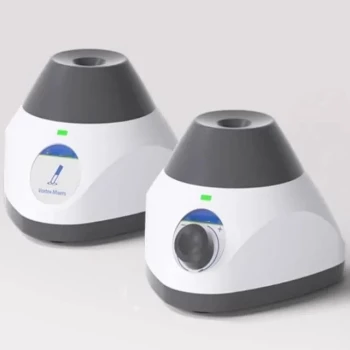
- Laboratory Vortex Mixer Orbital Shaker Multifunctional Rotation Oscillation Mixer
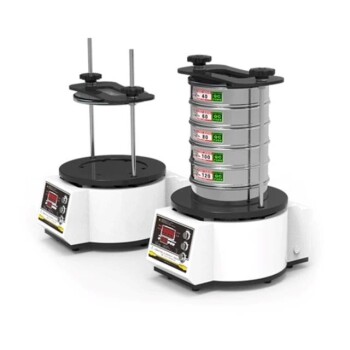
- Laboratory Wet Three-Dimensional Vibratory Sieve Shaker Machine
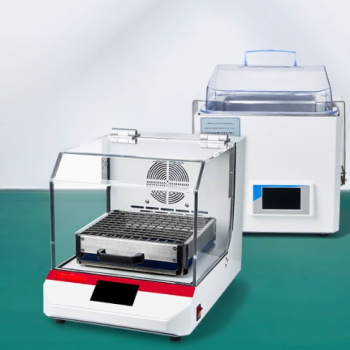
- Shaking Incubators for Diverse Laboratory Applications
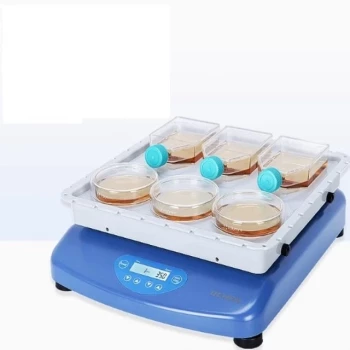
- Laboratory Oscillating Orbital Shaker
- Laboratory Multifunctional Small Speed-Adjustable Horizontal Mechanical Shaker for Lab
People Also Ask
- What is the role of a laboratory orbital shaker in copper recovery? Optimize Industrial Waste Liquid Processing
- What is the role of a laboratory orbital shaker in activated carbon synthesis? Maximize Pore Depth & Surface Area
- What is a laboratory mixer used for? Choose the Right Tool for Liquids or Solids
- What is a laboratory mixer? A Guide to Achieving Perfect Sample Homogeneity
- What are laboratory mixers used for? Achieve Perfect Sample Homogeneity and Reliable Results