A thermostatic water bath shaker ensures reproducibility by establishing a uniform thermodynamic environment. By precisely controlling both the water bath temperature and the oscillation frequency, it eliminates variables that commonly cause experimental deviation. This dual control ensures that biomass samples receive consistent thermal energy and mechanical agitation, leading to reliable data across multiple trials.
Experimental consistency in biomass processing relies on eliminating environmental gradients. A thermostatic water bath shaker standardizes reaction kinetics by maintaining a constant temperature while simultaneously preventing sedimentation, ensuring every molecule interacts under identical conditions.
The Role of Mechanical Oscillation in Pre-treatment
Facilitating Solvent Contact
In organic solvent pre-treatment, static incubation often leads to uneven reactions. The shaker ensures thorough contact between the solvent and the lignocellulose structure.
Achieving Effective Degreasing
This consistent agitation is critical for the removal of surface contaminants. By forcing interaction between the liquid and solid phases, the shaker facilitates effective degreasing, preparing the biomass for subsequent biological breakdown.
Maximizing Efficiency During Enzymatic Hydrolysis
Preventing Biomass Precipitation
During hydrolysis, biomass particles have a natural tendency to settle at the bottom of the reaction vessel. Continuous oscillation actively prevents the precipitation of biomass, keeping the substrate in a homogeneous suspension.
Increasing Molecular Collisions
Reaction rates are driven by how often reactants meet. The mechanical shaking increases the effective collision frequency between the enzyme molecules and the cellulose substrates.
Optimizing Sugar Yield at Critical Temperatures
Specific thermal setpoints are vital for reaction efficacy. The water bath maintains precise temperatures, such as 90 °C, which allows researchers to maximize sugar yield without the risk of thermal fluctuation.
Understanding Operational Criticalities
The Balance of Agitation
While agitation is necessary, it must be carefully calibrated. The goal is to maximize collision frequency without introducing shear forces that could damage sensitive biological components or cause splashing that alters reaction volumes.
Thermal Homogeneity
The primary advantage of a water bath over dry heat is thermal mass. However, at high temperatures like 90 °C, maintaining the water level is essential to ensure the thermodynamic environment remains uniform around the submerged samples.
Making the Right Choice for Your Goal
To ensure your data stands up to peer review, align your equipment settings with your specific process stage:
- If your primary focus is Organic Solvent Pre-treatment: Prioritize agitation speeds that guarantee rigorous solvent penetration to achieve complete lignocellulose degreasing.
- If your primary focus is Enzymatic Hydrolysis: Focus on maintaining strict thermal stability (e.g., 90 °C) combined with steady oscillation to keep substrates suspended for maximum sugar conversion.
By standardizing these physical parameters, you transform variable biomass processing into a controlled, reproducible scientific procedure.
Summary Table:
| Feature | Function in Biomass Processing | Impact on Reproducibility |
|---|---|---|
| Temperature Control | Maintains precise setpoints (e.g., 90°C) | Ensures consistent reaction kinetics and sugar yields |
| Mechanical Oscillation | Prevents biomass precipitation and sedimentation | Guarantees homogeneous substrate-enzyme interaction |
| Agitation Frequency | Increases molecular collision frequency | Eliminates localized solvent concentration gradients |
| Water Bath Medium | Provides superior thermal mass and stability | Prevents thermal fluctuations common in dry heating |
| Uniform Environment | Standardizes thermodynamic conditions | Reduces experimental deviation across multiple trials |
Elevate Your Lab's Precision with KINTEK Solutions
Don't let environmental variables compromise your biomass research. KINTEK specializes in high-performance laboratory equipment designed for the most demanding scientific applications. From thermostatic water bath shakers and homogenizers to our advanced high-temperature high-pressure reactors, we provide the tools you need to ensure every trial is reproducible and every result is reliable.
Whether you are performing enzymatic hydrolysis, organic solvent pre-treatment, or lignocellulose degreasing, our comprehensive portfolio—including specialized centrifuges, cooling solutions, and premium consumables like PTFE and ceramics—is engineered to optimize your workflow.
Ready to standardize your experimental results? Contact our experts today to find the perfect equipment solution for your laboratory's unique needs.
References
- Nurfahmi, S.M. Ashrafur Rahman. Production Process and Optimization of Solid Bioethanol from Empty Fruit Bunches of Palm Oil Using Response Surface Methodology. DOI: 10.3390/pr7100715
This article is also based on technical information from Kintek Solution Knowledge Base .
Related Products
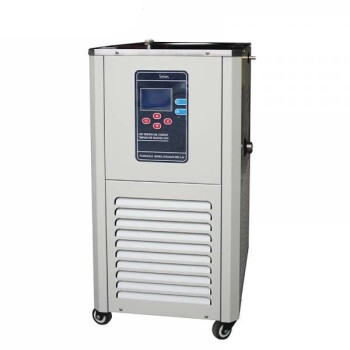
- 5L Heating Chilling Circulator Cooling Water Bath Circulator for High and Low Temperature Constant Temperature Reaction
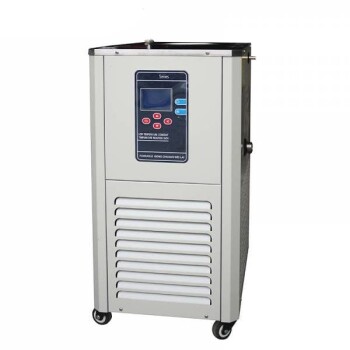
- 20L Heating Chilling Circulator Cooling Water Bath Circulator for High and Low Temperature Constant Temperature Reaction
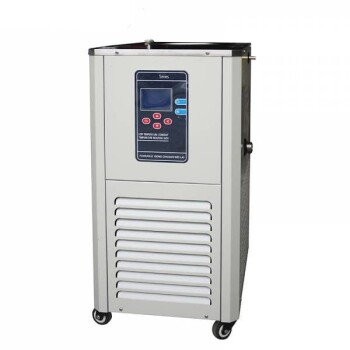
- 50L Heating Chilling Circulator Cooling Water Bath Circulator for High and Low Temperature Constant Temperature Reaction
- High Temperature Constant Temperature Heating Circulator Water Bath Chiller Circulator for Reaction Bath
- 100L Heating Chilling Circulator Cooling Water Bath Circulator for High and Low Temperature Constant Temperature Reaction
People Also Ask
- What is the necessity of a circulating water bath in chlorate production? Optimize Yield & Purity with Precision
- How does a constant temperature circulator support the leaching reaction of gold scrap? Optimize Gold Recovery Results
- How do constant temperature circulators impact weight-loss immersion tests? Ensure Precision in Corrosion Analysis
- What is the importance of a circulating water cooling system? Key to Protecting Your High-Temperature Lab Equipment
- Why is a circulating water chiller required for Prussian Blue nanoparticles? Ensure Stability & Batch Reproducibility