Precision in photoelectrochemical (PEC) measurement is fundamentally reliant on the isolation of electrochemical variables. A three-electrode system ensures accuracy by decoupling the potential control from the current-carrying circuit, allowing for the independent monitoring of the working electrode. This configuration eliminates interference from counter electrode polarization and minimizes errors caused by solution resistance, providing a true reflection of the semiconductor/electrolyte interface.
The three-electrode system acts as a high-fidelity diagnostic tool that isolates the performance of a single photoelectrode from the rest of the cell. By utilizing a dedicated reference electrode, researchers can precisely control the electrochemical environment to measure intrinsic material properties without the "noise" of system-wide potential drops.
The Mechanics of Independent Potential Control
Isolating the Working Electrode Interface
In a PEC cell, the Working Electrode (WE) is the semiconductor material under study, such as a photoanode or photocathode. The three-electrode system uses a Reference Electrode (RE), typically Ag/AgCl or SCE, to provide a stable chemical potential that does not change regardless of the current flowing through the cell.
Eliminating Counter Electrode Interference
In a two-electrode system, the potential measured is the sum of both the working and counter electrode processes. The three-electrode setup prevents counter electrode polarization—the change in potential at the counter electrode caused by current flow—from skewing the data, ensuring that the observed oxygen evolution reaction (OER) or hydrogen evolution reaction (HER) activity is attributed solely to the sample.
Utilizing the Potentiostat for Feedback
A high-precision electrochemical workstation (potentiostat) maintains the desired potential between the WE and RE. It achieves this by adjusting the current flowing between the WE and the Counter Electrode (CE), effectively "steering" the system to maintain the specific energy levels required for accurate semiconductor analysis.
Mitigating Physical and Parasitic Errors
Overcoming the Ohmic (IR) Drop
Current flowing through an electrolyte encounters resistance, which creates a voltage drop known as the IR drop. By measuring the potential through a high-impedance reference path where almost no current flows, the three-electrode system significantly reduces this error, providing a more accurate reading of the electrochemical interface kinetics.
Optimizing Light Transmission with Quartz Cells
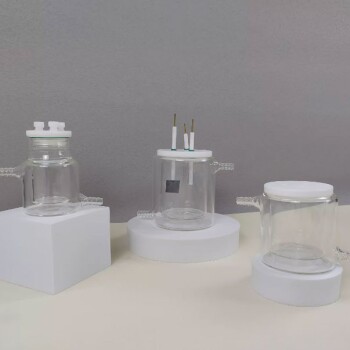
Standard PEC testing often utilizes a quartz electrolytic cell to ensure that ultraviolet and visible light reach the photoelectrode surface without loss. This transparency is critical for calculating the true solar-to-hydrogen (STH) conversion efficiency and observing the transient photocurrent response without optical interference from the cell walls.
Analyzing Charge Carrier Dynamics
This configuration is essential for Electrochemical Impedance Spectroscopy (EIS) and Mott-Schottky analysis. These techniques require precise potential control to quantitatively assess charge transfer efficiency and the separation of photoexcited carriers, allowing researchers to pinpoint exactly where energy losses occur in the material.
Understanding the Trade-offs and Pitfalls
Reference Electrode Stability and Calibration
While the RE provides a stable baseline, it is not "set and forget." Reference electrodes can drift over time due to ion contamination or temperature changes, requiring regular calibration against a standard (like Ferrocene or a known redox couple) to maintain absolute accuracy.
The Impact of Electrode Geometry
The physical placement of the RE relative to the WE—often managed via a Luggin capillary—is vital. If the RE is too far from the WE, the uncompensated solution resistance can still introduce significant errors in high-current applications, such as intense solar simulation.
Electrolyte Compatibility
The choice of electrolyte can affect the longevity of the electrodes. For example, using a silver-based reference electrode in a solution containing sulfides can lead to electrode poisoning, which degrades the precision of the measurement and necessitates frequent replacement of the reference components.
How to Apply This to Your Research
To achieve the highest accuracy in PEC performance testing, align your system configuration with your specific research objectives:
- If your primary focus is material durability: Use the three-electrode setup to monitor long-term photocurrent stability under a constant bias, ensuring that any degradation is attributed to the semiconductor and not the counter electrode.
- If your primary focus is catalytic kinetics: Utilize the system to generate precise polarization curves (LSV), which allow you to calculate the exact overpotential required for water splitting reactions.
- If your primary focus is charge transport: Combine the three-electrode cell with transient photocurrent measurements to evaluate how effectively your material separates photoexcited holes and electrons.
The three-electrode system remains the definitive standard for isolating and understanding the complex interactions at the photoelectrochemical interface.
Summary Table:
| Component | Role in PEC Testing | Impact on Accuracy |
|---|---|---|
| Working Electrode (WE) | Semiconductor sample under study | Isolates intrinsic material properties and photocurrent. |
| Reference Electrode (RE) | Stable potential baseline | Eliminates IR drop and provides a constant reference point. |
| Counter Electrode (CE) | Completes the electrical circuit | Prevents counter-electrode polarization from skewing data. |
| Quartz Cell Body | High-transparency light path | Ensures maximum light transmission for true STH efficiency. |
| Potentiostat | Electronic feedback control | Maintains precise potential between WE and RE via current adjustment. |
Elevate Your PEC Research with KINTEK Precision
Achieving high-fidelity photoelectrochemical data requires more than just methodology—it requires world-class equipment. KINTEK specializes in providing researchers with high-performance electrolytic cells and electrodes, tailored specifically for demanding PEC, OER, and HER applications.
Whether you need ultra-transparent quartz cells, reliable reference electrodes, or comprehensive laboratory solutions like high-temperature furnaces, reactors, and hydraulic presses, KINTEK is your trusted partner in material science. Our tools are designed to minimize parasitic losses and maximize measurement stability, ensuring your results are publishable and precise.
Ready to upgrade your laboratory setup? Contact KINTEK today to discuss your specific testing requirements and discover how our specialized consumables and equipment can accelerate your research breakthroughs.
References
- Changhao Liu, Zhigang Zou. Long-term durability of metastable β-Fe2O3 photoanodes in highly corrosive seawater. DOI: 10.1038/s41467-023-40010-9
This article is also based on technical information from Kintek Solution Knowledge Base .
Related Products
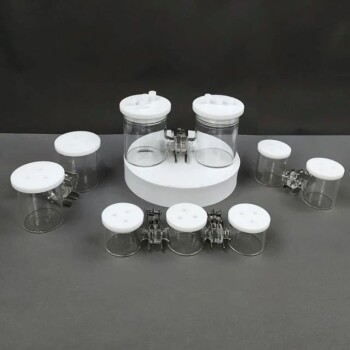
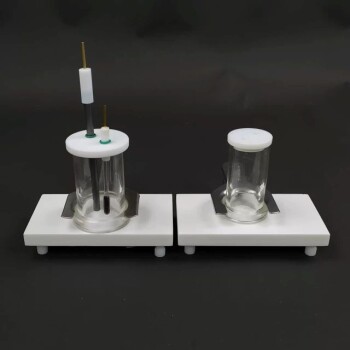
- H Type Electrolytic Cell Triple Electrochemical Cell
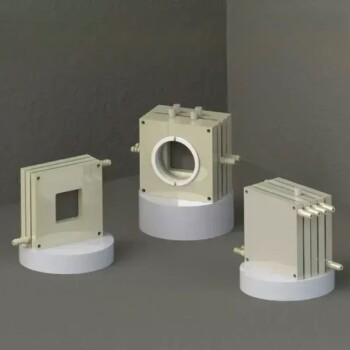
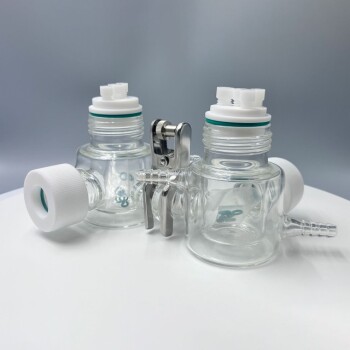
- Electrolytic Electrochemical Cell Gas Diffusion Liquid Flow Reaction Cell
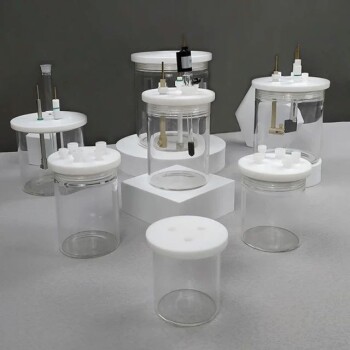
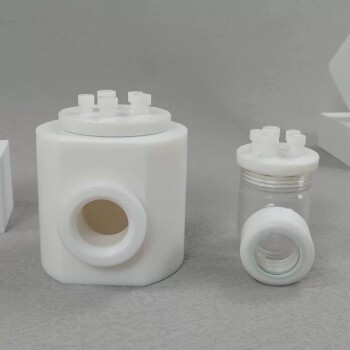
- PTFE Electrolytic Cell Electrochemical Cell Corrosion-Resistant Sealed and Non-Sealed
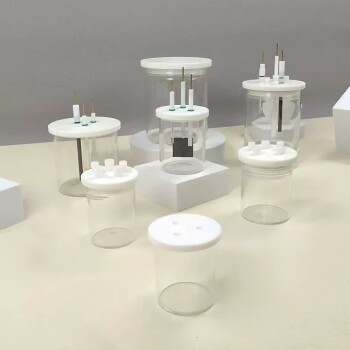
- Electrolytic Electrochemical Cell with Five-Port
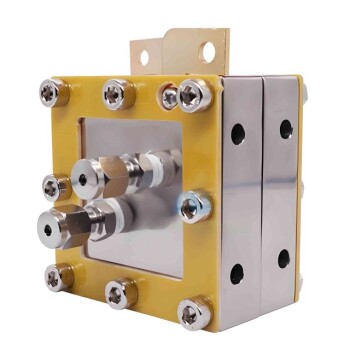
- Customizable PEM Electrolysis Cells for Diverse Research Applications
People Also Ask
- What is a H type cell? A Guide to Divided Electrochemical Cells for Accurate Experiments
- How should the electrolyte be prepared and added to the H-type electrolytic cell? Best Practices for Purity and Safety
- What is the technical necessity of using an H-type electrolytic cell for NO3RR tests? Protect Your Ammonia Yields
- How does the design of an H-type electrolytic cell benefit the neutral water electrolysis process for metal recovery?
- What is the primary function of an H-type electrolytic cell in NitRR? Ensure Accurate Product Yields