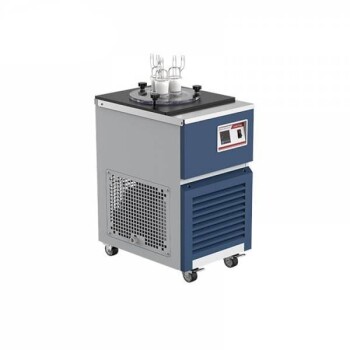
The vacuum pump system functions as the critical mechanism for residence time control in the Flame Spray Pyrolysis (FSP) process for producing nano-calcium-based adsorbents. It is primarily responsible for the continuous, timely extraction of solid nanoparticles from the combustion zone and directing them into a filtration device. This action stabilizes the pressure within the reaction zone, ensuring a steady state for continuous production.
The vacuum system is not merely a transport tool; it is the defining factor in preserving nanoparticle surface area. By limiting the material's exposure to extreme heat, it prevents melting and grain growth, which are detrimental to the performance of high-quality adsorbents.
The Critical Role of Thermal Management
Regulating Residence Time
The most significant contribution of the vacuum pump is the precise control of "residence time"—the duration nanoparticles spend inside the high-temperature flame.
The pump creates a continuous suction force that pulls the formed particles out of the combustion zone immediately after synthesis.
This ensures the particles are extracted at a velocity that prevents them from lingering in the heat longer than necessary.
Preventing Grain Growth and Melting
For calcium-based adsorbents, surface area is the primary metric of quality.
If nanoparticles remain in the high-temperature region for too long, they undergo severe melting or grain growth (sintering).
The vacuum system mitigates this by rapidly removing the particles before they can coalesce into larger, low-surface-area structures.
Preserving Surface Area
By effectively quenching the thermal history of the particle, the vacuum system "freezes" the particle morphology.
This allows for the retention of ultra-high specific surface areas, which is the key characteristic required for high-performance adsorption applications.
System Stability and Material Collection
Stabilizing Reaction Pressure
Beyond affecting the particles directly, the vacuum pump maintains a stable pressure environment within the reactor.
This stability is essential for maintaining a consistent flame geometry and combustion rate.
Without this stabilization, fluctuations in pressure could lead to uneven heating and inconsistent particle quality.
Directing Flow to Filtration
The vacuum system provides the directional force required to transport the synthesized nanomaterials.
It guides the aerosol stream from the open reaction zone directly into the filtration device for collection.
This ensures high recovery rates of the final product and prevents the loss of valuable nanomaterial to the surrounding environment.
Understanding the Trade-offs
The Risk of Excessive Suction
While rapid extraction is necessary to prevent melting, an improperly calibrated vacuum can disrupt the flame itself.
If the suction is too aggressive, it may destabilize the combustion zone or extract precursors before they have fully reacted.
The Consequence of Inadequate Suction
Conversely, if the vacuum pressure is too weak, the extraction becomes sluggish.
This results in particles dwelling in the hot zone, leading to the formation of large, sintered clumps rather than the desired fine nanopowder.
This directly degrades the specific surface area and the chemical reactivity of the final adsorbent.
Making the Right Choice for Your Goal
To optimize the FSP process for your specific calcium-based adsorbents, consider these priorities:
- If your primary focus is Maximum Surface Area: prioritize a higher capacity vacuum flow to minimize residence time and prevent particle melting/sintering.
- If your primary focus is Process Stability: prioritize a vacuum system with precise pressure regulation controls to maintain a steady combustion environment without disrupting the flame.
The vacuum pump is the unseen architect of particle quality, determining whether you produce a high-performance nanomaterial or a fused, low-value bulk powder.
Summary Table:
| Feature | Impact on FSP Process | Benefit for Nano-Calcium Adsorbents |
|---|---|---|
| Residence Time Control | Rapidly extracts particles from the flame | Prevents grain growth and melting |
| Pressure Stabilization | Maintains consistent reaction zone environment | Ensures uniform flame geometry and quality |
| Directional Suction | Guides aerosol stream to filtration | High recovery rates of synthesized powders |
| Thermal Quenching | Limits exposure to extreme combustion heat | Preserves high specific surface area (SSA) |
Elevate Your Nanomaterial Synthesis with KINTEK
Precision is the difference between high-value nanopowders and fused bulk waste. KINTEK specializes in advanced laboratory equipment designed for rigorous research environments. Whether you are optimizing Flame Spray Pyrolysis (FSP) or scaling up production, our comprehensive range of vacuum solutions, high-temperature furnaces, and crushing systems ensures you achieve the exact particle morphology your application demands.
From high-temperature reactors to specialized PTFE and ceramic consumables, KINTEK provides the tools to stabilize your process and maximize material surface area. Partner with the experts in lab efficiency—contact KINTEK today to find the perfect system for your research goals!
References
- Donata Konopacka-Łyskawa, Andrzej Szefer. CaO-based high temperature CO2 sorbents – Literature review. DOI: 10.24425/cpe.2021.138938
This article is also based on technical information from Kintek Solution Knowledge Base .
Related Products
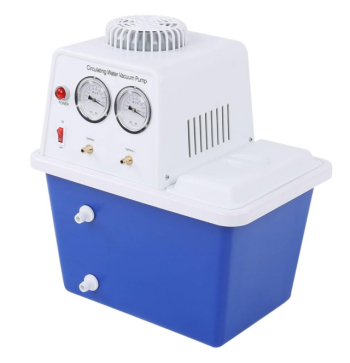
- Circulating Water Vacuum Pump for Laboratory and Industrial Use
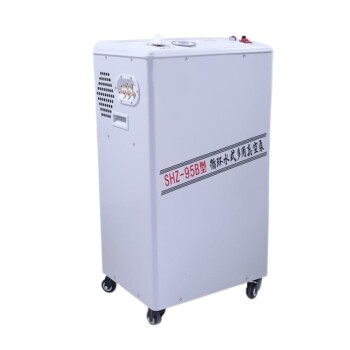
- Laboratory Vertical Water Circulating Vacuum Pump for Lab Use
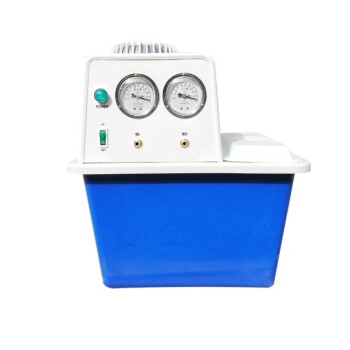
- Laboratory Benchtop Water Circulating Vacuum Pump for Lab Use
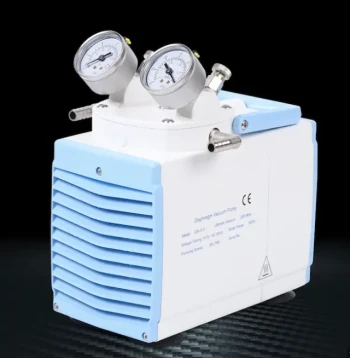
- Oil Free Diaphragm Vacuum Pump for Laboratory and Industrial Use
- Laboratory Rotary Vane Vacuum Pump for Lab Use
People Also Ask
- How is a circulating water vacuum pump utilized for hydrogen production residues? Optimize Your Solid-Liquid Separation
- How does the impeller rotation affect the gas flow in a water circulating vacuum pump? A Guide to the Liquid Ring Principle
- What determines the vacuum degree achievable by a water circulating vacuum pump? Unlock the Physics of Its Limits
- What are the advantages of a water circulating vacuum pump? Superior Durability for Demanding Lab Environments
- How does a water circulating vacuum pump operate? Discover the Efficient Liquid Piston Principle