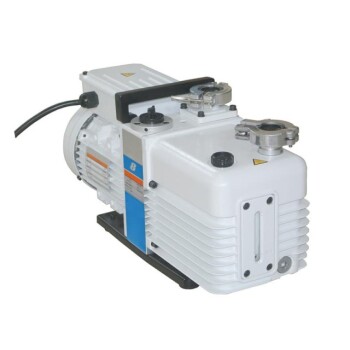
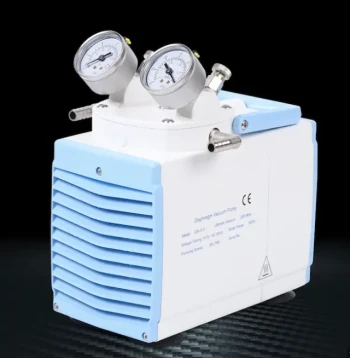
The primary function of a Rotary Vane Vacuum Pump is to evacuate air and other gases from a sealed chamber or system. Its specific operational sweet spot is the rough vacuum range, effectively reducing pressure from atmospheric levels (760 Torr) down to approximately 1 Torr.
The Rotary Vane Vacuum Pump acts as the foundational "workhorse" for vacuum systems. It provides the initial, cost-effective suction required to bridge the gap between our atmosphere and a controlled vacuum environment.
Understanding the Operational Context
The "Rough Vacuum" Zone
The most critical aspect of this pump is its pressure range.
It is engineered to handle the heavy lifting of removing the bulk of gas molecules from a vessel. It transitions a system from 760 Torr (standard atmosphere) down to the 1 Torr range.
The Oil-Sealed Advantage
These pumps generally rely on a specially formulated mineral oil.
This oil serves a dual purpose: it acts as a sealant to prevent gas backflow and as a lubricant for the moving parts. This oil-sealed design allows the pump to be robust and maintain a strong seal even during continuous operation.
Mechanism and Applications
How It Moves Gas
The core mechanism involves a rotor equipped with vanes spinning inside a chamber.
As the rotor spins, the vanes trap gas molecules entering from the intake. The rotation physically forces these trapped molecules out of the chamber, creating the vacuum.
Typical Use Cases
Because they provide continuous suction, these pumps are ideal for processes involving the reduction of dry gases.
They are a staple in chemistry and biology laboratories. You will frequently find them supporting applications that require a reliable medium-to-rough vacuum for filtration, drying, or distillation.
Understanding the Trade-offs
The Maintenance Factor
While these pumps are robust, the reliance on oil introduces a maintenance requirement.
The oil can become contaminated by the gases being pumped, requiring regular changes to maintain performance. Furthermore, oil mist filters are often necessary to prevent oil vapor from entering the workspace.
Environmental Limitations
These pumps are most effective with dry gases.
If your process involves significant moisture or corrosive vapors, standard oil-sealed rotary vane pumps may degrade quickly. Specialized traps or filters are required to remove air contaminants before they reach the pump mechanism.
Making the Right Choice for Your Project
Selecting a vacuum pump requires balancing performance needs with maintenance capabilities.
- If your primary focus is cost-efficiency: This pump is the ideal choice, offering a robust solution and strong air flow for a relatively low investment.
- If your primary focus is laboratory versatility: The rotary vane design provides the reliable continuous suction needed for standard chemistry and biology applications.
- If your primary focus is extremely low maintenance: You must consider the trade-off of regular oil changes and potential oil mist management required by this technology.
The Rotary Vane Vacuum Pump remains the industry standard for reliable, cost-effective gas evacuation in the rough vacuum range.
Summary Table:
| Feature | Specification/Detail |
|---|---|
| Primary Function | Evacuation of air and dry gases from sealed chambers |
| Optimal Vacuum Range | Rough Vacuum (760 Torr down to ~1 Torr) |
| Seal Type | Oil-sealed (mineral oil for sealing and lubrication) |
| Key Components | Rotor, sliding vanes, and oil-mist filtration |
| Common Applications | Laboratory filtration, distillation, and drying processes |
| Maintenance | Requires regular oil changes and contaminant monitoring |
Optimize Your Vacuum Systems with KINTEK Expertise
Are you looking to enhance your laboratory's efficiency with reliable vacuum technology? KINTEK specializes in high-performance laboratory equipment, providing the robust rotary vane vacuum pumps, cooling solutions, and specialized reactors your research demands. Whether you are performing complex distillations or managing large-scale drying processes, our team ensures you have the right tools—from high-temperature furnaces and hydraulic presses to precision rotary vane pumps and ULT freezers.
Ready to upgrade your lab? Contact us today to receive a tailored consultation and see how KINTEK can provide the durable, cost-effective solutions your project deserves!
Related Products
- Laboratory Rotary Vane Vacuum Pump for Lab Use
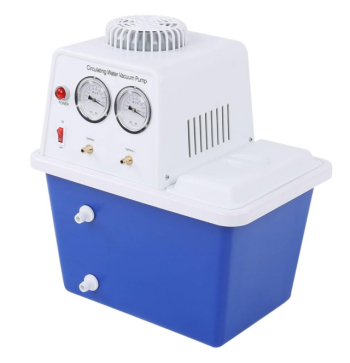
- Circulating Water Vacuum Pump for Laboratory and Industrial Use
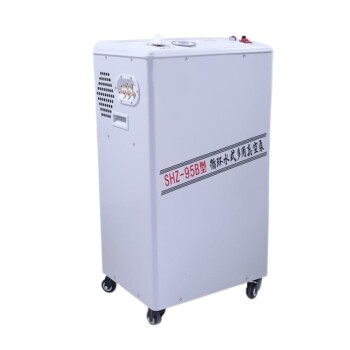
- Laboratory Vertical Water Circulating Vacuum Pump for Lab Use
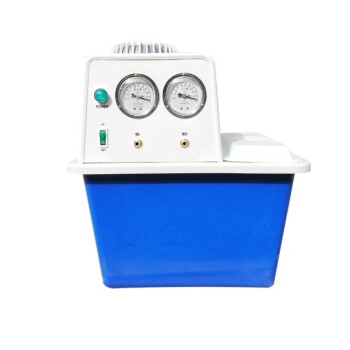
- Laboratory Benchtop Water Circulating Vacuum Pump for Lab Use
- Vacuum Sealed Continuous Working Rotary Tube Furnace Rotating Tube Furnace
People Also Ask
- What is the use of rotary vacuum pump? A Guide to Reliable Rough Vacuum for Labs & Industry
- What is the vacuum level of a rotary vacuum pump? Achieve Medium Vacuum for Your Lab or Industry
- What is the difference between a single-stage and a two-stage rotary vane pump? Choosing the Right Vacuum Depth
- How does the performance of single-stage and two-stage rotary vane pumps compare? Optimize Your Vacuum Efficiency
- How does a Rotary Vane Pump operate? Discover Efficient Vacuum Technology for Your Lab