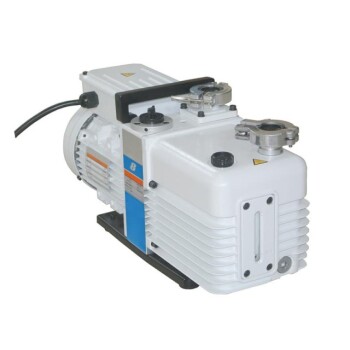
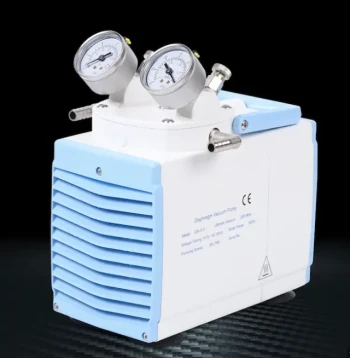
A Rotary Vane Vacuum Pump is an oil-sealed positive displacement pump designed to remove air and gas molecules from a sealed volume. It operates by rotating vanes within a chamber, utilizing a specially formulated mineral oil to act as a sealant, lubricant, and coolant for the moving parts.
Core Insight: Rotary vane pumps are the standard workhorse for creating a "rough" vacuum due to their balance of low cost and high performance. However, because they rely heavily on oil for sealing and lubrication, they require a commitment to regular maintenance to ensure longevity and process purity.
The Mechanics of Operation
The Role of Oil
Unlike dry pumps, the rotary vane design is oil-sealed. The evacuation chamber is filled with specialized mineral oil that creates an airtight seal between the rotating vanes and the housing, ensuring gas does not leak back into the chamber.
Creating Suction
A rotor equipped with sliding vanes spins inside the pump chamber. As the rotor turns, the vanes trap gas molecules entering the intake and physically push them toward the exhaust valve, expelling them to create a vacuum.
Thermal Management
The oil serves a dual purpose beyond sealing. It lubricates the high-speed moving parts to reduce friction and acts as a coolant to dissipate the heat generated during the compression process.
Performance Capabilities
Vacuum Range
These pumps are primarily used to achieve a rough to medium vacuum. They operate effectively from atmospheric pressure (760 Torr) down to approximately 1 milliTorr (0.001 Torr) for two-stage models.
Flow Rates
Despite their generally compact size, rotary vane pumps provide strong volumetric flow rates, typically ranging between 2 to 20 Cubic Feet per Minute (CFM). For larger industrial units, flow rates can reach as high as 1,600 m³/h.
Configurations
You will typically find these pumps in one-stage or two-stage configurations. Two-stage pumps are capable of achieving lower ultimate pressures, making them suitable for more demanding laboratory applications.
Understanding the Trade-offs
Maintenance Requirements
The reliance on oil is the pump's primary operational drawback. To prevent wear and performance degradation, the oil must be changed regularly—approximately every 3,000 hours of use—depending on the cleanliness of the application.
Contamination Risks
Because the pump contains oil, there is a risk of oil vapor backstreaming into the vacuum chamber if not properly managed. Additionally, the pump itself requires air filters to prevent minute dust particles from contaminating the oil reservoir.
Application Limits
While robust, these pumps are best suited for dry, non-corrosive gases or aqueous samples. Using them with aggressive chemicals often requires cold traps or special oil formulations to prevent damage to the pump internals.
Making the Right Choice for Your Goal
- If your primary focus is cost-efficiency: This is likely your best option, as rotary vane pumps offer the most performance per dollar for rough vacuum applications.
- If your primary focus is deep vacuum (High/Ultra-High): You should use this pump as a "roughing" or backing pump to support a high-vacuum turbomolecular or diffusion pump.
- If your primary focus is low maintenance: You may want to consider a dry scroll pump instead, as the required oil changes for rotary vanes add to the total cost of ownership over time.
For most general laboratory and industrial applications requiring continuous suction, the rotary vane pump remains the most practical and versatile solution available.
Summary Table:
| Feature | Specification/Detail |
|---|---|
| Pump Type | Oil-sealed Positive Displacement |
| Vacuum Range | 760 Torr down to 0.001 Torr (1 milliTorr) |
| Flow Rates | 2 to 20 CFM (Standard) / Up to 1,600 m³/h (Industrial) |
| Stages | Available in Single-stage or Two-stage configurations |
| Maintenance | Oil change required approx. every 3,000 hours |
| Key Functions | Sealant, Lubricant, and Coolant (via specialized mineral oil) |
Optimize Your Lab’s Vacuum Performance with KINTEK
Are you looking for reliable suction and high-performance vacuum solutions? KINTEK specializes in premium laboratory equipment, including robust rotary vane vacuum pumps and advanced cooling solutions like cold traps and freeze dryers to protect your equipment from contamination.
From high-temperature furnaces and hydraulic presses to specialized battery research tools, our comprehensive portfolio is designed to meet the rigorous demands of modern research and industrial production. Whether you need a standalone pump or a complete system for CVD/PECVD applications, our experts are here to help you select the perfect tools for your specific workflow.
Ready to enhance your lab's efficiency? Contact us today to discuss your vacuum requirements!
Related Products
- Laboratory Rotary Vane Vacuum Pump for Lab Use
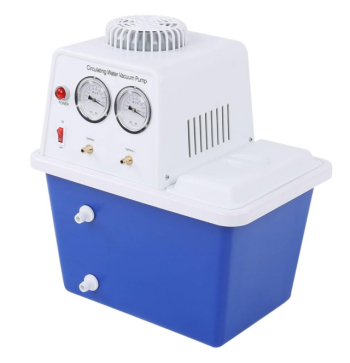
- Circulating Water Vacuum Pump for Laboratory and Industrial Use
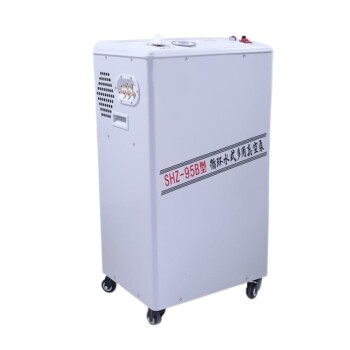
- Laboratory Vertical Water Circulating Vacuum Pump for Lab Use
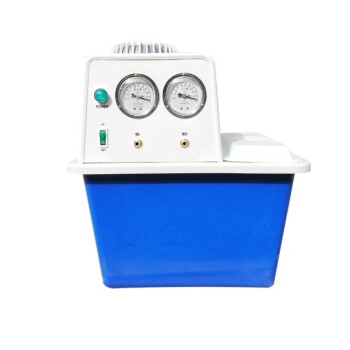
- Laboratory Benchtop Water Circulating Vacuum Pump for Lab Use
- Vacuum Sealed Continuous Working Rotary Tube Furnace Rotating Tube Furnace
People Also Ask
- What is the use of rotary vacuum pump? A Guide to Reliable Rough Vacuum for Labs & Industry
- What is the vacuum level of a rotary vacuum pump? Achieve Medium Vacuum for Your Lab or Industry
- What is the difference between a single-stage and a two-stage rotary vane pump? Choosing the Right Vacuum Depth
- How does the performance of single-stage and two-stage rotary vane pumps compare? Optimize Your Vacuum Efficiency
- How does a Rotary Vane Pump operate? Discover Efficient Vacuum Technology for Your Lab