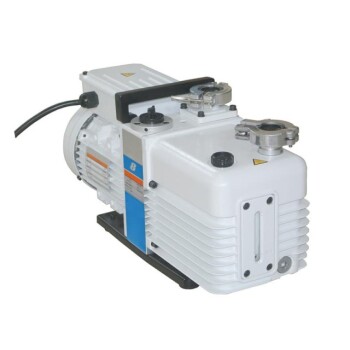
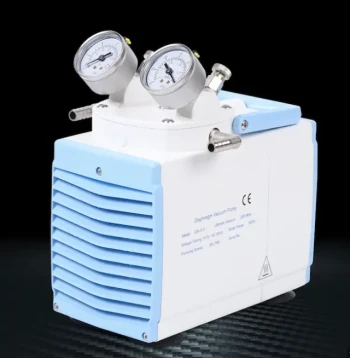
Rotary Vane Vacuum Pumps are primarily defined by their stage configuration and volumetric flow capabilities. These pumps typically feature either a one-stage or two-stage design, delivering flow rates between 2 and 20 Cubic Feet per Minute (CFM) and achieving vacuum levels as low as 1 milliTorr.
The Core Insight: While their flow rates make them versatile, the defining characteristic of a Rotary Vane pump is its ability to bridge the gap between atmospheric pressure and medium vacuum. They are the industry standard "roughing pumps" used to prepare systems for high-vacuum applications.
Understanding Pump Configurations
One-Stage vs. Two-Stage
The most fundamental configuration choice is between single-stage and dual-stage models.
One-Stage Limitations
One-stage pumps utilize a single rotor and chamber to trap and expel gas. While effective for basic suction, they generally achieve higher (less deep) ultimate pressures compared to their two-stage counterparts.
Two-Stage Capabilities
Two-stage pumps connect two chambers in series. The first stage exhausts into the second, allowing the pump to achieve a deeper vacuum, typically reaching the 1 milliTorr specification mentioned in performance data.
Key Performance Specifications
Volumetric Flow Rate
For most standard applications, you can expect a flow rate ranging from 2 to 20 CFM. This metric determines how quickly the pump can evacuate a specific volume of gas from a chamber.
Ultimate Vacuum Pressure
These pumps are capable of pulling a vacuum down to approximately 1 milliTorr. This low pressure allows them to be effective in chemistry and biology laboratories requiring medium to high vacuum levels.
The "Roughing" Application
Because of their specific pressure range, these units are frequently employed as roughing pumps. They handle the initial heavy lifting, reducing pressure from atmosphere (760 Torr) down to the range where specialized high-vacuum pumps can take over.
Drive Mechanisms and Operation
Direct Drive Systems
In this configuration, the pump connects directly to the electric motor via a coupling. These units typically operate at higher speeds, around 1750 RPM, and run at temperatures near 70 degrees Celsius.
Belt Drive Systems
Belt-driven models utilize a pulley system to reduce the rotational speed of the pump. Consequently, they operate at lower RPMs and run 10 to 20 degrees Celsius cooler than direct-drive models.
The Critical Role of Oil
These are oil-sealed pumps, meaning the chamber is filled with specialized mineral oil. This fluid serves a dual purpose: it acts as a sealant to trap gas and a lubricant for the moving vanes.
Understanding the Trade-offs
Temperature Sensitivity
Operating temperature is a critical variable influenced by speed, oil viscosity, and pump age. Direct drive pumps are compact but run hotter, which may not be suitable for thermally sensitive environments.
Maintenance Dependencies
Reliability is heavily dependent on oil quality. Because the oil functions as a sealant, contaminants or degraded viscosity can significantly impact the pump's ability to reach its ultimate vacuum rating.
Application Specificity
While robust, these pumps are designed for dry gas reduction. Introducing significant moisture or corrosive contaminants without proper traps can degrade the oil and damage the internal vanes.
Making the Right Choice for Your Goal
To select the correct Rotary Vane Vacuum Pump for your application, consider the following technical priorities:
- If your primary focus is reaching deep vacuum levels: Prioritize a two-stage configuration to ensure you can achieve the 1 milliTorr threshold required for lab applications.
- If your primary focus is pump longevity and temperature control: Opt for a belt-driven configuration, which operates at lower RPMs and significantly lower temperatures.
- If your primary focus is speed of evacuation: Select a model at the higher end of the 20 CFM range to minimize pump-down time for larger chambers.
Select the configuration that aligns with your specific vacuum depth requirements rather than defaulting to the highest flow rate.
Summary Table:
| Feature | Single-Stage Configuration | Two-Stage Configuration |
|---|---|---|
| Ultimate Vacuum | Higher (Less Deep) | Down to 1 milliTorr |
| Flow Rate Range | 2 - 20 CFM | 2 - 20 CFM |
| Primary Use | Basic Suction/Evacuation | High-Vacuum Roughing |
| Drive Options | Direct (1750 RPM) or Belt Drive | Direct (1750 RPM) or Belt Drive |
| Operating Temp | ~70°C (Direct) / Cooler (Belt) | ~70°C (Direct) / Cooler (Belt) |
| Sealing Medium | Specialized Mineral Oil | Specialized Mineral Oil |
Elevate Your Laboratory Precision with KINTEK
Is your research demanding more reliable vacuum performance? KINTEK specializes in high-performance laboratory equipment, providing the robust Rotary Vane Vacuum Pumps needed to power your most critical applications. Whether you require a high-speed direct-drive system or a cool-running belt-driven model, our technical experts are ready to help you find the perfect match for your flow rate and vacuum depth requirements.
Beyond vacuum solutions, KINTEK offers a comprehensive range of:
- High-Temperature Furnaces (Muffle, Tube, Vacuum, CVD/PECVD)
- Hydraulic Presses (Pellet, Isostatic, Hot)
- Advanced Reactors & Autoclaves
- Sample Preparation Tools (Crushing, Milling, Sieving)
Maximize your lab's efficiency and achieve deeper vacuum levels today.
→ Contact KINTEK for a Professional Consultation
Related Products
- Laboratory Rotary Vane Vacuum Pump for Lab Use
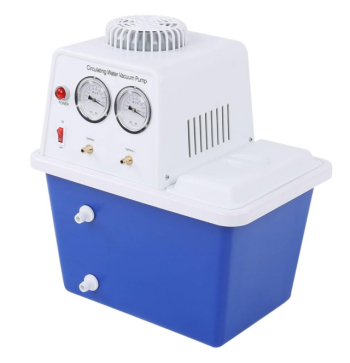
- Circulating Water Vacuum Pump for Laboratory and Industrial Use
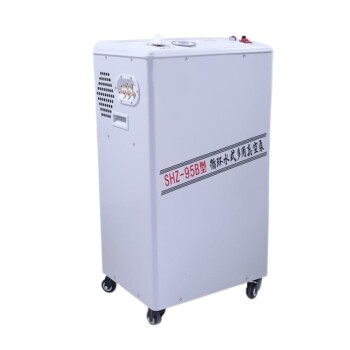
- Laboratory Vertical Water Circulating Vacuum Pump for Lab Use
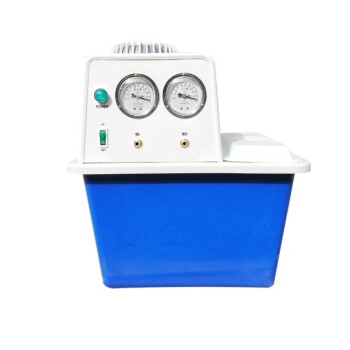
- Laboratory Benchtop Water Circulating Vacuum Pump for Lab Use
- Vacuum Sealed Continuous Working Rotary Tube Furnace Rotating Tube Furnace
People Also Ask
- What is the use of rotary vacuum pump? A Guide to Reliable Rough Vacuum for Labs & Industry
- What is the vacuum level of a rotary vacuum pump? Achieve Medium Vacuum for Your Lab or Industry
- What is the difference between a single-stage and a two-stage rotary vane pump? Choosing the Right Vacuum Depth
- How does the performance of single-stage and two-stage rotary vane pumps compare? Optimize Your Vacuum Efficiency
- How does a Rotary Vane Pump operate? Discover Efficient Vacuum Technology for Your Lab