The fundamental difference between low-cost and high-end industrial rotary vane vacuum pumps lies in their intended duty cycle and engineering architecture. High-end industrial pumps are engineered for continuous, heavy-duty operation with high-flow capabilities, whereas low-cost models are restricted to intermittent, light-duty applications.
While initial cost is the most visible difference, the true distinction is operational longevity. Industrial pumps are rebuildable assets designed for maximum airflow efficiency, while economy models are often "consumable" tools limited by restricted intakes and non-serviceable components.
Operational Design and Duty Cycle
Engineered for Continuity
High-end industrial pumps are built specifically for continuous, 24/7 operation. They are designed to manage the heat and stress of heavy-duty workloads found in manufacturing lines or scientific processing without degradation.
The Limits of Economy Models
In contrast, low-cost pumps are intended strictly for intermittent use. They differ fundamentally in their tolerance for heat and wear; running a budget pump continuously will typically result in rapid failure.
Intake Architecture and Efficiency
The Industrial Flange Advantage
A critical performance differentiator is the design of the intake port. Industrial pumps utilize large-diameter flanges, such as NW25 or NW40. These wide openings maximize conductance, allowing for significantly higher pumping efficiency and speed.
Restrictions of Threaded Ports
Low-end pumps typically rely on small, threaded ports, such as 3/8 inch or 1/2 inch NPT. These narrow connections physically restrict gas flow, creating a bottleneck that limits the system's overall efficiency regardless of the pump's motor power.
Material Quality and Lifespan
Built to Be Rebuilt
Industrial pumps are constructed with high-quality materials meant to withstand years of service. Crucially, they are designed to be maintained; when components eventually wear, the pump can be rebuilt to factory specifications, extending its life indefinitely.
The "Disposable" Nature of Budget Pumps
Lower-cost models generally sacrifice material durability to reduce price. Because they are often difficult or impossible to rebuild cost-effectively, they become disposable items that must be replaced entirely once they fail.
Understanding the Trade-offs
Initial Investment vs. Long-Term Value
The primary trade-off is the upfront cost versus the total cost of ownership. An industrial pump requires a significant initial investment but offers stability and repairability. A low-cost pump saves money immediately but may cost more over time due to frequent replacements and process downtime.
Matching Performance to Application
It is important not to over-specify for simple tasks. If your application involves only occasional evacuation—such as HVAC repair or infrequent hobbyist work—an industrial pump may be an unnecessary expense for capacity you will never utilize.
Making the Right Choice for Your Goal
Selecting the correct class of pump depends entirely on the frequency and intensity of your application.
- If your primary focus is continuous production or scientific research: Prioritize a high-end industrial model with NW flanges to ensure sustained efficiency and the ability to rebuild the unit later.
- If your primary focus is occasional utility or intermittent tasks: A low-cost model with standard NPT threading is a sufficient and cost-effective solution for light-duty cycles.
Choose the tool that matches your workload to ensure reliability without overspending.
Summary Table:
| Feature | High-End Industrial Pump | Low-Cost Economy Pump |
|---|---|---|
| Duty Cycle | Continuous (24/7) Heavy-Duty | Intermittent (Light-Duty) |
| Intake Design | Large Flanges (NW25/NW40) | Small Threaded Ports (NPT) |
| Efficiency | Maximum Conductance & Speed | Restricted Airflow (Bottlenecks) |
| Longevity | Rebuildable & Long-Lasting | Often Disposable/Consumable |
| Ideal Use | Production & Scientific Research | HVAC Repair & Hobbyist Work |
Maximize Your Lab’s Uptime with KINTEK Precision Engineering
Don't let a "disposable" pump become the bottleneck in your production or research. KINTEK specializes in high-performance laboratory equipment designed for longevity and efficiency. Whether you need robust rotary vane vacuum pumps, high-temperature furnaces, or advanced hydraulic presses, we provide the industrial-grade tools your mission-critical applications demand.
Why Choose KINTEK?
- Durability: Systems built for continuous, heavy-duty operation.
- Expertise: From battery research tools to high-pressure autoclaves, we understand your technical requirements.
- Support: Comprehensive solutions including cooling systems, homogenizers, and essential ceramics.
Contact KINTEK today to find the perfect vacuum solution for your application!
Related Products
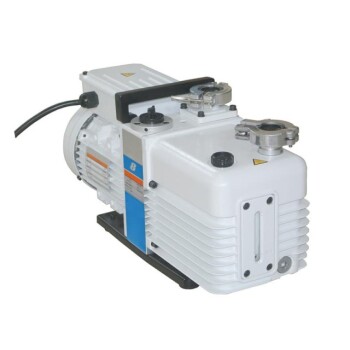
- Laboratory Rotary Vane Vacuum Pump for Lab Use
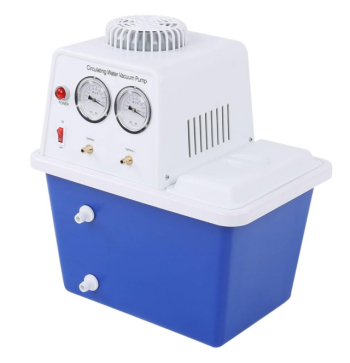
- Circulating Water Vacuum Pump for Laboratory and Industrial Use
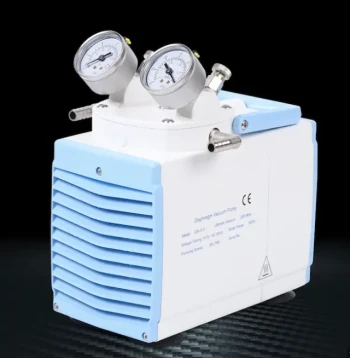
- Oil Free Diaphragm Vacuum Pump for Laboratory and Industrial Use
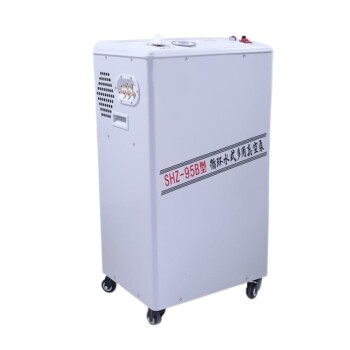
- Laboratory Vertical Water Circulating Vacuum Pump for Lab Use
- Laboratory Benchtop Water Circulating Vacuum Pump for Lab Use
People Also Ask
- What is the use of rotary vacuum pump? A Guide to Reliable Rough Vacuum for Labs & Industry
- What is the vacuum level of a rotary vacuum pump? Achieve Medium Vacuum for Your Lab or Industry
- What is the difference between a single-stage and a two-stage rotary vane pump? Choosing the Right Vacuum Depth
- How does the performance of single-stage and two-stage rotary vane pumps compare? Optimize Your Vacuum Efficiency
- How does a Rotary Vane Pump operate? Discover Efficient Vacuum Technology for Your Lab