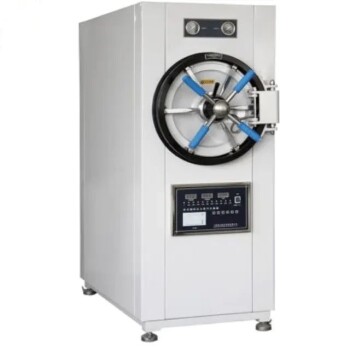
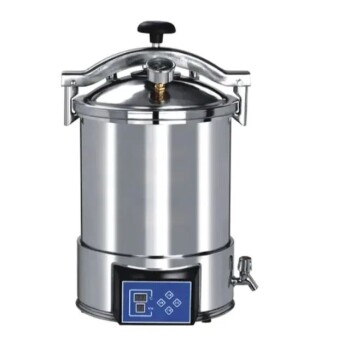
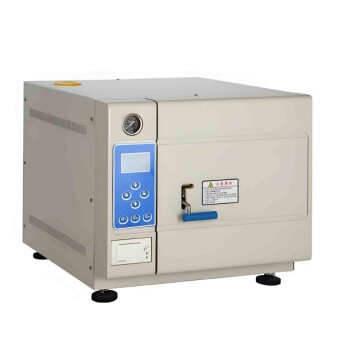
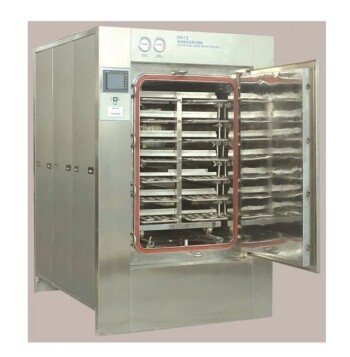
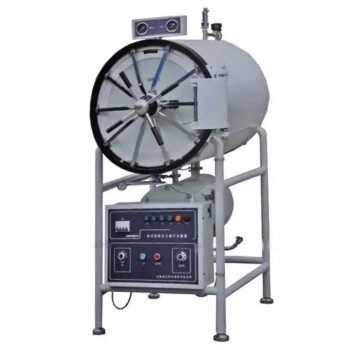
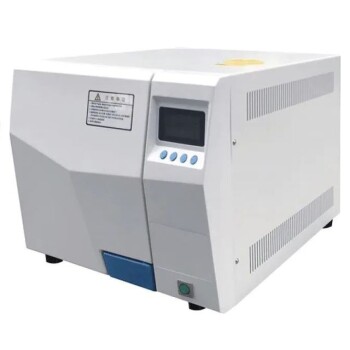
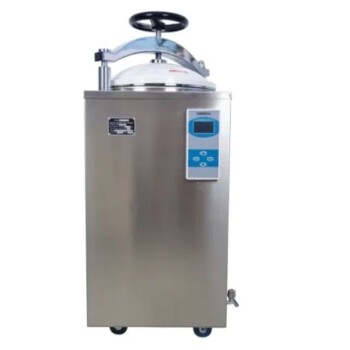
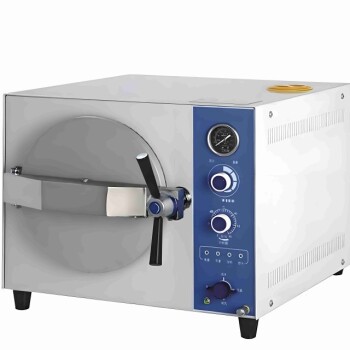
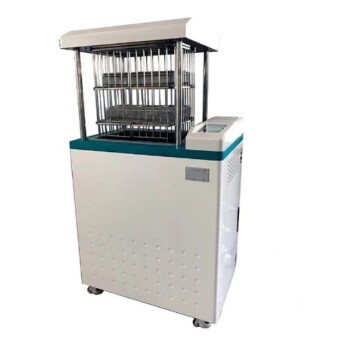
The autoclave functions as the foundational control mechanism for experimental validity, utilizing high-temperature and high-pressure steam to completely eliminate microbial contaminants from culture media and instruments. By establishing a sterile baseline, it prevents environmental microorganisms from competing with target strains, thereby ensuring that any observed biofilm formation or growth kinetics are exclusively attributable to the specific organism under study.
Core Takeaway The reliability of biofilm data hinges on isolation. By eliminating environmental contaminants, the autoclave ensures that the evaluation of antimicrobial performance reflects the true interaction between the specific bacterial strain and the material, rather than random interference from background microbes.
The Mechanism of Sterilization
Establishing a Clean Baseline
Reliable data begins with sterile inputs. An autoclave uses high-temperature steam under pressure to destroy all potential microbial life on experimental instruments and within culture media.
This step removes biological "noise" before the experiment begins. It ensures that the environment is a blank slate, ready for the introduction of specific test variables.
Eliminating Environmental Interference
Without autoclaving, environmental microorganisms naturally present on equipment can infiltrate the experiment. These invaders introduce uncontrolled variables that compromise the integrity of the study.
Protecting Experimental Specificity
Preserving Growth Kinetics
Specific strains, such as Staphylococcus aureus or Pseudomonas aeruginosa, exhibit distinct growth patterns known as kinetics. Contaminants can outcompete or synergize with these strains, altering their natural growth rates.
Sterilization guarantees that the growth kinetics recorded are intrinsic to the target strain. This allows researchers to trust that the biological behavior observed is authentic.
Validating Antimicrobial Performance
When evaluating the antimicrobial performance of composite coatings, accuracy is paramount. You must be certain that a reduction in biofilm formation is caused by the coating, not by competition from a contaminant.
The autoclave ensures the "uniqueness" of these evaluation results. It isolates the variable of interest—the coating's efficacy—by ensuring the bacterial challenge is controlled and singular.
The Risks of Inadequate Sterilization
The Loss of Data Attribution
The primary trade-off in skipping or performing inadequate sterilization is the total loss of data attribution. If an autoclave cycle is not verified or effective, you cannot attribute results to your target strain.
Compromised Evaluation Metrics
In the context of material testing, contamination renders results void. You may observe a "fail" in biofilm formation that is actually due to a contaminant killing the target strain, leading to a false positive regarding the coating's performance.
Making the Right Choice for Your Goal
To ensure your biofilm experiments yield publishable and reliable data, prioritize the sterilization protocol as part of your experimental design.
- If your primary focus is determining growth rates: Ensure complete media sterilization to prevent environmental microbes from altering the specific growth kinetics of your target strain.
- If your primary focus is testing antimicrobial coatings: Rigorously autoclave all instruments to ensure that the coating's performance is evaluated against the intended pathogen only, protecting the accuracy of your results.
Reliability in microbiology is not just about what you grow, but ensuring you have eliminated everything you did not intend to grow.
Summary Table:
| Feature | Impact on Biofilm Research | Benefit to Reliability |
|---|---|---|
| Sterile Baseline | Eliminates background microbial noise | Ensures results are attributable only to target strains |
| Pressure & Heat | Total destruction of all microbial life | Prevents environmental contamination from altering data |
| Kinetic Preservation | Protects specific growth patterns | Guarantees authentic observation of bacterial behavior |
| Variable Control | Isolates the material/coating efficacy | Validates antimicrobial performance without interference |
Elevate Your Research Precision with KINTEK Solutions
Don't let contamination compromise your biofilm data. KINTEK specializes in high-performance laboratory equipment designed for the most demanding microbiological research. Whether you are testing antimicrobial coatings or studying bacterial kinetics, our precision high-temperature high-pressure reactors and autoclaves provide the sterile foundation your experiments require.
From advanced crushing and milling systems to essential PTFE and ceramic consumables, KINTEK delivers the tools to ensure your results are both reliable and publishable. Contact us today to find the perfect sterilization and research solutions for your lab!
References
- Innocent J. Macha, Wolfgang Müller. Development of antimicrobial composite coatings for drug release in dental, orthopaedic and neural prostheses applications. DOI: 10.1007/s42452-018-0064-1
This article is also based on technical information from Kintek Solution Knowledge Base .
Related Products
- Portable High Pressure Laboratory Autoclave Steam Sterilizer for Lab Use
- Laboratory Horizontal Autoclave Steam Sterilizer Lab Microcomputer Sterilizer
- Desktop Fast High Pressure Laboratory Autoclave Sterilizer 16L 24L for Lab Use
- Portable Digital Display Automatic Laboratory Sterilizer Lab Autoclave for Sterilization Pressure
- Desktop Fast Laboratory Autoclave Sterilizer 35L 50L 90L for Lab Use
People Also Ask
- Why is a laboratory high-pressure autoclave sterilizer necessary? Ensure Accuracy in Antibacterial Research
- What is the role of a laboratory high-pressure autoclave in the conversion of furfural to piperidine? Optimize Yields
- What are the two types of autoclave used in the laboratory? Gravity vs. Pre-Vacuum Explained
- What precautions should be taken during autoclave in laboratory? A Complete Safety Guide to Prevent Burns and Explosions
- What extreme conditions does a laboratory autoclave simulate? Testing Wear Resistance of Nuclear Fuel Cladding