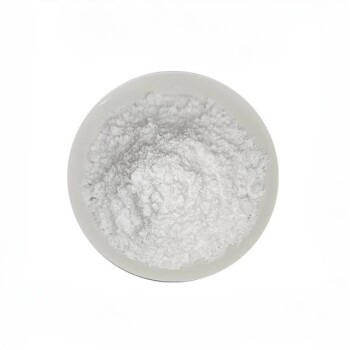
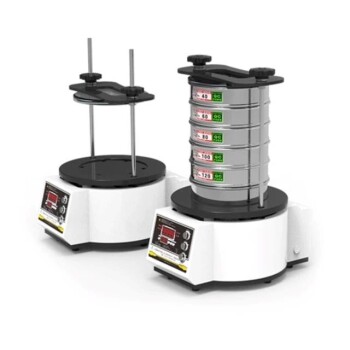
Controlling powder particle size via sieving is the decisive factor in balancing coating density against chemical integrity during raw material preparation. By strictly grading raw materials—such as separating particles smaller than 63 µm from those smaller than 90 µm—you directly dictate the melting behavior and stability of the Ti-Al-V alloy within the plasma flame.
While finer powders facilitate denser coatings, their increased surface area heightens the risk of oxidation and elemental evaporation. Precision sieving is required to maintain the correct alloy composition and prevent ductility loss in the final product.
The Impact on Processing and Microstructure
Regulating Melting Degree
The primary function of sieving is to standardize how particles react to heat.
Strictly graded powders ensure a uniform melting degree when exposed to the plasma flame.
When particle sizes vary too widely, the melting behavior becomes inconsistent, leading to structural defects in the final coating.
achieving Higher Density
The use of finer powder grades (e.g., <63 µm) is generally associated with superior physical structure.
Because these smaller particles melt more thoroughly and pack more efficiently, they typically produce denser coatings.
This reduction in porosity is a key objective for applications requiring high structural integrity.
Understanding the Trade-offs: Composition vs. Structure
The Risk of Oxidation
While finer powders improve density, they introduce a significant chemical vulnerability.
Fine particles possess a high specific surface area relative to their volume.
This increased surface exposure makes the material much more susceptible to oxidation during high-temperature processing, potentially compromising the purity of the alloy.
Elemental Loss and Composition Shift
The most critical risk associated with uncontrolled fine powders is the alteration of the alloy's chemical makeup.
At high plasma temperatures, fine particles are prone to the evaporation of volatile alloying elements, specifically aluminum.
The loss of aluminum shifts the final composition of the Ti-Al-V alloy, which can severely degrade its mechanical properties, particularly ductility.
Making the Right Choice for Your Goal
To optimize your Ti-Al-V alloy preparation, you must select a particle size range that aligns with your specific mechanical requirements.
- If your primary focus is maximizing coating density: Utilize finer particle grades (e.g., <63 µm) to ensure complete melting, but implement strict process controls to mitigate oxidation.
- If your primary focus is preserving ductility and chemical composition: Prioritize coarser grades or strictly limit the fines content to prevent the evaporation of aluminum and excessive oxidation.
Strict control over particle size distribution is the only way to ensure the final alloy performs as designed.
Summary Table:
| Particle Size Range | Coating Density | Oxidation Risk | Elemental Stability (Al) | Primary Benefit |
|---|---|---|---|---|
| Fine (<63 µm) | Very High | High | Low (Risk of Evaporation) | Maximum structural density |
| Coarse (63-90 µm) | Moderate | Low | High | Preservation of ductility |
| Mixed/Ungraded | Inconsistent | Variable | Unpredictable | Not recommended for precision |
Elevate Your Alloy Performance with KINTEK Precision Solutions
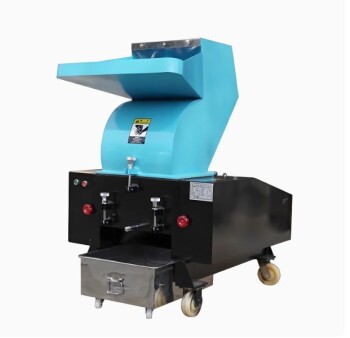
Don't let inconsistent particle sizes compromise your Ti-Al-V alloy integrity. KINTEK specializes in high-performance sieving equipment and crushing systems designed to give you total control over your raw material preparation.
Whether you are aiming for maximum coating density or preserving critical ductility, our comprehensive range of laboratory equipment—including vibratory sieves, hydraulic presses, and high-temperature vacuum furnaces—ensures your materials meet the most rigorous standards.
Ready to optimize your powder metallurgy workflow? Contact KINTEK today to discover how our tailored laboratory solutions can enhance your research and production efficiency.
Related Products
- Three-dimensional electromagnetic sieving instrument
- Laboratory Vibratory Sieve Shaker Machine for Dry and Wet Three-Dimensional Sieving
- Laboratory Test Sieves and Sieving Machines
- Laboratory Test Sieves and Vibratory Sieve Shaker Machine
- Laboratory Vibratory Sieve Shaker Machine Slap Vibrating Sieve
People Also Ask
- Why is sieving equipment essential for the classification of processed bio-activated carbon? Optimize Performance
- What are the limitations of sieving? Understanding the Constraints of Particle Size Analysis
- What are advantages and disadvantages of sieving method? A Guide to Reliable & Cost-Effective Particle Sizing
- How is sieving important? The Critical Role of Particle Size Analysis in Quality Control
- What is sieving and how does it work? A Guide to Accurate Particle Size Analysis