Thermocouple degradation creates a silent measurement drift. As the sensing wire undergoes repeated thermal cycles, its physical properties change, causing the small millivolt signal it generates to shift. This results in a controller readout that remains active but reports a temperature that deviates significantly from the actual conditions inside the furnace.
The most dangerous aspect of thermocouple degradation is not total failure, but inaccurate success. The system may continue to display a stable reading, masking a reality where the actual process temperature is off by more than 100 degrees.
The Mechanics of Sensor Decay
The Impact of Thermal Cycling
The wire used to form a thermocouple is not a permanent fixture; it is a consumable component.
With each thermal cycle (heating up and cooling down), the physical structure of the wire degrades.
This is a cumulative process, meaning the older the sensor is, the more physically altered the wire becomes.
Signal Distortion
Thermocouples function by generating a very specific, small electrical signal relative to temperature.
As the wire degrades, the electrical properties of the metal change, which alters this output signal.
The electronic controller interprets this altered signal based on the original calibration, resulting in an incorrect calculation.
The "Silent Failure" Scenario
The False Sense of Security
Unlike a lightbulb that burns out and goes dark, a degrading thermocouple often continues to function.
The furnace readout will likely still display a temperature, leading operators to believe the system is functioning correctly.
This lack of an obvious "error" or "open circuit" alarm prevents immediate detection of the problem.
The Magnitude of Error
The discrepancy caused by degradation is rarely negligible.
The shift in the electrical signal can lead to massive inaccuracies in the reported temperature.
In severe cases, the actual temperature could be off by more than 100 degrees compared to what the controller is displaying.
Understanding the Trade-offs
Durability vs. Precision
While thermocouples are valued for their ruggedness and ability to withstand high heat, this durability has limits.
The trade-off for their robustness is that they do not fail "safe"—they fail by drifting.
Process Risks
Relying on an old thermocouple introduces a significant variable into your quality control.
If the sensor reads low, you may overheat the product; if it reads high, you may under-process it.
The cost of replacing a sensor is almost always lower than the cost of a batch of ruined product due to a 100-degree error.
Ensuring Measurement Integrity
To mitigate the risks of silent degradation, you must treat thermocouples as wear items rather than permanent infrastructure.
- If your primary focus is critical accuracy: Replace thermocouples on a strict schedule based on the number of thermal cycles, regardless of whether they appear to be working.
- If your primary focus is budget optimization: Implement a routine verification process where a calibrated reference probe checks the furnace temperature to identify drift before it affects production.
Trusting a degrading sensor is a gamble; verification is the only guarantee of accuracy.
Summary Table:
| Aspect of Degradation | Impact on Measurement | Operational Risk |
|---|---|---|
| Thermal Cycling | Alters wire's physical/electrical properties | Cumulative, non-reversible sensor decay |
| Signal Distortion | Shift in millivolt output signal | Controller reports incorrect temperature data |
| Failure Mode | "Silent Failure" (no alarm) | Massive inaccuracies (100°C+) go undetected |
| Process Outcome | Inconsistent heating | Batch failure, product damage, and QC loss |
Secure Your Thermal Precision with KINTEK
Don't let a silent sensor failure compromise your research or production quality. KINTEK provides high-performance laboratory equipment and precision-engineered consumables designed for the most demanding environments. Whether you need reliable high-temperature furnaces, high-pressure reactors, or professional thermal sensors, our experts help you eliminate measurement drift and maintain absolute control.
Our value to you:
- Comprehensive Solutions: From muffle and vacuum furnaces to advanced CVD/PECVD systems.
- Reliable Consumables: High-quality ceramics, crucibles, and replacement sensors to prevent process variability.
- Expert Support: Specialized equipment tailored for battery research, crushing, milling, and hydraulic pressing.
Ensure your laboratory's integrity today. Contact KINTEK for expert advice and reliable equipment solutions!
Related Products
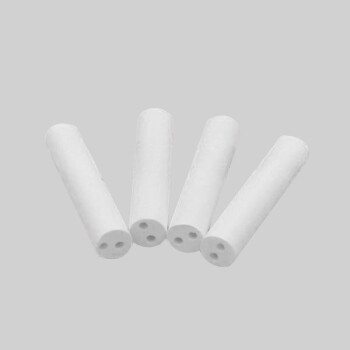
- Hexagonal Boron Nitride HBN Thermocouple Protection Tube
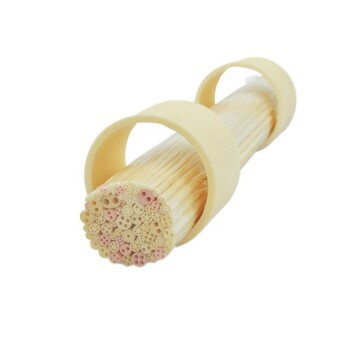
- High Temperature Aluminum Oxide (Al2O3) Protective Tube for Engineering Advanced Fine Ceramics
People Also Ask
- Why are Boron Nitride Tubes selected as reaction vessels for Na3SbS4? Ensure Purity in High-Temp Synthesis
- What are the symptoms of a bad thermocouple? Diagnose a Pilot Light That Won't Stay Lit
- What information does a thermocouple at the substrate bottom provide in LCVD? Master Precise Temperature Control
- What are the specific temperature control requirements for high-precision thermocouples? Achieve ±0.3°C Precision
- What is the most common type of temperature sensor? The Unmatched Versatility of Thermocouples