Strategic spatial orientation is the key to achieving uniform electrode composition. During the phosphidation of NiFeP/NF, the phosphorus source (typically sodium hypophosphite) must be placed at the upstream end of the furnace, while the nickel-iron precursors are situated downstream. This specific arrangement utilizes the carrier gas to transport generated phosphine ($PH_3$) vapor directly and consistently over the sample surfaces, ensuring a thorough chemical transformation into high-performance electrodes.
Core Takeaway: The precise placement of ceramic boats creates a controlled gas-solid phase reaction environment where the carrier gas acts as a delivery vehicle for reactive vapors. This layout is non-negotiable for producing self-supporting electrodes with uniform electrochemical properties and high crystalline purity.
The Mechanics of Directional Phosphidation
Strategic Upstream Source Positioning
Placing the phosphorus source, such as sodium hypophosphite, at the upstream end ensures that as it thermally decomposes, the resulting vapors are immediately captured by the carrier gas. This creates a continuous, concentrated stream of reactant that moves toward the target material.
Downstream Sample Uniformity
The NiFeP/NF samples are positioned downstream to act as the "receiver" in this gas-flow dynamic. This setup ensures that the phosphine gas is carried uniformly across the entire surface area of the foam, preventing localized areas of incomplete phosphidation.
Spatial Control of Reaction Kinetics
By separating the phosphorus source and the metal precursor into independent ceramic boats, researchers can precisely regulate the diffusion paths. This spatial distribution allows for better control over the reaction rate and the final crystallinity of the NiFeP/NF structure.
Ceramic Boats as a Reaction Environment
Chemical Inertness at High Temperatures
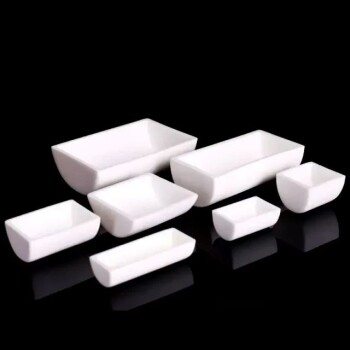
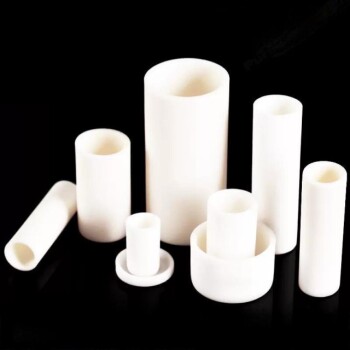
Ceramic boats are selected for their high-temperature tolerance and chemical stability. During a typical 350 °C reaction, the ceramic material remains inert, ensuring that no impurities from the container leach into the phosphorus source or the synthesizing NiFeP/NF electrode.
Maximizing Gas-Solid Contact
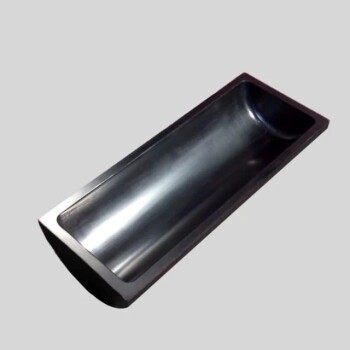
The flat geometry of a ceramic boat is a functional design choice rather than a matter of convenience. A wide, flat surface area maximizes the contact between the raw materials and the gas phase, facilitating a more efficient and rapid phosphorization process.
Maintaining Sample Purity
Because ceramic does not react with phosphorus pentasulfide vapor or metal catalysts, it acts as a neutral staging ground. This preserves the integrity of the NiFeP/NF electrodes, which is critical for maintaining high performance in electrochemical applications.
Understanding the Trade-offs and Constraints
The Impact of Inter-Boat Distance
While upstream/downstream placement is vital, the distance between the boats represents a critical trade-off. Placing them too far apart may result in gas dilution or cooling, while placing them too close can cause turbulent flow that results in uneven coating.
Carrier Gas Flow Rate Sensitivity
The effectiveness of boat placement is entirely dependent on the carrier gas velocity. If the flow rate is too low, the phosphorus vapor may deposit on the furnace walls before reaching the sample; if too high, the vapor may pass over the sample too quickly to react.
Material Saturation Risks
In a downstream configuration, the leading edge of the NiFeP/NF sample may encounter a higher concentration of phosphorus than the trailing edge. This requires careful calibration of the reactant quantity to ensure the entire downstream boat is saturated with enough vapor for a complete reaction.
How to Apply This to Your Synthesis Process
Successful phosphidation requires more than just the correct temperature; it requires a mastery of the furnace's internal geography.
- If your primary focus is Maximum Uniformity: Ensure the sample boat is placed in the center of the furnace's "hot zone" while the phosphorus source remains upstream at the edge of the heating element.
- If your primary focus is High Crystallinity: Use independent boats for each reactant to prevent premature solid-state reactions and rely strictly on controlled gas-phase transport.
- If your primary focus is Scalability: Utilize flat, wide ceramic boats to increase the surface-to-volume ratio, ensuring that phosphine gas can penetrate even large-scale NF templates.
Proper spatial configuration transforms a standard thermal treatment into a precision engineering process for high-performance electrodes.
Summary Table:
| Factor | Strategic Placement | Function in Phosphidation |
|---|---|---|
| Phosphorus Source | Upstream | Vaporizes and is carried by gas flow toward the sample. |
| NiFe Precursors | Downstream | Acts as the receiver for uniform gas-solid phase reaction. |
| Ceramic Boat | Hot Zone | Provides an inert, high-temperature environment for purity. |
| Carrier Gas | Flowing Up to Down | Transports $PH_3$ vapor directly to the electrode surface. |
Elevate Your Material Synthesis with KINTEK
Achieving precise, uniform results in phosphidation requires more than just the right process—it requires the right equipment. KINTEK specializes in high-performance laboratory solutions, offering a comprehensive range of tube furnaces (CVD, PECVD, atmosphere) and high-purity ceramic boats and crucibles designed to withstand rigorous thermal environments.
Whether you are developing next-generation NiFeP/NF electrodes or scaling up battery research, our muffle furnaces, vacuum systems, and precision consumables ensure the consistency your research demands.
Ready to optimize your lab’s efficiency? Contact KINTEK today to discover how our high-temperature solutions can transform your material engineering outcomes.
References
- Qixian Han, Lian Gao. Self-Standing Hierarchical Porous Nickel-Iron Phosphide/Nickel Foam for Long-Term Overall Water Splitting. DOI: 10.3390/catal13091242
This article is also based on technical information from Kintek Solution Knowledge Base .
Related Products
- Alumina Al2O3 Ceramic Crucible Semicircle Boat with Lid for Engineering Advanced Fine Ceramics
- Aluminized Ceramic Evaporation Boat for Thin Film Deposition
- Ceramic Evaporation Boat Set Alumina Crucible for Laboratory Use
- Boron Nitride (BN) Ceramic Plate
- Engineering Advanced Fine Ceramics Alumina Al2O3 Crucible With Lid Cylindrical Laboratory Crucible
People Also Ask
- Why are alumina crucibles and mother powder essential for LATP sintering? Optimize Your Solid Electrolyte Performance
- Why are high-purity alumina crucibles used for liquid lead corrosion experiments? Ensure Data Accuracy at 550°C
- Why Use Alumina Crucibles & Powder Burial for NaSICON? Ensure Phase Purity and Prevent Elemental Volatilization
- What is the primary purpose of using alumina crucibles for LLTO ceramics? Optimize Your High-Temperature Sintering
- What are the benefits of using an alumina crucible with a lid for TiB2 nanopowder heat treatment? Ensure High Purity