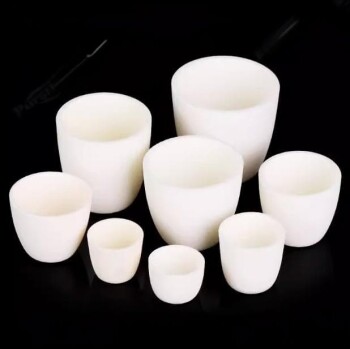
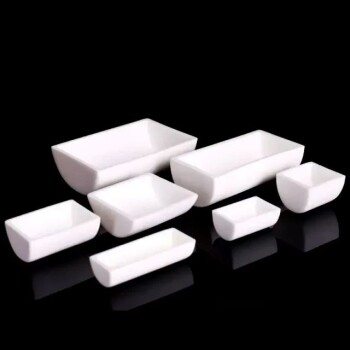
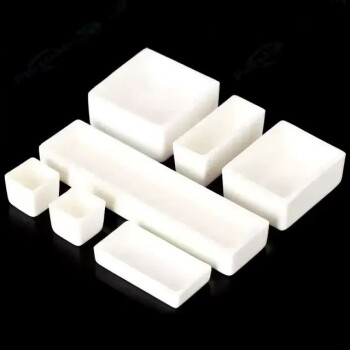
The alumina crucible serves as a chemically inert, structural barrier. During the calcination of LLZTBO solid electrolyte precursor powders at 800°C, its primary role is to act as a stable containment vessel. It withstands the 15-hour high-temperature cycle without reacting with the precursor mix, thereby preventing container-induced contamination.
Core Takeaway In solid-state synthesis, the vessel must be invisible to the chemical process. The alumina crucible achieves this by providing exceptional thermal stability and chemical inertness, ensuring the synthesized LLZTBO electrolyte retains the strict purity and stoichiometry required for high ionic conductivity.
Thermal and Structural Integrity
Withstanding Prolonged Heat Treatment
The synthesis of LLZTBO requires a solid-state reaction at 800°C for a duration of 15 hours. The alumina crucible possesses high-temperature resistance well beyond this point. It maintains its physical shape and structural rigidity throughout the prolonged heating cycle, ensuring the powder remains safely contained without the risk of the vessel softening or collapsing.
Stability in Oxidizing Atmospheres
Calcination typically occurs in an oxidizing environment (air or oxygen). Alumina is naturally stable in these conditions. Unlike metallic vessels that might oxidize or degrade, the alumina crucible remains unaffected by the atmosphere, ensuring a consistent thermal environment for the precursors inside.
Preserving Chemical Purity
Preventing Diffusion and Reaction
The most critical role of the crucible is to prevent chemical interaction between the vessel wall and the reactive precursor powders. At 800°C, many materials become reactive. The alumina crucible acts as a neutral boundary, preventing elements from the container (such as aluminum) from diffusing into the LLZTBO mixture.
Ensuring Stoichiometric Accuracy
For solid electrolytes like LLZTBO, performance depends on an exact ratio of elements (stoichiometry). By preventing reactions with the container, the alumina crucible ensures that no active ingredients (like Lithium salts) are lost to the vessel walls. This guarantees that the final synthesized product matches the intended chemical formula without impurities.
Understanding the Trade-offs
The Necessity of High-Purity Alumina
While alumina is generally inert, the quality of the crucible itself matters. For sensitive electrolytes, one must utilize high-purity alumina. Lower-grade crucibles may contain binders or trace contaminants (like silica or iron) that could leach into the powder at 800°C, negating the benefits of the material.
Thermal Shock Sensitivity
While chemically stable, alumina ceramic can be sensitive to rapid temperature changes. Operators must control the heating and cooling rates of the furnace. Rapid quenching could crack the crucible, potentially spilling the sample or exposing it to furnace heating elements.
Making the Right Choice for Your Goal
When setting up your calcination process for solid electrolytes, apply these principles:
- If your primary focus is Chemical Purity: Ensure the crucible is made of high-purity alumina to prevent the diffusion of trace contaminants into the electrolyte lattice.
- If your primary focus is Process Stability: Rely on alumina’s ability to withstand long dwell times (15+ hours) at 800°C without physical deformation or softening.
Ultimate success in LLZTBO synthesis relies on treating the crucible not just as a cup, but as a critical component in the chemical equation—one selected specifically for its refusal to participate in the reaction.
Summary Table:
| Feature | Benefit for LLZTBO Calcination |
|---|---|
| High-Temp Resistance | Withstands 800°C for 15+ hours without structural deformation. |
| Chemical Inertness | Prevents diffusion of contaminants and ensures stoichiometric accuracy. |
| Oxidation Stability | Remains stable in air/oxygen atmospheres during the solid-state reaction. |
| Material Purity | High-purity alumina (99%+) eliminates leaching of silica or iron into powders. |
Elevate Your Solid-State Synthesis with KINTEK Precision
Achieving the perfect stoichiometry for LLZTBO electrolytes requires more than just high temperatures—it demands uncompromising purity. KINTEK specializes in premium laboratory equipment and consumables designed for advanced material research. From high-purity alumina crucibles and ceramics to precision muffle and tube furnaces, we provide the tools necessary to ensure your chemical processes remain uncontaminated.
Whether you are scaling up battery research with our high-pressure reactors or refining powders with our milling and sieving systems, KINTEK delivers the durability and thermal stability your lab requires. Contact us today to discuss your specific calcination requirements and discover how our comprehensive range of laboratory solutions can enhance your research outcomes.
Related Products
- Arc-Shaped Alumina Ceramic Crucible High Temperature Resistant for Engineering Advanced Fine Ceramics
- Alumina Al2O3 Ceramic Crucible Semicircle Boat with Lid for Engineering Advanced Fine Ceramics
- Engineering Advanced Fine Ceramics Alumina Crucibles (Al2O3) for Thermal Analysis TGA DTA
- Engineering Advanced Fine Ceramics Alumina Al2O3 Crucible With Lid Cylindrical Laboratory Crucible
- Engineering Advanced Fine Alumina Al2O3 Ceramic Crucible for Laboratory Muffle Furnace
People Also Ask
- Why Use Alumina Crucibles & Powder Burial for NaSICON? Ensure Phase Purity and Prevent Elemental Volatilization
- What is the primary purpose of using alumina crucibles for LLTO ceramics? Optimize Your High-Temperature Sintering
- Why are alumina crucibles and mother powder essential for LATP sintering? Optimize Your Solid Electrolyte Performance
- Why are high-purity alumina crucibles used for liquid lead corrosion experiments? Ensure Data Accuracy at 550°C
- Primary considerations for choosing alumina crucibles and quartz tubes in indium intercalation: Ensure Material Purity