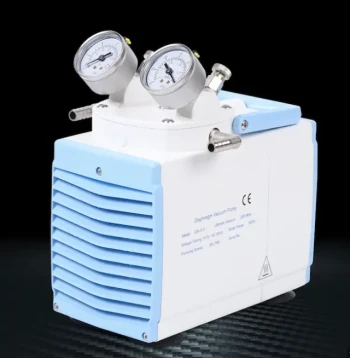
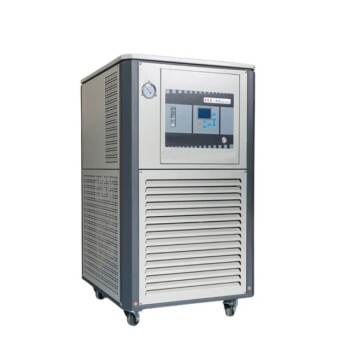
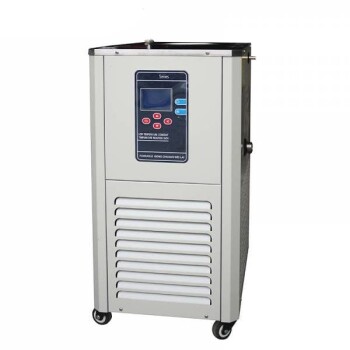
In the processing of experimental hydrogen production residues, a circulating water vacuum pump acts as the critical engine for efficient solid-liquid separation. Its primary function is to generate stable negative pressure for a Buchner funnel filtration system. This suction rapidly isolates solid reaction byproducts from salt solutions, preparing materials like magnesium hydroxide and aluminum hydroxide for necessary washing, drying, and micro-morphological analysis.
Core Takeaway While gravity alone is often insufficient for processing dense chemical residues, this pump accelerates the workflow by creating a vacuum seal. It serves as the foundational tool that transforms a slurry of byproducts into clean, analyzable solid samples.
The Role of the Pump in Residue Processing
Powering the Buchner Funnel System
The pump is connected directly to a filtration setup, typically utilizing a Buchner funnel.
By evacuating air from the collection flask, the pump creates a pressure differential. This forces the liquid salt solution through the filter medium much faster than gravity allows, leaving the solid residues behind.
Isolating Reaction Byproducts
In hydrogen production experiments, specific byproducts such as magnesium hydroxide and aluminum hydroxide must be recovered.
The pump's consistent vacuum ensures these solids are effectively separated from the surrounding liquid matrix. This separation is the prerequisite for all subsequent experimental steps.
Enabling Downstream Analysis
Once separated, the residues must be washed to remove impurities and dried.
The thoroughness of the vacuum filtration ensures the solids are sufficiently dry and clean for high-precision testing. This allows researchers to accurately study the micro-morphology and phase structure of the material without interference from residual solution.
How the Mechanism Supports the Application
The "Water Ring" Principle
The pump operates using water as its working medium, housed in a cylindrical casing with an eccentrically mounted impeller.
As the impeller rotates, centrifugal force pushes the water against the walls, creating a swirling water ring. This formation creates a seal that facilitates the suction needed for filtration.
Handling Hazardous Gases
Because the compression of gas within the pump is nearly isothermal (constant temperature), the risk of igniting flammable gases is significantly reduced.
This is particularly relevant in hydrogen production contexts, where trace amounts of explosive gas may be present. The water acts as a heat sink, ensuring safe operation.
Tolerance for Impurities
Unlike pumps with internal friction surfaces or exhaust valves, this design can effectively handle dusty gases and gas-water mixtures.
This makes it ideal for residue processing, where moisture and particulate matter are inevitably drawn into the vacuum line during filtration.
Understanding Operational Trade-offs
Water Quality Degradation
The water in the tank is susceptible to contamination by corrosive gases extracted during the process.
This can deteriorate water quality and generate bubbles, which negatively impacts the vacuum degree. You must change the water frequently to maintain performance.
Efficiency vs. Versatility
While these pumps are highly versatile and safe for hazardous mixtures, they generally offer lower efficiency compared to other vacuum pump types.
You are trading raw power for the ability to safely handle moisture, dust, and flammable byproducts.
Environmental Vulnerabilities
The pump is sensitive to environmental conditions, particularly freezing temperatures.
During cold seasons, you must drain the medium after use. Failure to do so can lead to frost cracking, permanently damaging the equipment.
Optimizing Your Filtration Setup
To get the best results when processing experimental residues, align your operation with these specific goals:
- If your primary focus is Separation Speed: Ensure the system is airtight by winding extra sealing rings around the suction filter head if necessary.
- If your primary focus is Sample Purity: Change the circulating water frequently to prevent corrosive gases from re-entering the system or reducing vacuum stability.
- If your primary focus is Safety: Utilize the pump's circulating cooling water outlet to manage the temperature of external devices connected to the process.
By maintaining clean working fluid and a sealed system, you ensure the consistent negative pressure required for precise residue analysis.
Summary Table:
| Feature | Function in Residue Processing | Benefit to Researcher |
|---|---|---|
| Negative Pressure Generation | Powers Buchner funnel filtration systems | Rapidly isolates solids from salt solutions |
| Isothermal Compression | Maintains constant temperature during suction | Safely handles trace flammable hydrogen gases |
| Particle Tolerance | Manages gas-water mixtures and dusty gases | Ideal for slurries with high particulate matter |
| Water Ring Seal | Creates vacuum without internal friction | Low maintenance when processing moist residues |
| Versatility | Supports washing and drying preparation | Ensures clean samples for micro-morphological analysis |
Maximize Your Lab’s Efficiency with KINTEK
Precision in hydrogen research requires reliable vacuum solutions and high-performance equipment. KINTEK specializes in advanced laboratory tools, offering everything from circulating water vacuum pumps and hydraulic presses for sample preparation to high-temperature furnaces (muffle, tube, vacuum) and high-pressure reactors for hydrogen production experiments.
Whether you are processing chemical residues or analyzing micro-morphology, our comprehensive portfolio—including PTFE consumables, ceramics, and cooling solutions—ensures your research remains safe and accurate.
Ready to upgrade your experimental setup? Contact KINTEK today to find the perfect solution for your lab!
References
- Olesya A. Buryakovskaya, А. О. Дудоладов. Waste to Hydrogen: Elaboration of Hydroreactive Materials from Magnesium-Aluminum Scrap. DOI: 10.3390/su14084496
This article is also based on technical information from Kintek Solution Knowledge Base .
Related Products
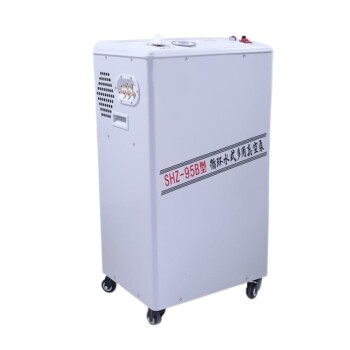
- Laboratory Vertical Water Circulating Vacuum Pump for Lab Use
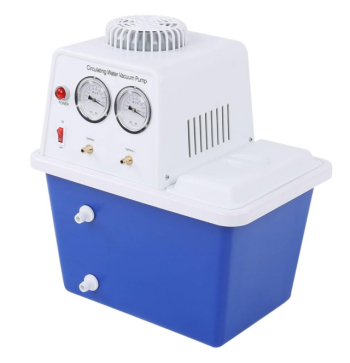
- Circulating Water Vacuum Pump for Laboratory and Industrial Use
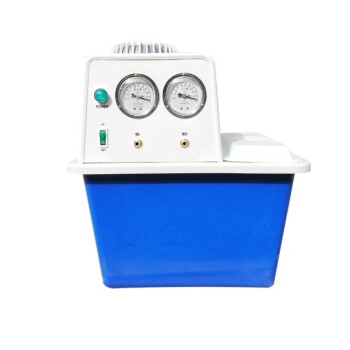
- Laboratory Benchtop Water Circulating Vacuum Pump for Lab Use
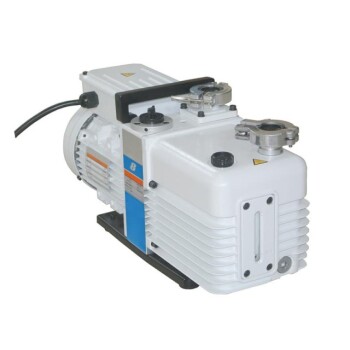
- Laboratory Rotary Vane Vacuum Pump for Lab Use
- Oil Free Diaphragm Vacuum Pump for Laboratory and Industrial Use
People Also Ask
- What are the advantages of a water circulating vacuum pump? Superior Durability for Demanding Lab Environments
- How does the impeller rotation affect the gas flow in a water circulating vacuum pump? A Guide to the Liquid Ring Principle
- What determines the vacuum degree achievable by a water circulating vacuum pump? Unlock the Physics of Its Limits
- Why is a water circulating vacuum pump suitable for handling flammable or explosive gases? Inherent Safety Through Isothermal Compression
- How does a water circulating vacuum pump operate? Discover the Efficient Liquid Piston Principle