The performance of a vacuum pump is fundamentally defined by two critical metrics.
The first is the ultimate pressure rating, which indicates the lowest pressure (or deepest vacuum) the pump can achieve, typically measured in Torr, mBar, or Pascals. The second is the pumping speed, representing the volume of gas the pump can remove per unit of time, expressed in CFM (cubic feet per minute), Liters per minute, or cubic meters per hour.
While specifications provide a baseline, true performance is determined by the balance between maximum vacuum and maximum flow rate relative to your specific application. Optimizing this relationship maximizes efficiency while preventing sample loss or equipment damage.
Understanding the Primary Metrics
Ultimate Pressure Rating
This metric defines the "floor" of the pump's capabilities. It represents the absolute lowest pressure the pump can maintain under ideal conditions.
In vacuum technology, a lower number indicates better performance regarding ultimate pressure. For example, a pump rated for 0.01 mBar creates a stronger vacuum than one rated for 10 mBar.
Pumping Speed
Pumping speed measures the "muscle" of the unit or its volumetric flow rate. This figure determines how quickly the pump can evacuate a specific vessel to reach the desired pressure.
This metric is directly dictated by the scale of your operation. Small laboratory setups require significantly lower pumping speeds than kilolab or pilot plant operations, which must displace massive volumes of air and solvent vapors.
The Critical Relationship: Vacuum vs. Flow
Balancing for Efficiency
The most important factor in real-world performance is the relationship between the pump's maximum vacuum and its flow rate. You must balance these factors to match your specific laboratory needs.
Operational Impact
Properly tuning this balance is essential for processes like evaporation. If the vacuum is too strong or the flow too aggressive for the sample, you risk sample loss through bumping or impacts. Conversely, insufficient performance leads to slow evaporation rates and process inefficiencies.
Validating Performance in the Lab
Routine Verification Steps
To ensure your pump is performing to its specifications, you should conduct a monthly performance check after completing daily and weekly maintenance. Close the gas ballast cap and attach an accurate vacuum gauge with a resolution of 1 mbar or better.
Interpreting the Results
Measure the pump's ultimate vacuum against its factory specifications. A healthy pump should read at or below 10 mbar above its specified vacuum level.
If the reading is more than 15 mbar above the specified level, or if the unit is unusually noisy, the pump has failed the performance test. It should be removed from service immediately and inspected by a technician.
Understanding the Trade-offs
Application Suitability vs. Raw Power
More power is not always better. Different tasks require vastly different vacuum levels; for example, simple filtration requires significantly less vacuum than complex molecular distillation.
Selecting a pump that is overpowered for a delicate task can be just as problematic as under-specifying a pump for a heavy-duty application.
Material Compatibility vs. Cost
Performance is also measured by longevity in your specific environment. If you frequently process corrosive materials, a standard-duty pump will degrade quickly, regardless of its initial pressure ratings.
Investing in a corrosion-resistant pump may be more expensive initially, but it is often the only way to maintain consistent performance and avoid frequent replacement costs.
Making the Right Choice for Your Goal
To select or evaluate the right pump, you must map the performance metrics to your specific objective:
- If your primary focus is speed and scale: Prioritize Pumping Speed. Higher flow rates are required to evacuate large volumes in pilot plants or kilolabs efficiently.
- If your primary focus is high-purity isolation: Prioritize Ultimate Pressure. Applications like molecular distillation require the deepest possible vacuum levels to function correctly.
- If your primary focus is long-term reliability: Prioritize Chemical Compatibility. Ensure the pump materials can withstand your solvents to prevent performance degradation over time.
True performance is achieved only when the pump's capabilities are perfectly aligned with the physics of your application.
Summary Table:
| Metric | Unit of Measurement | Description | Key Performance Indicator |
|---|---|---|---|
| Ultimate Pressure | Torr, mBar, Pa | The deepest vacuum/lowest pressure achievable. | Lower value = Higher vacuum strength. |
| Pumping Speed | CFM, L/min, m³/h | Volumetric flow rate of gas removal. | Higher value = Faster vessel evacuation. |
| Verification | mBar | Comparison of current vs. factory specs. | Failure if >15 mbar above specification. |
Maximize Your Lab’s Vacuum Performance with KINTEK
Don't let mismatched equipment slow down your research or risk sample loss. KINTEK provides high-precision laboratory solutions tailored to your specific vacuum and thermal needs. From advanced high-temperature furnaces and reactors to precision crushing, milling, and hydraulic press systems, we ensure your equipment is perfectly aligned with your application's physics.
Why choose KINTEK?
- Comprehensive Range: Specialized in everything from rotary and vacuum furnaces to high-pressure autoclaves and battery research tools.
- Expert Support: We help you balance ultimate pressure and pumping speed for maximum efficiency.
- Durability Focused: Our portfolio includes corrosion-resistant consumables like PTFE products, ceramics, and crucibles to ensure long-term reliability.
Ready to upgrade your laboratory setup? Contact our technical experts today to find the ideal vacuum or thermal solution for your pilot plant or research facility!
Related Products
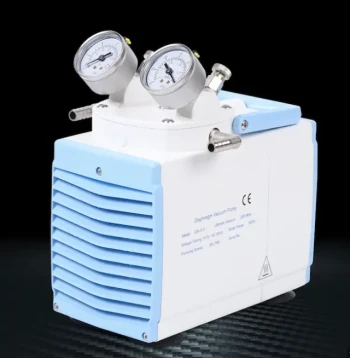
- Oil Free Diaphragm Vacuum Pump for Laboratory and Industrial Use
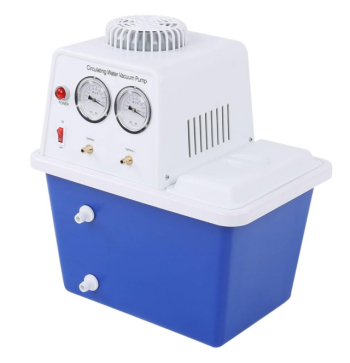
- Circulating Water Vacuum Pump for Laboratory and Industrial Use
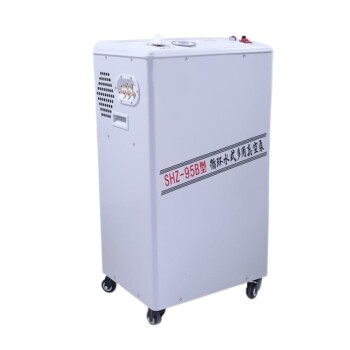
- Laboratory Vertical Water Circulating Vacuum Pump for Lab Use
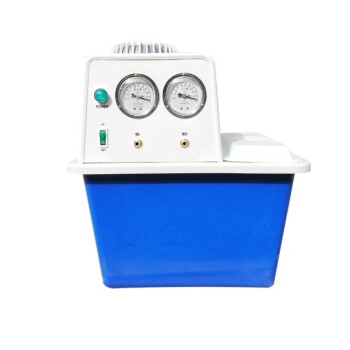
- Laboratory Benchtop Water Circulating Vacuum Pump for Lab Use
- Laboratory Rotary Vane Vacuum Pump for Lab Use
People Also Ask
- What are some typical applications for oil-free diaphragm vacuum pumps? Ensure Process Purity in Your Lab
- What is an oil-free diaphragm vacuum pump? The Ultimate Guide to Clean, Low-Maintenance Vacuum
- How does an oil-free diaphragm vacuum pump work? A Guide to Clean, Contamination-Free Vacuum
- What are the advantages of using oil-free diaphragm vacuum pumps? Achieve Clean, Low-Maintenance Vacuum
- What factors should be considered when selecting an oil-free diaphragm vacuum pump? A Guide to Optimal Performance & Longevity