To mitigate the poor thermal-shock resistance of pure alumina, the standard technical solution is the addition of silica to the refractory formulation. This process typically results in the formation of an alumino-silicate compound, which fundamentally alters the material's microstructure to better withstand rapid temperature fluctuations.
Pure alumina is exceptionally hard but inherently brittle when subjected to sudden temperature changes. By introducing silica to form alumino-silicates, engineers create a material matrix that dissipates thermal stress more effectively, preventing catastrophic structural failure.
The Challenge of Pure Alumina
Why High Purity Creates Vulnerability
Pure alumina ($Al_2O_3$) is valued for its high melting point and chemical inertness.
However, it possesses a relatively high coefficient of thermal expansion. This means it expands and contracts significantly when heated or cooled.
The Mechanics of Thermal Shock
When a material with high thermal expansion is exposed to rapid temperature changes, internal stresses develop unevenly.
In pure alumina, the material cannot distribute these stresses quickly enough. This inability leads to the rapid propagation of cracks and, ultimately, the fracture of the refractory component.
The Alumino-Silicate Solution
Modifying the Formulation
To counteract brittleness, manufacturers combine pure alumina with silica ($SiO_2$).
This is not merely a physical mixture; at high processing temperatures, these oxides react chemically.
Creating a Stress-Resistant Bond
This reaction forms an alumino-silicate compound.
The introduction of this compound modifies the thermal expansion properties of the overall matrix. It acts as a bonding phase that arrests crack propagation, allowing the refractory to endure cyclic heating and cooling without shattering.
Understanding the Trade-offs
Thermal Stability vs. Chemical Resistance
While adding silica solves the thermal shock problem, it introduces a new variable: chemical vulnerability.
Pure alumina is highly resistant to corrosive environments. Alumino-silicates, however, may be more susceptible to attack by certain corrosive agents, such as alkali slags or vapors.
Operating Temperature Limits
The addition of silica can slightly lower the maximum service temperature of the refractory compared to ultra-high purity alumina.
You must ensure that the resulting alumino-silicate compound can still withstand the peak temperatures of your specific application.
Making the Right Choice for Your Goal
When selecting a refractory material, you must balance mechanical stability against thermal endurance.
- If your primary focus is resisting thermal shock: Choose an alumino-silicate formulation to ensure the material survives rapid heating and cooling cycles.
- If your primary focus is extreme chemical inertness: Stick to high-purity alumina, but implement strict controls to manage temperature changes very slowly.
By strategically introducing silica, you transform a brittle ceramic into a robust industrial material capable of surviving the harshest thermal environments.
Summary Table:
| Property | Pure Alumina (Al2O3) | Alumino-Silicate (Alumina + Silica) |
|---|---|---|
| Thermal Shock Resistance | Poor (Brittle) | Enhanced (Stress-Resistant) |
| Thermal Expansion | High | Modified/Balanced |
| Chemical Inertness | Very High | Moderate (Susceptible to Alkalis) |
| Max Service Temp | Extremely High | Slightly Reduced |
| Best Use Case | Stable, Corrosive Environments | Cyclic Heating/Cooling Processes |
Elevate Your Laboratory Precision with KINTEK
Don't let thermal shock compromise your research or production efficiency. KINTEK specializes in advanced laboratory equipment and high-performance consumables designed to withstand the most demanding thermal environments.
Whether you require high-temperature muffle, tube, or vacuum furnaces for precise heat treatment, or specialized ceramics and crucibles that balance chemical inertness with thermal durability, we have the expertise to support your goals. Our comprehensive range also includes high-pressure reactors, hydraulic presses, and battery research tools tailored for industrial and scientific excellence.
Ready to optimize your material performance? Contact KINTEK today to discover how our high-quality alumina and alumino-silicate solutions can enhance your lab's productivity.
Related Products
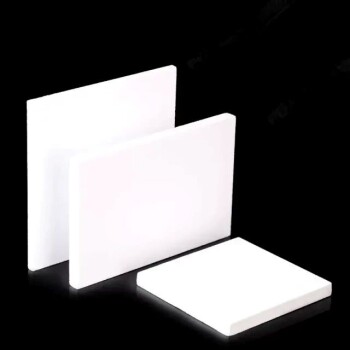
- High Temperature Wear-Resistant Alumina Al2O3 Plate for Engineering Advanced Fine Ceramics
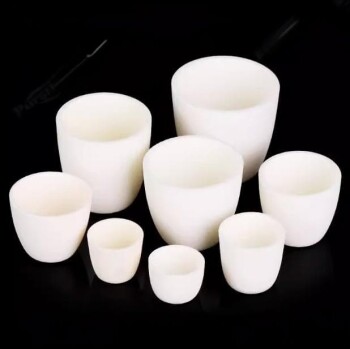
- Arc-Shaped Alumina Ceramic Crucible High Temperature Resistant for Engineering Advanced Fine Ceramics
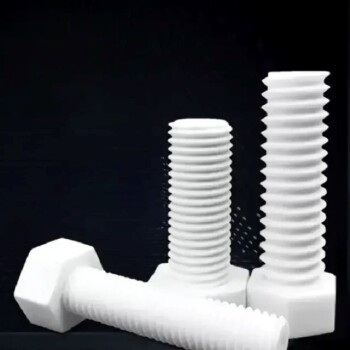
- High Quality Alumina Ceramic Screw for Engineering Advanced Fine Ceramics with High Temperature Resistance and Insulation
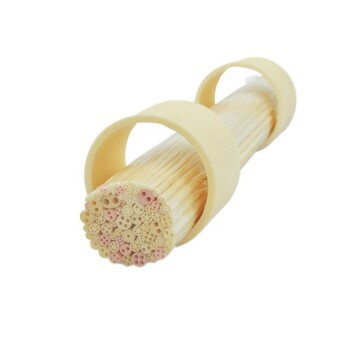
- High Temperature Aluminum Oxide (Al2O3) Protective Tube for Engineering Advanced Fine Ceramics
- Engineering Advanced Fine Ceramics Alumina Al2O3 Crucible With Lid Cylindrical Laboratory Crucible
People Also Ask
- What are the process advantages of selecting an alumina plate for CuO nanofilm synthesis? Achieve Superior Purity
- What function do alumina ceramic plates serve as supports in the preparation of molecular sieve membranes?
- How is alumina ceramic made? A Guide to Manufacturing Methods and Material Properties
- Why use high-purity alumina plates for sintering porous stainless steel? Ensure Purity & Precision
- What is the function of alumina setter plates for LATP? Protect Material Purity & Prevent Adhesion