Immediate cleaning and meticulous environmental control are the definitive requirements for maintaining an in-situ Raman electrolytic cell. You must sanitize the electrodes and reaction vessel immediately following every experiment, while strictly controlling storage conditions to prevent oxidation and impurity buildup.
Core Takeaway The integrity of your spectroscopic data relies on preventing surface contamination and oxidation; this requires a regimen of immediate post-experiment cleaning, regular electrolyte replacement, and storing disassembled components in a dry, dark environment.
The Cleaning Protocol
Immediate Action is Critical
You must clean the electrodes and the reaction vessel immediately after each experiment. allowing reactants to sit risks permanent surface contamination or corrosion, which will distort future Raman spectra.
Cleaning the Reaction Vessel
For the cell walls, use a three-step solvent process. Scrub the inner wall with acetone, followed by a rinse with ethanol.
Finish by rinsing thoroughly with ultrapure water (resistivity of at least 18.2 MΩ·cm) to ensure no solvent residues remain.
Cleaning the Electrodes
Electrodes require a more delicate approach depending on their material. For noble metal electrodes (like platinum), soak them in a dilute acid (e.g., 1M nitric acid) to strip reaction products.
Follow the acid soak with a thorough rinse using deionized water. Never use metal brushes during this process, as scratches will alter the electrode's active surface area and electrochemical behavior.
Storage and Preservation
Short-Term Storage
Between frequent uses, ensure all components are completely dry. Store the cell and electrodes in a non-humid environment to prevent atmospheric moisture from degrading the connections or surfaces.
Long-Term Preservation
If the cell will not be used for an extended period, you must disassemble the cell completely. Do not leave electrodes installed in the vessel.
Store the electrodes in a dark place to prevent light-induced degradation. It is vital to avoid prolonged contact with air or water during storage; consider using an oxygen-free environment or a protective antioxidant solution for metals prone to oxidation.
Operational Maintenance
Electrolyte Management
Change the electrolyte periodically based on your usage frequency. Old electrolytes accumulate impurities that can cause side reactions or introduce noise into your Raman signal.
Electrode Surface Inspection
Inspect electrode surfaces for wear, deformation, or corrosion before and after every use. Even microscopic damage can cause uneven current distribution.
Regularly polish and calibrate electrodes to maintain electrical conductivity, but do so gently.
Common Pitfalls and Safety
Avoid Chemical Conflicts
When cleaning, be hyper-aware of chemical compatibility. Never mix incompatible acids and bases, such as nitric acid (HNO₃) and sodium hydroxide (NaOH), during the cleaning process.
Voltage and Polarity
Ensure the correct polarity of the anode and cathode before powering the workstation to avoid reverse connection damage. Avoid applying excessively high voltage, which can decompose the electrolyte or physically destroy the electrode surface.
Handling Fragility
The in-situ Raman cell has a complex, fragile structure designed for optical alignment. Handle it with extreme gentleness during assembly and disassembly to avoid misalignment or breakage.
Making the Right Choice for Your Goal
To maximize the value of your equipment, tailor your maintenance focus to your immediate needs:
- If your primary focus is Data Accuracy: Prioritize the use of ultrapure water and fresh electrolytes to eliminate background noise in your spectra.
- If your primary focus is Equipment Longevity: Focus on disassembly and dark storage, ensuring electrodes are never left exposed to humid air for prolonged periods.
Treat your electrolytic cell not just as a container, but as a precision optical instrument.
Summary Table:
| Maintenance Type | Action Required | Key Frequency |
|---|---|---|
| Cleaning | Three-step solvent (Acetone, Ethanol, Ultrapure Water) | Immediately after every experiment |
| Electrodes | Dilute acid soak (for noble metals) & gentle rinse; no metal brushes | Post-experiment and periodic calibration |
| Storage | Disassemble, dry thoroughly, and store in a dark, dry environment | Long-term or between frequent uses |
| Inspection | Check for wear, deformation, or corrosion | Before and after every use |
| Electrolyte | Periodic replacement to prevent impurity buildup | Based on usage frequency |
Precision in spectroscopy starts with high-quality instrumentation and expert care. KINTEK specializes in advanced laboratory equipment, offering high-performance electrolytic cells and electrodes specifically designed for demanding research environments. Whether you are conducting battery research, material analysis, or complex electrochemical studies, our comprehensive portfolio—including high-temperature furnaces, hydraulic presses, and specialized consumables—is engineered for durability and accuracy. Enhance your lab's data integrity and equipment lifespan today. Contact KINTEK for expert solutions and high-quality consumables!
Related Products
- Electrolytic Electrochemical Cell for Coating Evaluation
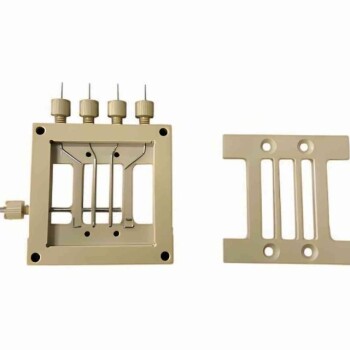
- Thin-Layer Spectral Electrolysis Electrochemical Cell
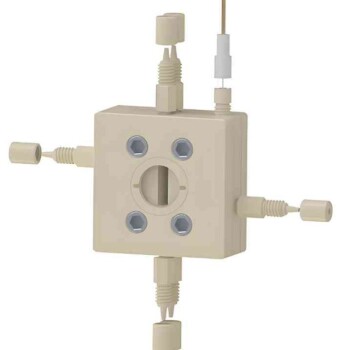
- Electrolytic Electrochemical Cell with Five-Port
- Electrolytic Electrochemical Cell Gas Diffusion Liquid Flow Reaction Cell
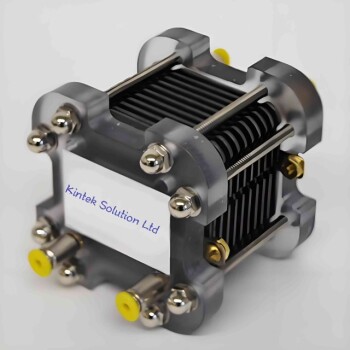
- Customizable PEM Electrolysis Cells for Diverse Research Applications
People Also Ask
- What is the volume range of the coating evaluation electrolytic cell? A Guide to Choosing the Right Size
- How does the design of an electrochemical electrolytic cell influence the coating uniformity? Optimize Your Catalysts
- What is the correct shutdown and disassembly procedure after an experiment? Ensure Safety and Protect Your Equipment
- How do the electrochemical cell and three-electrode testing system collaborate? Optimize Zinc Anode Deposition Control
- What is the difference between a voltaic cell and an electrochemical cell? Understand the Two Types of Energy Conversion