Knowledge test sieve What are advantages and disadvantages of sieving method? A Guide to Reliable & Cost-Effective Particle Sizing
Author avatar

Tech Team · Kintek Solution

Updated 2 months ago

What are advantages and disadvantages of sieving method? A Guide to Reliable & Cost-Effective Particle Sizing


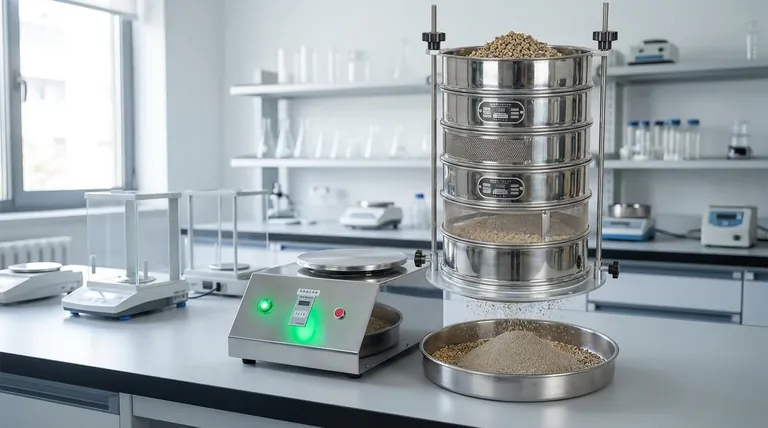
In short, sieving is a highly reliable and cost-effective method for separating particles by size, valued for its simplicity and reproducibility. Its primary advantages are its straightforward operation and the durability of the equipment, often made from high-grade stainless steel. However, its main disadvantages stem from its physical nature: it struggles with non-spherical particles, is prone to clogging, and is less effective for particles smaller than about 38 microns.

The core takeaway is that sieving is an exceptionally effective and economical tool for routine particle size classification. Its limitations only become critical when dealing with very fine powders or when the particle's shape, not just its passing diameter, is a crucial factor for analysis.
What are advantages and disadvantages of sieving method? A Guide to Reliable & Cost-Effective Particle Sizing

The Core Advantages of Sieving

Sieving, or sifting, remains a fundamental technique in both laboratory and industrial settings because its benefits are direct and substantial. These advantages center on reliability, cost, and ease of use.

Simplicity and Cost-Effectiveness

The method is mechanically simple, relying on gravity and agitation to pass particles through a mesh. This means training is minimal, and the equipment—a set of sieves and potentially a shaker—is significantly less expensive than more advanced particle analysis technologies like laser diffraction.

High Reproducibility and Standardization

Test sieves are manufactured to meet strict international standards (like ISO and ASTM). This ensures that a test performed in one facility can be reliably duplicated in another, provided the same standardized sieves and procedures are used. This high degree of reproducibility is critical for quality control in industries from pharmaceuticals to civil engineering.

Durability and Chemical Resistance

Modern sieves are typically constructed from materials like 304 or 316 stainless steel. As noted in technical specifications, this provides excellent resistance to corrosion, high temperatures, and chemical attack. This durability ensures a long service life and allows a single set of sieves to be used for a wide variety of materials without contamination, as they are easy to clean thoroughly.

Understanding the Trade-offs: The Disadvantages

While powerful, the sieving method is not without its inherent limitations. These trade-offs are a direct result of its physical mechanism and are critical to understand when deciding if it's the right tool for a specific task.

Inaccuracy with Non-Spherical Particles

A sieve only measures a particle's second-largest dimension. Particle shape heavily influences results. For example, a long, needle-shaped particle may pass end-first through a mesh opening that a spherical particle of the same volume could never fit through. This makes sieving less accurate for characterizing fibrous or elongated materials where a more comprehensive shape analysis is needed.

Risk of Clogging and Blinding

Blinding occurs when particles become lodged in the mesh openings, effectively reducing the available area for separation. This is common with materials that are sticky, damp, or contain a high concentration of particles very close in size to the mesh opening. Blinding halts the separation process, skews results, and requires time-consuming manual cleaning.

Limited to a Practical Particle Size Range

Sieving is most effective for particles ranging from several millimeters down to approximately 38 microns (around 400 mesh). Below this size, electrostatic forces between fine particles can cause them to agglomerate and resist passing through the mesh. For sub-micron particle analysis, alternative methods like light scattering or sedimentation are necessary.

Labor-Intensive for High Precision

Achieving a precise particle size distribution requires a stack of many sieves and can be a time-consuming and labor-intensive process, even with a mechanical shaker. Weighing the material retained on each individual sieve adds to the manual effort and time required for a complete analysis.

Making the Right Choice for Your Goal

To apply this knowledge effectively, align the method's strengths and weaknesses with your primary objective.

  • If your primary focus is routine quality control of bulk materials (e.g., sand, grain, plastic pellets): Sieving is the ideal choice due to its low cost, high reproducibility, and simplicity.
  • If your primary focus is sorting materials for production: The method is exceptionally effective and scalable for separating materials into different size fractions for industrial use.
  • If your primary focus is high-precision analysis of fine powders or irregularly shaped particles: Use sieving as a preliminary step, but be prepared to supplement it with more advanced techniques like microscopy or laser diffraction for a complete characterization.

By understanding these fundamental trade-offs, you can confidently determine where this reliable and foundational method fits into your workflow.

Summary Table:

Aspect Advantage Disadvantage
Operation Simple, minimal training required Can be labor-intensive and time-consuming
Cost Highly cost-effective equipment -
Accuracy Excellent reproducibility for standard materials Inaccurate for non-spherical or fibrous particles
Particle Size Ideal for particles > 38 microns Limited effectiveness for sub-micron particles
Equipment Durable, chemically resistant stainless steel Prone to clogging and blinding with certain materials

Ready to Optimize Your Particle Analysis?

KINTEK specializes in high-quality lab equipment and consumables, including durable, standardized test sieves designed for long-lasting, reliable performance. Whether your needs are for routine quality control or complex material separation, our solutions are built to deliver accuracy and efficiency.

Contact us today to discuss how our sieving equipment can enhance your laboratory's workflow and ensure reproducible results. Let our experts help you select the perfect tools for your specific particle sizing challenges.

Get in touch with our specialists now!

Visual Guide

What are advantages and disadvantages of sieving method? A Guide to Reliable & Cost-Effective Particle Sizing Visual Guide

Related Products

People Also Ask

Related Products

Three-dimensional electromagnetic sieving instrument

Three-dimensional electromagnetic sieving instrument

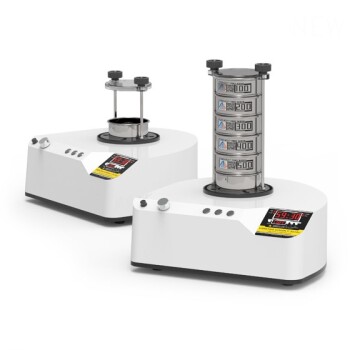
KT-VT150 is a desktop sample processing instrument for both sieving and grinding. Grinding and sieving can be used both dry and wet. The vibration amplitude is 5mm and the vibration frequency is 3000-3600 times/min.

Laboratory Vibratory Sieve Shaker Machine for Dry and Wet Three-Dimensional Sieving

Laboratory Vibratory Sieve Shaker Machine for Dry and Wet Three-Dimensional Sieving

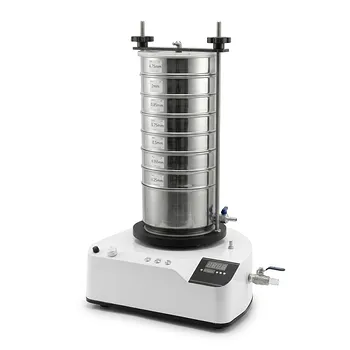
KT-VD200 can be used for sieving tasks of dry and wet samples in the laboratory. The screening quality is 20g-3kg. The product is designed with a unique mechanical structure and an electromagnetic vibrating body with a vibration frequency of 3000 times per minute.

Laboratory Test Sieves and Sieving Machines

Laboratory Test Sieves and Sieving Machines

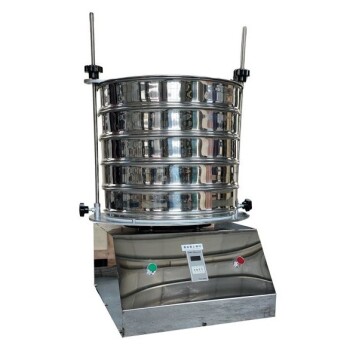
Precision lab test sieves & sieving machines for accurate particle analysis. Stainless steel, ISO-compliant, 20μm-125mm range. Request specs now!

Laboratory Wet Three-Dimensional Vibratory Sieve Shaker Machine

Laboratory Wet Three-Dimensional Vibratory Sieve Shaker Machine

The wet three-dimensional vibrating sieving instrument focuses on solving the sieving tasks of dry and wet samples in the laboratory. It is suitable for sieving 20g - 3kg dry, wet or liquid samples.

Laboratory Test Sieves and Vibratory Sieve Shaker Machine

Laboratory Test Sieves and Vibratory Sieve Shaker Machine

Efficiently process powders, granules, and small blocks with a high-frequency vibration sieve. Control vibration frequency, screen continuously or intermittently, and achieve accurate particle size determination, separation, and classification.

Vibratory Sieve Shaker Machine Dry Three-Dimensional Vibrating Sieve

Vibratory Sieve Shaker Machine Dry Three-Dimensional Vibrating Sieve

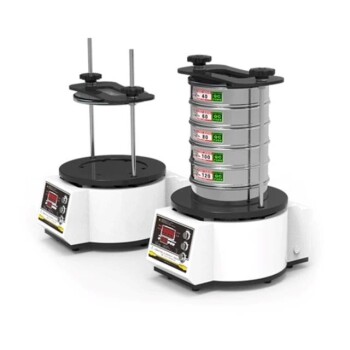
The KT-V200 product focuses on solving common sieving tasks in the laboratory. It is suitable for sieving 20g-3kg dry samples.

Laboratory Vibratory Sieve Shaker Machine Slap Vibrating Sieve

Laboratory Vibratory Sieve Shaker Machine Slap Vibrating Sieve

KT-T200TAP is a slapping and oscillating sieving instrument for laboratory desktop use, with 300 rpm horizontal circular motion and 300 vertical slapping motions to simulate manual sieving to help sample particles pass through better.

Custom PTFE Teflon Parts Manufacturer for PTFE Mesh F4 Sieve

Custom PTFE Teflon Parts Manufacturer for PTFE Mesh F4 Sieve

PTFE mesh sieve is a specialized test sieve designed for particle analysis in various industries, featuring a non-metallic mesh woven from PTFE filament. This synthetic mesh is ideal for applications where metal contamination is a concern . PTFE sieves are crucial for maintaining the integrity of samples in sensitive environments, ensuring accurate and reliable results in particle size distribution analysis.

Professional Cutting Tools for Carbon Paper Cloth Diaphragm Copper Aluminum Foil and More

Professional Cutting Tools for Carbon Paper Cloth Diaphragm Copper Aluminum Foil and More

Professional tools for cutting lithium sheets, carbon paper, carbon cloth, separators, copper foil, aluminum foil, etc., with round and square shapes and different sizes of blades.

Mini Planetary Ball Mill Machine for Laboratory Milling

Mini Planetary Ball Mill Machine for Laboratory Milling

Discover the KT-P400 desktop planetary ball mill, ideal for grinding and mixing small samples in the lab. Enjoy stable performance, long service life, and practicality. Functions include timing and overload protection.

Laboratory Single Horizontal Jar Mill

Laboratory Single Horizontal Jar Mill

KT-JM3000 is a mixing and grinding instrument for placing a ball milling tank with a volume of 3000ml or less. It adopts frequency conversion control to realize timing, constant speed, direction change, overload protection and other functions.

12 Inch 24 Inch High Precision Automatic Diamond Wire Cutting Machine Laboratory Saw Precision Wire EDM Cutting Machine

12 Inch 24 Inch High Precision Automatic Diamond Wire Cutting Machine Laboratory Saw Precision Wire EDM Cutting Machine

The high precision automatic diamond wire cutting machine is a versatile cutting tool that uses a diamond wire to cut through a wide range of materials, including conductive and non-conductive materials, ceramics, glass, rocks, gems, jade, meteorites, monocrystalline silicon, silicon carbide, polycrystalline silicon, refractory bricks, epoxy boards, and ferrite bodies. It is especially suitable for cutting various brittle crystals with high hardness, high value, and easy to break.

High-Energy Omnidirectional Planetary Ball Mill Milling Machine for Laboratory

High-Energy Omnidirectional Planetary Ball Mill Milling Machine for Laboratory

The KT-P4000E is a new product derived from the vertical high-energy planetary ball mill with a 360° swivel function. Experience faster, uniform, and smaller sample output results with 4 ≤1000ml ball mill jars.

Laboratory High Throughput Tissue Grinding Mill Grinder

Laboratory High Throughput Tissue Grinding Mill Grinder

KT-MT is a high-quality, small, and versatile tissue grinder used for crushing, grinding, mixing, and cell wall breaking in various fields, including food, medical, and environmental protection. It is equipped with 24 or 48 2ml adapters and ball grinding tanks and is widely employed for DNA, RNA, and protein extraction.

Laboratory Ball Mill Jar Mill with Metal Alloy Grinding Jar and Balls

Laboratory Ball Mill Jar Mill with Metal Alloy Grinding Jar and Balls

Grind and mill with ease using metal alloy grinding jars with balls. Choose from 304/316L stainless steel or tungsten carbide and optional liner materials. Compatible with various mills and features optional functions.

High Energy Planetary Ball Mill Milling Machine for Laboratory

High Energy Planetary Ball Mill Milling Machine for Laboratory

The biggest feature is that the high energy planetary ball mill can not only perform fast and effective grinding, but also has good crushing ability

High Energy Planetary Ball Mill Milling Machine for Laboratory

High Energy Planetary Ball Mill Milling Machine for Laboratory

Experience fast and effective sample processing with the F-P2000 high-energy planetary ball mill. This versatile equipment offers precise control and excellent grinding capabilities. Perfect for laboratories, it features multiple grinding bowls for simultaneous testing and high output. Achieve optimal results with its ergonomic design, compact structure, and advanced features. Ideal for a wide range of materials, it ensures consistent particle size reduction and low maintenance.

Lab Internal Rubber Mixer Rubber Kneader Machine for Mixing and Kneading

Lab Internal Rubber Mixer Rubber Kneader Machine for Mixing and Kneading

Lab internal rubber mixer is suitable for mixing, kneading and dispersing various chemical raw materials such as plastics, rubber, synthetic rubber, hot melt adhesive and various low-viscosity materials.

Laboratory Jar Mill with Agate Grinding Jar and Balls

Laboratory Jar Mill with Agate Grinding Jar and Balls

Grind your materials with ease using Agate Grinding Jars with Balls. Sizes from 50ml to 3000ml, perfect for planetary and vibration mills.

Vibrating Disc Mill Small Laboratory Grinding Machine

Vibrating Disc Mill Small Laboratory Grinding Machine

Discover the versatile Vibrating Disc Mill for efficient laboratory grinding. Ideal for geology, metallurgy, biology, and more. Explore now!


Leave Your Message