The primary advantages of using a benchtop quartz reactor for acetic acid reforming are its exceptional chemical inertness and high-temperature thermal stability. These properties allow for the precise evaluation of catalytic activity without the reactor vessel influencing the results, particularly when processing corrosive compounds at temperatures up to 900 °C.
The defining value of a quartz reactor is the assurance of data integrity; it ensures that experimental results reflect only the catalyst's activity, eliminating variables caused by reactor wall corrosion or side reactions.
Chemical Compatibility and Inertness
Resisting Corrosive Reactants
Acetic acid acts as a primary tar compound and is highly corrosive, particularly at the elevated temperatures required for reforming.
Unlike metallic reactors, a benchtop quartz reactor resists this corrosion effectively. This prevents the degradation of the reactor walls during the experiment.
Eliminating Side Reactions
A critical challenge in catalyst evaluation is ensuring that the reactor vessel itself does not act as a catalyst.
Quartz provides a chemically inert surface that does not interact with reactants. This ensures that the reactor walls do not induce unwanted side reactions that could skew the data.
Thermal Performance at High Temperatures
Stability up to 900 °C
Reforming experiments often require extreme heat to achieve the necessary reaction kinetics.
Benchtop quartz reactors offer excellent thermal stability, withstanding experimental temperatures up to 900 °C. This allows researchers to test catalysts under aggressive thermal conditions without compromising the structural integrity of the vessel.
Ensuring Data Integrity
Isolating Catalyst Activity
The ultimate goal of using a benchtop setup is to obtain accurate activity data for specific catalysts.
Because the quartz walls are inert and do not interfere with the tar reforming reaction, researchers can be confident that the observed conversion rates are solely attributable to the catalyst being tested.
Understanding the Trade-offs
Mechanical Fragility
While thermally stable, quartz is mechanically brittle compared to stainless steel or Inconel reactors.
It requires careful handling during setup and cleaning to avoid breakage, making it less forgiving of physical impact or stress.
Pressure Limitations
Quartz generally has lower pressure ratings than metallic reactors.
If your reforming process requires high-pressure conditions in addition to high heat, a standard benchtop quartz setup may not be suitable.
Making the Right Choice for Your Goal
To determine if a benchtop quartz reactor is the right tool for your specific acetic acid reforming project, consider your primary experimental needs.
- If your primary focus is precise catalyst characterization: Choose quartz to eliminate wall effects and ensure the chemical data is pure and uncorrupted by the vessel.
- If your primary focus is high-pressure process simulation: Evaluate whether the pressure limits of quartz will constrain your operating window, potentially necessitating a high-alloy metallic reactor instead.
By selecting quartz, you prioritize chemical accuracy and thermal resilience to validate your catalyst's true potential.
Summary Table:
| Feature | Quartz Reactor Benefit | Impact on Acetic Acid Reforming |
|---|---|---|
| Chemical Inertness | Prevents wall reactions and corrosion | Ensures data reflects only catalyst activity |
| Thermal Stability | Operates safely up to 900 °C | Enables high-temperature tar reforming studies |
| Data Integrity | Eliminates secondary catalytic effects | Provides accurate, uncontaminated kinetic results |
| Corrosion Resistance | Resists acidic degradation | Extends reactor life during corrosive processing |
| Material Trade-off | Mechanically brittle; low pressure | Requires careful handling; best for atmospheric tests |
Elevate Your Catalyst Research with KINTEK Precision
Are you looking to eliminate experimental variables and achieve uncompromising data integrity in your reforming studies? KINTEK specializes in high-performance laboratory solutions tailored for demanding chemical research.
Whether you need the exceptional inertness of our benchtop quartz reactors, the robustness of our high-temperature high-pressure reactors and autoclaves, or precision high-temperature furnaces (muffle, tube, vacuum) for thermal processing, we provide the tools necessary for scientific excellence. From PTFE products and ceramics to advanced crushing, milling, and sieving equipment, our comprehensive portfolio supports every stage of your laboratory workflow.
Ready to optimize your acetic acid reforming performance? Contact KINTEK today to consult with our experts and find the perfect reactor or consumable for your specific application. Let us help you unlock the true potential of your catalysts.
References
- A. Cavalli, P.V. Aravind. Catalytic reforming of acetic acid as main primary tar compound from biomass updraft gasifiers: screening of suitable catalysts and operating conditions. DOI: 10.1016/j.biombioe.2021.105982
This article is also based on technical information from Kintek Solution Knowledge Base .
Related Products
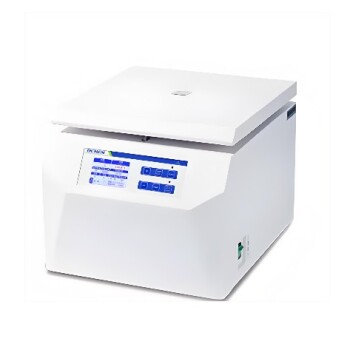
- Benchtop High Speed Small Lab Centrifuge for Serum Separation and Low Temperature Dehydration
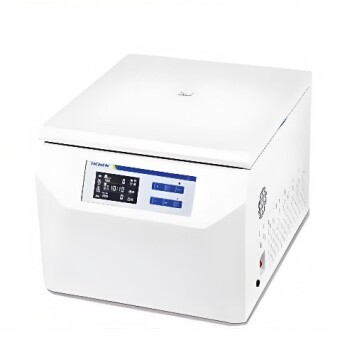
- Laboratory Benchtop High Speed Small Centrifuge for Low Temp Serum Separation Dehydration Research
- Visual High-Pressure Reactor for In-Situ Observation
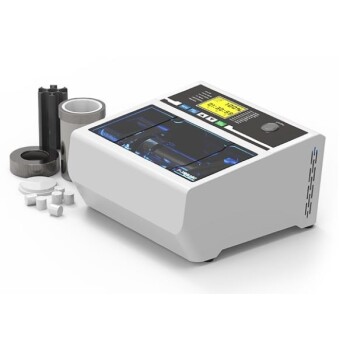
- Laboratory Micro Horizontal Jar Mill for Precision Sample Preparation in Research and Analysis
- Laboratory Rapid Thermal Processing (RTP) Quartz Tube Furnace
People Also Ask
- How is a benchtop laboratory centrifuge used in the desorption and regeneration of composite adsorbent beads?
- What is the primary function of a laboratory centrifuge? Master PAAMP-b-PVK Block Copolymer Purification
- What role does a Laboratory Centrifuge play in the production of succinic acid? Critical Solid-Liquid Separation Guide
- What are the advantages and disadvantages of a centrifuge? Weighing Speed Against Cost and Risk
- How does a centrifuge work and for what purpose? Unlock the Power of Rapid Sample Separation