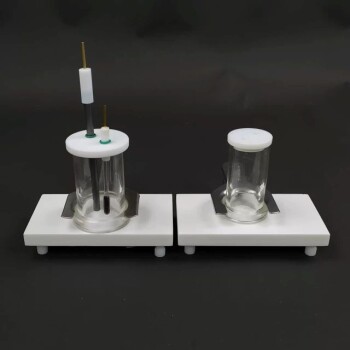
The double chamber glass electrolytic cell offers a highly controlled environment for evaluating anode performance by physically isolating the anodic and cathodic reactions. By utilizing a proton exchange membrane and transparent materials, this design allows researchers to independently manipulate chamber conditions while maintaining visual access to critical biological processes.
Core Takeaway To accurately evaluate Microbial Fuel Cell (MFC) anode performance, you must isolate anodic variables from cathodic interference. The double chamber glass design achieves this through physical separation, enabling precise environmental customization and direct optical monitoring that opaque or single-chamber systems cannot provide.
Precise Control Through Isolation
The Role of the Proton Exchange Membrane
The defining feature of this configuration is the use of a proton exchange membrane to separate the cell into two distinct compartments.
This physical barrier ensures that the anode and cathode remain chemically isolated while still allowing for necessary ion transport.
Independent Environmental Customization
Because the chambers are separated, you can tailor the environment of the anode chamber specifically for the microbial, chemical, or waste treatment goals of your experiment.
For example, the reference highlights the ability to fill the anode chamber with specific substrates, such as cobalt-containing wastewater and organic nutrients.
Simultaneously, you can maintain a stable buffer solution in the cathode chamber, ensuring that cathode-side fluctuations do not interfere with the data collected from the anode.
The Value of Optical Transparency
Real-Time Biofilm Monitoring
The use of glass material provides a critical advantage for biological evaluation: total transparency.
This allows researchers to perform real-time observation of biofilm growth on the anode surface without dismantling the cell or disrupting the anaerobic environment.
Visualizing Remediation Status
Beyond biological growth, transparency enables immediate visual assessment of the wastewater treatment process.
Researchers can monitor the remediation status of the treated wastewater, observing changes in color or turbidity as the reaction progresses.
Understanding the Operational Trade-offs
Management of Distinct Environments
While independent customization is an advantage, it also requires rigorous management of two separate fluid chemistries.
Researchers must actively monitor and maintain the specific conditions of both the wastewater-filled anode and the buffered cathode to ensure the isolation remains effective.
Dependence on Membrane Integrity
The success of this evaluation method relies entirely on the proton exchange membrane.
If the membrane is compromised, the isolation is lost, leading to cross-contamination between the nutrient-rich anode and the buffered cathode, which invalidates the performance data.
Making the Right Choice for Your Research
To determine if a double chamber glass cell is the correct tool for your specific experiment, consider your primary analytical goals:
- If your primary focus is biological observation: The transparency of the glass design is essential for non-invasive monitoring of biofilm development and wastewater remediation.
- If your primary focus is electrochemical precision: The physical separation provided by the membrane allows you to attribute performance changes strictly to anode conditions, eliminating cathodic interference.
This configuration effectively transforms the anode compartment into a standalone laboratory, offering both visual insight and chemical control.
Summary Table:
| Feature | Advantage | Benefit to MFC Research |
|---|---|---|
| Physical Separation | Isolates anodic and cathodic reactions via PEM | Eliminates cathodic interference for precise data |
| Glass Construction | 100% Optical transparency | Real-time monitoring of biofilm and remediation |
| Independent Chambers | Tailored environmental customization | Allows testing of specific substrates (e.g., wastewater) |
| Ion Transport | Controlled proton exchange | Maintains chemical isolation while enabling reaction |
Elevate Your Microbial Fuel Cell Research with KINTEK
Precision in electrochemical evaluation starts with the right environment. KINTEK specializes in high-performance electrolytic cells and electrodes, providing the optical clarity and chemical isolation necessary for advanced Microbial Fuel Cell (MFC) studies.
Whether you are monitoring biofilm growth or optimizing wastewater remediation, our comprehensive range of laboratory equipment—from high-temperature reactors to PTFE consumables—is designed to meet the rigorous demands of battery and energy research.
Ready to achieve superior electrochemical precision? Contact our specialists today to find the perfect cell configuration for your laboratory!
References
- Asim Ali Yaqoob, Mohd Rafatullah. Utilization of biomass-derived electrodes: a journey toward the high performance of microbial fuel cells. DOI: 10.1007/s13201-022-01632-4
This article is also based on technical information from Kintek Solution Knowledge Base .
Related Products
- Double Layer Five-Port Water Bath Electrolytic Electrochemical Cell
- H-Type Double-Layer Optical Electrolytic Electrochemical Cell with Water Bath
- Double-Layer Water Bath Electrolytic Electrochemical Cell
- Multifunctional Electrolytic Electrochemical Cell Water Bath Single Layer Double Layer
- Side Window Optical Electrolytic Electrochemical Cell
People Also Ask
- What does the routine maintenance of a double-layer water-bath electrolytic cell involve? A Guide to Ensuring Precision and Longevity
- When is professional repair required for a double-layer water-bath electrolytic cell? Protect Your Lab's Precision and Safety
- What are the key features of a double-layer water-bath electrolytic cell? Achieve Precise Temperature Control for Your Experiments
- What is the typical experimental system used with a double-layer water-bath electrolytic cell? Achieve Precise Electrochemical Control
- What are the procedures for after using a double-layer water-bath electrolytic cell? Ensure Equipment Longevity and Data Accuracy