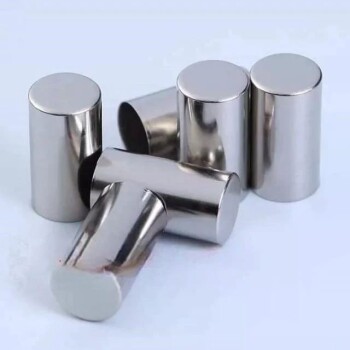
The use of a stainless steel cylindrical reactor offers a decisive advantage in the photocatalytic elimination of ibuprofen by maximizing both physical durability and reaction efficiency. Unlike open containers, this specific reactor design ensures the uniform distribution of ultraviolet (UV) light and ultrasonic energy, while providing superior resistance to the corrosive effects of oxidizing agents such as hydrogen peroxide (H2O2).
By coupling a corrosion-resistant material with a geometry that optimizes energy transmission, the stainless steel cylindrical reactor creates a stable, homogeneous environment that significantly improves the energy utilization efficiency of the degradation process.
Material Durability and Chemical Resistance
Resistance to Oxidizing Agents
Photocatalytic processes often rely on strong oxidants to break down pharmaceuticals. A laboratory-grade stainless steel construction provides essential corrosion resistance, specifically against the aggressive oxidizing effects of hydrogen peroxide (H2O2) used in these reactions.
Long-Term Structural Stability
Open containers or inferior materials may degrade or weaken over repeated exposure to harsh chemical environments. The structural stability of stainless steel ensures the reactor maintains its integrity over time, providing a reliable vessel for consistent experimentation.
Geometric Optimization for Energy Distribution
Uniform UV Light Distribution
The cylindrical design of the reactor is not merely aesthetic; it is functional. This geometry facilitates the even spread of ultraviolet light throughout the vessel, ensuring that the photocatalyst is activated uniformly across the entire reaction volume.
Efficient Ultrasonic Transmission
Beyond light, the cylindrical shape is critical for sonochemical applications. It allows for the efficient transmission of ultrasonic energy, minimizing energy loss and maximizing the cavitation effects necessary for breaking down complex molecules like ibuprofen.
Creating a Homogeneous Environment
In an open container, "dead zones" with lower energy intensity can occur. The combination of cylindrical geometry and stainless steel construction eliminates these inconsistencies, creating a homogeneous degradation environment where reaction rates are consistent throughout the liquid.
Understanding the Operational Trade-offs
Visibility Limitations
While stainless steel offers superior durability, it is opaque. Unlike glass open containers, you cannot visually monitor color changes or precipitate formation in real-time, requiring reliance on external sampling or sensors.
Thermal Conductivity
Stainless steel is a conductor of heat. When using high-energy inputs like ultrasound, the reactor walls may retain heat, potentially requiring an external cooling jacket to maintain isothermal conditions if temperature sensitivity is a concern.
Making the Right Choice for Your Process
If you are deciding between a standard open vessel and a stainless steel cylindrical reactor, consider your specific experimental needs:
- If your primary focus is reaction efficiency: Choose the stainless steel cylindrical reactor to maximize energy utilization and ensure uniform UV and ultrasonic exposure.
- If your primary focus is equipment longevity: Select the stainless steel reactor to prevent corrosion damage from repeated exposure to hydrogen peroxide.
- If your primary focus is visual monitoring: An open, transparent container may be necessary for preliminary tests, accepting that degradation rates will likely be lower and less uniform.
Selecting the right reactor geometry is as critical as selecting the right chemical reagents for optimizing pharmaceutical degradation.
Summary Table:
| Feature | Stainless Steel Cylindrical Reactor | Open Glass/Plastic Container |
|---|---|---|
| Chemical Resistance | High (ideal for H2O2 and oxidants) | Low (prone to degradation/staining) |
| Energy Distribution | Uniform UV & ultrasonic transmission | Inconsistent; prone to "dead zones" |
| Durability | High structural stability | Fragile; prone to breakage or corrosion |
| Process Efficiency | Optimized for high-rate degradation | Lower energy utilization efficiency |
| Monitoring | Requires sensors (opaque walls) | Visual monitoring possible (transparent) |
Elevate Your Photocatalytic Research with KINTEK
Precision matters in pharmaceutical degradation. KINTEK specializes in high-performance laboratory equipment designed to withstand the most rigorous chemical environments. Whether you need high-temperature high-pressure reactors and autoclaves for complex synthesis or specialized cylindrical reactors for uniform energy distribution, we provide the tools that ensure consistent, reproducible results.
Our comprehensive range includes:
- Advanced Reactors: From vacuum and atmosphere furnaces to stainless steel autoclaves.
- Precision Tools: Electrolytic cells, electrodes, and ultrasonic-compatible systems.
- Lab Essentials: High-purity ceramics, crucibles, and PTFE consumables.
Ready to optimize your degradation efficiency and equipment longevity? Contact KINTEK today to find the perfect reactor solution for your lab!
References
- Narges Farhadi, Fazel Amiri. Optimization and characterization of zeolite-titanate for ibuprofen elimination by sonication/hydrogen peroxide/ultraviolet activity. DOI: 10.1016/j.ultsonch.2020.105122
This article is also based on technical information from Kintek Solution Knowledge Base .
Related Products
- Cylindrical Resonator MPCVD Machine System Reactor for Microwave Plasma Chemical Vapor Deposition and Lab Diamond Growth
- Stainless High Pressure Autoclave Reactor Laboratory Pressure Reactor
- Mini SS High Pressure Autoclave Reactor for Laboratory Use
- Customizable Laboratory High Temperature High Pressure Reactors for Diverse Scientific Applications
- Cylindrical Lab Electric Heating Press Mold for Laboratory Applications
People Also Ask
- What are the advantages of a Microwave Plasma CVD reactor for MCD/NCD coatings? Precision Multilayer Diamond Engineering
- How does a microwave plasma reactor facilitate the synthesis of diamond? Master MPCVD with Precision Technology
- Why is argon-rich gas phase chemistry used for UNCD growth? Unlock Precision Nano-Diamond Synthesis
- How does chemical vapor deposition work for diamonds? Grow Lab-Created Diamonds Layer by Layer
- What are the primary advantages of the CVD method for growing diamonds? Engineering High-Purity Gems and Components