Corrosion-resistant stainless steel serves as the essential structural backbone for reaction cells in synchronous X-ray absorption and in-situ infrared spectroscopy. Its primary advantage lies in delivering a rare combination of high-temperature mechanical strength and exceptional chemical inertness against aggressive gases like carbon monoxide and hydrogen.
Core Takeaway Successful in-situ spectroscopy requires a reaction environment that is both physically robust and chemically invisible. Stainless steel provides the necessary structural rigidity to maintain hermetic seals and integrate complex heating systems, while resisting degradation from reactive atmospheres that would otherwise compromise experimental data.
Maintaining Chemical Integrity in Harsh Atmospheres
Resistance to Reactive Gases
In-situ experiments often utilize aggressive environments containing carbon monoxide (CO), hydrogen (H2), or oxygen (O2).
Stainless steel resists reacting with these gases, preventing corrosion that could contaminate the catalyst sample or alter the reaction kinetics. This ensures the spectroscopic signals you observe originate solely from your sample, not the cell walls.
Stability at Elevated Temperatures
Chemical resistance must hold up under heat. Stainless steel maintains its inert properties even at high temperatures.
This thermal stability is crucial for studying catalysts under realistic reaction conditions without the risk of the cell body degrading or releasing volatile contaminants.
Structural Reliability and System Sealing
Rigid Mechanical Support
Solid catalysts require a highly stable platform during analysis. The high strength of the stainless steel body provides stable mechanical support for the sample.
This rigidity prevents deformation that could misalign the X-ray or IR beam paths during the experiment, which is critical for maintaining signal intensity and quality.
Ensuring Hermetic Sealing
Reactor sealing is critical to prevent gas leaks or atmospheric contamination.
The material's durability allows for the high-torque assembly of windows and fittings without warping. This ensures a tight, reliable seal is maintained throughout complex, long-duration experiments.
Facilitating Complex Cell Integration
Integrating Heating Components
Reaction cells are rarely passive; they require active temperature control.
The structural properties of stainless steel facilitate the integration of heating components. This allows for precise thermal regulation directly within the cell body, ensuring the catalyst is at the exact target temperature.
Managing Gas Lines and Flow
Complex gas delivery systems must be routed into the cell.
The body's strength supports the physical connection of gas lines, handling the mechanical stress of plumbing without compromising the cell's integrity or introducing leaks.
Understanding the Trade-offs
Optical Opacity
While excellent for the structural body, stainless steel is opaque to X-rays and Infrared light.
This necessitates the precise integration of specific windows (such as Beryllium or Calcium Fluoride). The steel body must be machined with high precision to hold these fragile windows securely under pressure.
Thermal Mass Considerations
Stainless steel provides a robust structure, but it also adds significant thermal mass.
While this contributes to stability, it requires powerful heating elements to change temperatures rapidly. The system design must account for this to achieve efficient thermal cycling.
Making the Right Choice for Your Goal
Selecting the right cell material is a balance of structural needs and chemical compatibility.
- If your primary focus is experimental safety and sealing: Rely on stainless steel for its high tensile strength to maintain seal integrity against fluctuating gas pressures and temperatures.
- If your primary focus is experimental versatility: Leverage the machinability and strength of stainless steel to integrate complex heating, cooling, and gas flow peripherals directly into the cell body.
By leveraging the structural and chemical resilience of stainless steel, you ensure that your spectroscopic data reflects only the catalyst's behavior, not the degradation of your equipment.
Summary Table:
| Feature | Advantage | Benefit to Experiment |
|---|---|---|
| Chemical Resistance | Resists CO, H2, and O2 | Prevents sample contamination and artifacts |
| Mechanical Strength | High structural rigidity | Maintains beam alignment and seal integrity |
| Thermal Stability | Maintains properties at heat | Supports realistic reaction condition studies |
| Machinability | Supports complex integration | Enables easy mounting of heaters and gas lines |
| Durability | High-torque assembly capable | Ensures long-term hermetic sealing under pressure |
Elevate Your In-Situ Research with KINTEK Precision
At KINTEK, we understand that the integrity of your spectroscopic data depends on the quality of your reaction environment. Our high-performance high-temperature high-pressure reactors, autoclaves, and electrolytic cells are engineered from premium materials to withstand the most aggressive atmospheres.
Whether you need custom-machined stainless steel reaction bodies or specialized PTFE, ceramic, and high-purity consumables, KINTEK provides the laboratory equipment required for precise catalyst characterization and material science.
Ready to optimize your experimental setup? Contact our technical team today to find the perfect solution for your laboratory needs.
References
- Gian Luca Chiarello, Davide Ferri. Adding diffuse reflectance infrared Fourier transform spectroscopy capability to extended x-ray-absorption fine structure in a new cell to study solid catalysts in combination with a modulation approach. DOI: 10.1063/1.4890668
This article is also based on technical information from Kintek Solution Knowledge Base .
Related Products
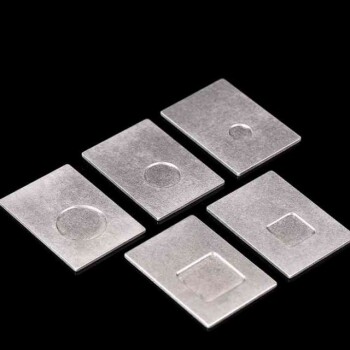
- Customizable XRD Sample Holders for Diverse Research Applications
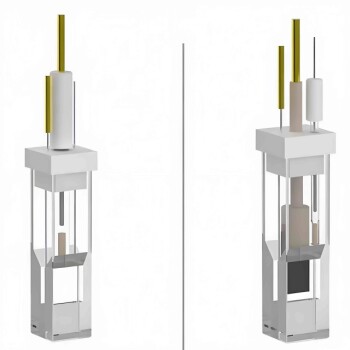
- Thin-Layer Spectral Electrolysis Electrochemical Cell
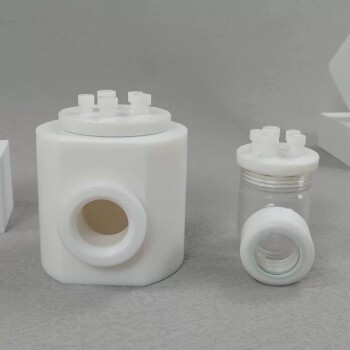
- Side Window Optical Electrolytic Electrochemical Cell
- XRF Boric Acid Lab Powder Pellet Pressing Mold for Laboratory Use
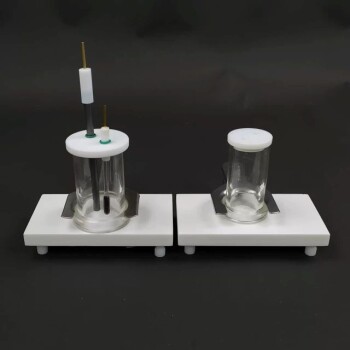
- Sample Support Body for Electrochemical Tests
People Also Ask
- What are the applicable sample dimensions for the sample holder? Ensure a Perfect Fit for Your Lab Samples
- What are the specific storage requirements for a sample holder? Protect Your Lab's Critical Assets
- How can corrosion of the sample holder be prevented when using corrosive chemicals? Protect Your Lab's Integrity
- How should a suitable sample be selected and secured in the holder before an experiment? Ensure Unshakeable Stability for Reliable Data
- What are the general operating procedures for using a sample holder during experiments? Ensure Sample Integrity and Accurate Results