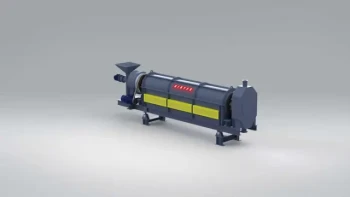
High-pressure reactors fundamentally change the economics of carbonization by utilizing autogenous steam pressure within a sealed system to drive chemical changes. This mechanism allows you to convert biomass into hydrochar at significantly lower temperatures than traditional dry pyrolysis, while completely eliminating the energy-intensive requirement of pre-drying raw materials.
Core Takeaway By leveraging subcritical water pressure, these reactors unlock the ability to process wet biomass directly into chemically active hydrochar. The resulting material features a superior surface structure with abundant functional groups, making it significantly more effective for environmental adsorption and catalysis applications than char produced by conventional heating.
Operational Efficiency and Feedstock Flexibility
Elimination of Pre-Drying
Traditional carbonization requires dry feedstock, often necessitating expensive energy input to remove moisture before processing.
High-pressure reactors use water as the reaction medium. This allows for the direct processing of high-moisture biomass—such as sludge, animal manure, or fresh plant matter—without any pre-drying.
Lower Temperature Requirements
Conventional carbonization often requires high temperatures to drive thermal decomposition.
In contrast, high-pressure hydrothermal carbonization (HTC) operates effectively between 120°C and 250°C. The sealed environment utilizes saturated vapor pressure to drive dehydration and hydrolysis efficiently at these reduced thermal levels.
Enhanced Chemical and Physical Properties
Enriched Surface Chemistry
The pressure generated during the reaction does more than just break down biomass; it actively facilitates surface modification.
This environment promotes the formation of abundant oxygen-containing functional groups on the hydrochar surface. This chemical richness significantly enhances the material's capacity to adsorb pollutants (like heavy metals) or serve as a carrier for catalytically active components.
Superior Carbon Structure
The subcritical water environment accelerates deoxygenation and carbonization mechanisms.
This results in a hydrochar with a higher overall carbon content and a well-developed, often spherical, porous structure. These physical traits improve the material's deashing performance and provide a larger surface area for chemical interactions.
Preservation of Volatile Elements
In specific applications, such as synthesizing cathode materials, the sealed nature of the reactor prevents the loss of volatile elements.
For example, this containment prevents the volatilization loss of lithium ions, ensuring the final material retains the correct stoichiometry and avoids the formation of deficient compounds.
Understanding the Trade-offs
Equipment Complexity and Safety
While efficient thermally, operating at pressures between 2 to 10 MPa requires robust, certified pressure vessels.
This increases the initial capital cost and safety engineering requirements compared to simple atmospheric kilns used in traditional biochar production.
Process Control Sensitivity
The benefits of HTC rely on maintaining a precise subcritical environment.
Variations in temperature and pressure can significantly alter the phase composition and pore size distribution. Achieving the high reproducibility mentioned in the references requires sophisticated control systems to manage the autogenous pressure effectively.
Making the Right Choice for Your Goal
To maximize the value of your carbonization project, align your reactor choice with your specific feedstock and end-use requirements:
- If your primary focus is processing wet waste (sludge/manure): Choose high-pressure HTC to eliminate drying costs and maximize resource recovery from high-moisture streams.
- If your primary focus is environmental remediation: Choose high-pressure HTC to produce hydrochar with the rich functional groups necessary for heavy metal adsorption.
- If your primary focus is energy conservation: Choose high-pressure HTC to utilize lower reaction temperatures (approx. 180°C) and reduce overall thermal energy input.
High-pressure reactors are the superior choice when chemical surface activity and feedstock moisture tolerance outweigh the need for simple, low-pressure equipment.
Summary Table:
| Feature | High-Pressure HTC Reactor | Traditional Carbonization |
|---|---|---|
| Feedstock Moisture | High (Sludge, Manure, Wet Biomass) | Low (Requires Pre-Drying) |
| Process Temperature | 120°C - 250°C | > 400°C |
| Surface Chemistry | Rich Oxygen-Functional Groups | Low Functional Groups |
| Energy Efficiency | High (No pre-drying needed) | Low (High drying & heating costs) |
| Key Applications | Adsorption, Catalysis, Waste-to-Energy | Fuel, Soil Amendment |
Revolutionize Your Carbonization Process with KINTEK
At KINTEK, we understand that precision and safety are paramount when dealing with subcritical water environments. Our specialized high-temperature high-pressure reactors and autoclaves are engineered to handle the 2 to 10 MPa demands of hydrothermal carbonization, ensuring superior hydrochar quality for environmental remediation and energy storage.
Whether you are processing wet waste streams or synthesizing advanced cathode materials, our laboratory systems provide the sophisticated thermal control and pressure integrity you need. Maximize your lab's efficiency and material performance today.
Contact a KINTEK Specialist Now
References
- Dhiraj Kumar, Gaurav Kumar. Advancement in the Utilization of Nanocatalyst for Transesterification of Triglycerides. DOI: 10.30799/jnst.111.18040302
This article is also based on technical information from Kintek Solution Knowledge Base .
Related Products
- High Pressure Laboratory Autoclave Reactor for Hydrothermal Synthesis
- Customizable Laboratory High Temperature High Pressure Reactors for Diverse Scientific Applications
- Stainless High Pressure Autoclave Reactor Laboratory Pressure Reactor
- Customizable High Pressure Reactors for Advanced Scientific and Industrial Applications
- Mini SS High Pressure Autoclave Reactor for Laboratory Use
People Also Ask
- What role does a high-pressure reactor (autoclave) play in the synthesis of NiCuFe-LDH? Master Hydrothermal Growth
- What Role Does a High-Pressure Reactor or Autoclave Play in HA Catalyst Synthesis? Achieve High Surface Area Materials
- What equipment is required for hydrothermal synthesis of Ga0.25Zn4.67S5.08? Optimize Your Semiconductor Production
- What is the function of a high-pressure reactor in the hydrothermal synthesis of boehmite? Expert Process Insights
- What role does an autoclave play in the synthesis of MnO2 nanofibers? Mastering Hydrothermal Growth