The primary advantage of using PTFE-lined tubing between a gas-liquid separator and a detector is its exceptional chemical inertness combined with extremely low surface adsorption. This material prevents unstable species—specifically volatile lead compounds—from adhering to the tube walls or degrading during transport, ensuring the sample remains intact upon reaching the detector.
Core Takeaway By virtually eliminating surface interactions, PTFE tubing resolves two critical analytical challenges: sample loss and signal carryover. This ensures that the detector measures the true concentration of the analyte, resulting in sharper data and higher accuracy.
Preserving Sample Integrity
Superior Chemical Inertness
The chemical composition of Polytetrafluoroethylene (PTFE) is highly stable and non-reactive.
When transporting unstable volatile species, such as lead derivatives, standard tubing materials can induce chemical breakdown. PTFE acts as a neutral conduit, preventing the tubing material itself from reacting with or altering the sample before detection.
Minimizing Surface Adsorption
Many volatile compounds are prone to "sticking" to the walls of transport lines.
PTFE provides a surface with remarkably low surface energy. This prevents analytes from adsorbing (clinging) to the interior of the tubing. This is critical for maintaining the true concentration of the sample as it moves from the separator to the detector.
Enhancing Analytical Performance
Reduction of Memory Effects
"Memory effects" occur when residues from a previous sample linger in the tubing and contaminate subsequent runs.
Because PTFE prevents adsorption, it effectively eliminates this carryover. The tubing clears out completely between samples. This ensures that high-concentration samples do not artificially inflate the readings of following low-concentration samples.
Faster Response Times
Adsorption creates a drag on the sample, causing peak tailing and delayed signals.
By removing this friction, PTFE ensures the sample travels efficiently. This leads to faster response times and sharper, better-defined peaks at the detector.
Understanding the Trade-offs
Physical Durability Considerations
While chemically superior, PTFE has mechanical limitations compared to metals like stainless steel.
It is softer and can be susceptible to kinking if bent at sharp angles. A kinked line can restrict gas flow and ruin the very consistency you are trying to achieve.
Pressure and Temperature Limits
PTFE functions well within standard analytical conditions but has lower thresholds than metal tubing.
If your application requires extreme high pressures or temperatures exceeding standard operating ranges, the structural integrity of PTFE must be verified against your specific method parameters.
Ensuring Analytical Success
To determine if PTFE is the critical link in your setup, consider your analytical priorities:
- If your primary focus is Trace Analysis: Use PTFE to prevent surface adsorption, ensuring that even minute quantities of volatile species reach the detector without loss.
- If your primary focus is High Throughput: Use PTFE to minimize memory effects, allowing for faster cycle times between samples without risk of cross-contamination.
Ultimately, PTFE lined tubing transforms the transfer line from a potential source of error into a passive, reliable component of your analytical system.
Summary Table:
| Feature | Advantage in PTFE Tubing | Analytical Impact |
|---|---|---|
| Chemical Inertness | Prevents sample degradation | Maintains sample integrity for unstable species |
| Surface Energy | Extremely low adsorption | Minimizes sample loss and prevents "sticking" |
| Carryover Control | Eliminates memory effects | Prevents cross-contamination between samples |
| Flow Efficiency | Reduces peak tailing | Delivers faster response times and sharper peaks |
| Compatibility | Non-reactive with volatiles | Ideal for sensitive trace analysis (e.g., lead compounds) |
Elevate Your Analytical Precision with KINTEK
Don't let sample loss or memory effects compromise your laboratory results. KINTEK specializes in high-performance laboratory equipment and consumables designed for the most demanding applications. From PTFE products and essential consumables to advanced high-temperature reactors, autoclaves, and crushing systems, we provide the tools you need for consistent, reliable data.
Whether you are conducting trace analysis or high-throughput research, our team is ready to help you select the perfect components for your system. Contact us today to discover how KINTEK's premium solutions can enhance your lab's efficiency and accuracy!
References
- Shuzhen Li, Ying Gao. Direct Determination of Trace Lead in Seawater by Inductively Coupled Plasma Mass Spectrometry After Photochemical Vapor Generation. DOI: 10.46770/as.2017.03.001
This article is also based on technical information from Kintek Solution Knowledge Base .
Related Products
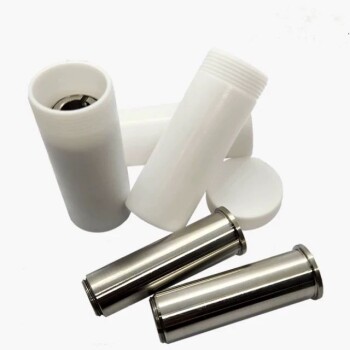
- Custom PTFE Teflon Parts Manufacturer for PTFE Bottle Oil Fume Sampling Tube
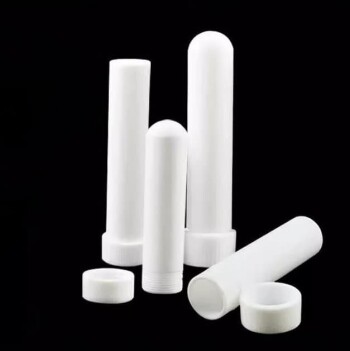
- Custom PTFE Teflon Parts Manufacturer for Centrifuge Tubes
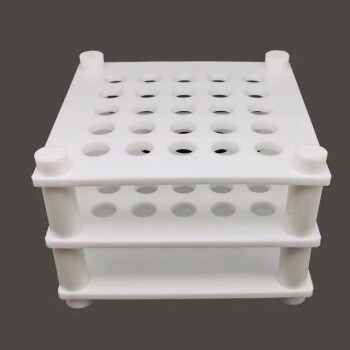
- Custom PTFE Teflon Parts Manufacturer for Centrifuge Tube Racks
- Custom PTFE Teflon Parts Manufacturer for Hydrothermal Synthesis Reactor Polytetrafluoroethylene Carbon Paper and Carbon Cloth Nano-growth
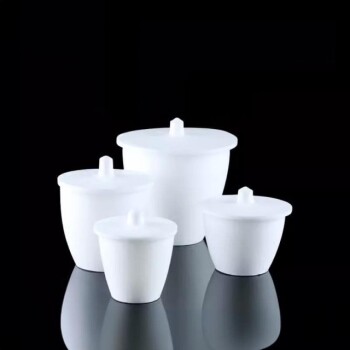
- Custom Machined and Molded PTFE Teflon Parts Manufacturer with PTFE Crucible and Lid
People Also Ask
- Why is slender PTFE tubing necessary for flow control in multi-channel catalyst aging? Ensure Equal Gas Distribution
- What is the significance of using PTFE gas tubing for HCl? Ensure Pure, Corrosion-Free Salt Formation
- Why Use PTFE Sample Bottles for Coal Demineralization? Ensure Chemical Stability and Data Integrity
- What makes PTFE bottles suitable for static leaching? Ensure Zero-Contamination for Glass Testing
- Is PTFE corrosion resistant? Discover the Ultimate Chemical Resistance for Your Lab