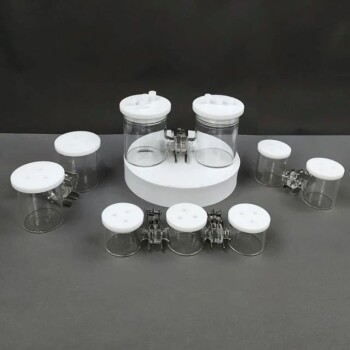
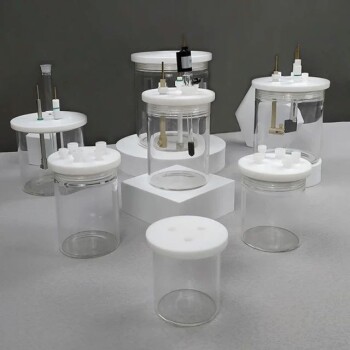
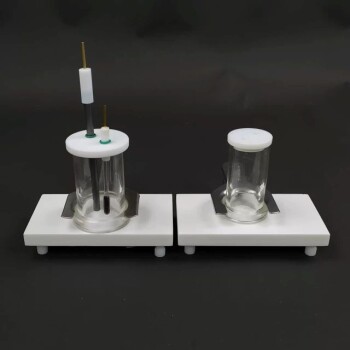
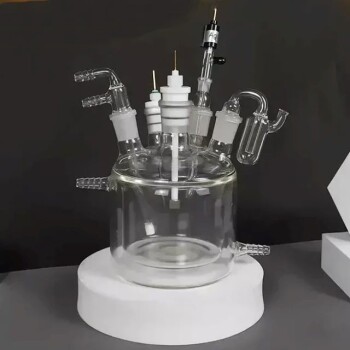
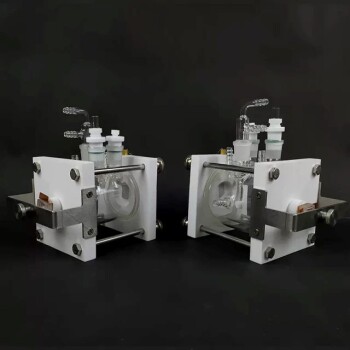
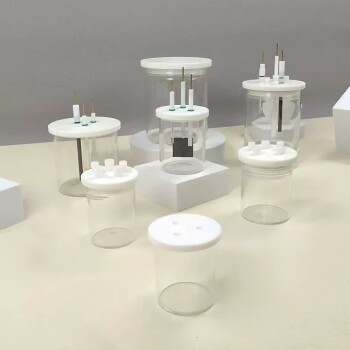
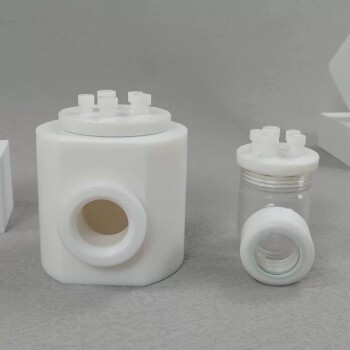
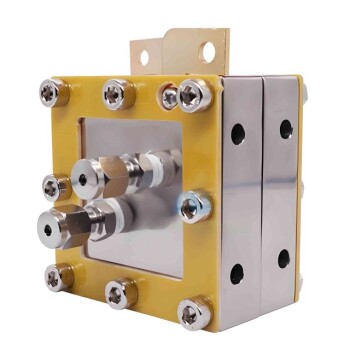
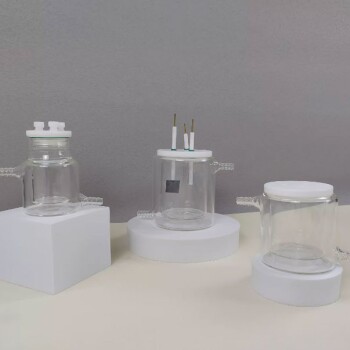
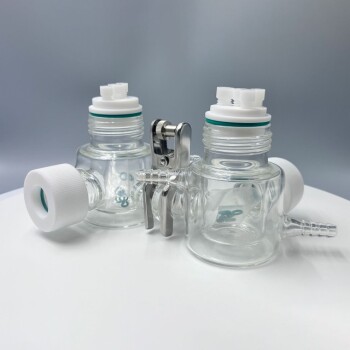
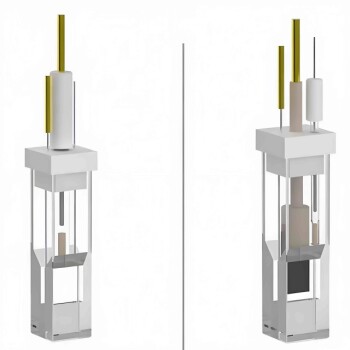
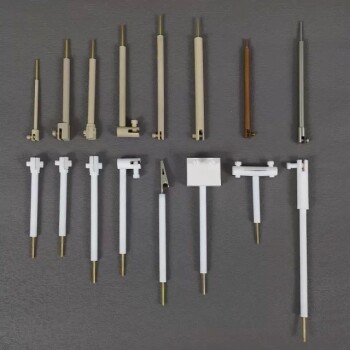
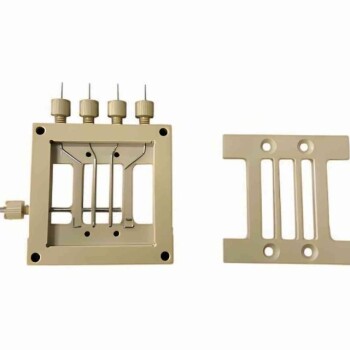
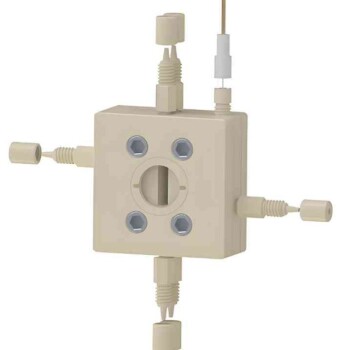
The electrolytic cell and electrode system serve as the engine for controlled anodic dissolution in Metal-Organic Framework (MOF) synthesis. Instead of mixing chemicals, this system uses electrical energy to etch a metal anode, generating metal ions in-situ that react with organic linkers in the electrolyte to form MOF structures.
Core Takeaway By replacing external metal salts with a sacrificial anode, this electrochemical method eliminates unwanted anions and enables the rapid, continuous production of high-purity MOF films at room temperature.
The Mechanism of In-Situ Ion Generation
The Anode as a Sacrificial Source
The most critical function of the electrode system is to act as the raw material source.
In this process, the anode (the positive electrode) is not chemically inert. It undergoes controlled etching, releasing metal ions directly into the solution to initiate MOF growth.
Eliminating Chemical Contaminants
Traditional MOF synthesis requires metal salts (like metal nitrates or chlorides), which introduce "counter-anions" that can contaminate the final product.
The electrolytic cell circumvents this completely. Because metal ions are generated directly from the solid electrode, no external metal salt solutions are required, resulting in a purer chemical environment free of unwanted anions.
Facilitating Charge Transfer
The electrode system acts as the precise medium for charge transfer.
While the primary reference focuses on the anode, the overall system—often controlled by a potentiostat or galvanostat—manages the flow of electrons that drives the dissolution process, ensuring the reaction proceeds at a stable rate.
Precision Control of Material Properties
Regulating Deposition and Thickness
The electrolytic cell transforms synthesis from a passive chemical reaction into a tunable active process.
By adjusting electrochemical parameters—specifically current and voltage—you gain direct control over the physical properties of the MOF.
Engineering Density
This control extends to the deposition density of the material.
Operators can fine-tune the system to produce anything from sparse nanomaterials to dense, continuous MOF coatings on the electrode surface.
Operational Efficiency
The system allows for synthesis conditions that are difficult to achieve via thermal methods.
It enables the preparation of MOF films at room temperature and atmospheric pressure, significantly reducing the energy overhead compared to traditional solvothermal methods that require high heat and pressure vessels.
Understanding the Trade-offs
Electrode Consumption
Because the process relies on anodic dissolution, the working electrode is physically consumed over time.
Unlike catalytic processes where electrodes remain stable, this method requires the anode to be treated as a consumable resource that will eventually need replacement.
Parameter Sensitivity
While the system offers high control, it also demands high precision.
The quality of the MOF film is tightly coupled to the stability of the electrochemical environment. Fluctuations in current density or fluid dynamics can alter the morphology or thickness of the coating, requiring robust instrumentation (like a potentiostat) to maintain consistency.
Making the Right Choice for Your Goal
The electrochemical approach is distinct from traditional chemical mixing. Use the following guide to determine if it fits your application:
- If your primary focus is High Purity: Choose this method to eliminate the risk of anion contamination derived from metal salt precursors.
- If your primary focus is Surface Coatings: Utilize this system to grow MOF films directly onto conductive substrates with precise control over thickness.
- If your primary focus is Energy Efficiency: Adopt this approach to enable rapid manufacturing at room temperature without high-pressure reactors.
By leveraging the electrolytic cell, you convert the electrode from a simple conductor into a dynamic, controllable source for high-quality MOF fabrication.
Summary Table:
| Core Function | Description | Key Advantage |
|---|---|---|
| In-Situ Ion Generation | Sacrificial anode releases metal ions via controlled etching. | Eliminates need for metal salts/counter-anions. |
| Precision Control | Adjusting current and voltage to regulate growth. | Direct control over film thickness and density. |
| Energy Efficiency | Reaction occurs at room temperature and atmospheric pressure. | Lower overhead compared to solvothermal methods. |
| Charge Transfer | Managed flow of electrons via potentiostat/galvanostat. | Stable and consistent material morphology. |
Accelerate your material science research with KINTEK’s precision engineering. From electrolytic cells and electrodes specifically designed for MOF synthesis to a comprehensive range of high-temperature furnaces, crushing and milling systems, and hydraulic presses, we provide the tools necessary for high-purity, efficient laboratory workflows. Whether you are developing dense surface coatings or high-purity nanomaterials, KINTEK offers the specialized equipment and consumables you need to ensure consistent, repeatable results. Contact our experts today to find the perfect solution for your lab!
References
- Shuxian Tang, Gang Wei. Recent Advances in Metal–Organic Framework (MOF)-Based Composites for Organic Effluent Remediation. DOI: 10.3390/ma17112660
This article is also based on technical information from Kintek Solution Knowledge Base .
Related Products
- H Type Electrolytic Cell Triple Electrochemical Cell
- Electrolytic Electrochemical Cell Gas Diffusion Liquid Flow Reaction Cell
- Super Sealed Electrolytic Electrochemical Cell
- Electrolytic Electrochemical Cell with Five-Port
- PTFE Electrolytic Cell Electrochemical Cell Corrosion-Resistant Sealed and Non-Sealed
People Also Ask
- What is a H type cell? A Guide to Divided Electrochemical Cells for Accurate Experiments
- How should the electrolyte be prepared and added to the H-type electrolytic cell? Best Practices for Purity and Safety
- What is the technical necessity of using an H-type electrolytic cell for NO3RR tests? Protect Your Ammonia Yields
- How does the design of an H-type electrolytic cell benefit the neutral water electrolysis process for metal recovery?
- What is the primary function of an H-type electrolytic cell in NitRR? Ensure Accurate Product Yields