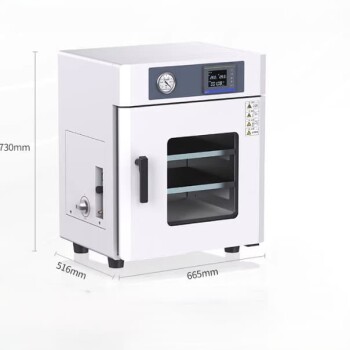
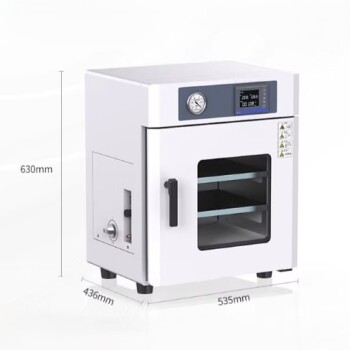
In the synthesis of biodiesel catalyst supports from biomass like Murici seeds, the laboratory oven serves as a critical stabilization unit, not just a simple heating device. Its primary functions are to prepare the raw biomass for mechanical size reduction and to condition the impregnated catalyst precursors for high-temperature thermal activation.
The laboratory oven acts as a gatekeeper for structural integrity. By ensuring the complete removal of moisture and solvents at specific process stages, it prevents mechanical inefficiency during grinding and catastrophic structural failure during the final activation phase.
Optimizing Mechanical Processing
The first critical function of the laboratory oven occurs immediately after the raw biomass has been washed.
Removing Surface and Internal Moisture
Raw biomass, such as Murici seeds, retains significant water content after the initial washing stage. The laboratory oven is utilized to thoroughly dry the biomass to a consistent baseline.
Enhancing Grinding Efficiency
Moist biomass tends to be fibrous and resilient, making it difficult to pulverize. Drying the seeds renders them brittle, which significantly improves the efficiency of grinding and sieving. This ensures a uniform particle size distribution, which is essential for consistent catalyst performance.
Protecting Catalyst Structure
The second critical function occurs after the "wet impregnation" process, where the support material is chemically treated.
Solvent Removal Post-Impregnation
During wet impregnation, the biomass support is saturated with chemical precursors and solvents. The oven is used to dry the catalyst precursors to ensure these solvents are fully evaporated before the next step.
Preventing Structural Collapse
If solvents remain within the catalyst pores during the subsequent high-temperature activation, they can vaporize instantly. This generates intense steam pressure within the material.
Preserving Mechanical Integrity
This internal pressure can cause the catalyst support to crack or shatter. By using the oven to gently remove volatiles first, you prevent this internal stress and protect the structural integrity of the final catalyst.
Common Pitfalls to Avoid
While the oven's role seems straightforward, neglecting these drying steps leads to specific failure modes.
The Risk of Incomplete Drying
Rushing the post-impregnation drying phase is a common error. Even trace amounts of trapped solvent can compromise the pore structure when the material enters the calcination furnace.
Overlooking Mechanical Prep
Attempting to grind biomass that has not been adequately dried in the oven often leads to equipment clogging and inconsistent particle sizes. This creates a "mush" rather than the fine powder required for effective catalysis.
Making the Right Choice for Your Goal
The specific application of the laboratory oven depends on which stage of the synthesis process you are currently managing.
- If your primary focus is Uniform Particle Size: Prioritize thorough drying of the washed seeds to ensure they fracture cleanly during the grinding process.
- If your primary focus is Catalyst Surface Area: Ensure complete solvent removal after impregnation to prevent pore collapse caused by rapid steam expansion during activation.
Proper thermal conditioning is the invisible step that determines the viability of your final catalyst.
Summary Table:
| Process Stage | Function of Laboratory Oven | Key Benefit/Outcome |
|---|---|---|
| Pre-Processing | Moisture & surface water removal | Enhances biomass brittleness for efficient grinding |
| Post-Grinding | Consistent drying of powders | Ensures uniform particle size distribution |
| Post-Impregnation | Controlled solvent evaporation | Prevents internal steam pressure and pore collapse |
| Pre-Activation | Thermal stabilization of precursors | Protects structural integrity before high-temp calcination |
Elevate Your Biomass Research with KINTEK Precision
Achieving the perfect catalyst support requires more than just heat; it requires precise thermal stabilization. At KINTEK, we specialize in high-performance laboratory equipment designed for the most demanding research workflows. Whether you are processing Murici seeds or developing advanced biodiesel catalysts, our comprehensive range of laboratory ovens, crushing and milling systems, and high-temperature furnaces ensures your materials maintain their structural integrity from raw biomass to final activation.
Why choose KINTEK?
- Uniform Thermal Control: Precision ovens for consistent drying and solvent removal.
- Complete Processing Solutions: From pellet presses and sieving equipment to high-pressure reactors.
- Expertise in Advanced Materials: Supporting your work in battery research, ceramics, and catalytic synthesis.
Don't let moisture or structural collapse compromise your results. Contact us today to find the perfect equipment for your laboratory!
References
- Thaíssa Saraiva Ribeiro, Leyvison Rafael Vieira da Conceição. Functionalized Biochar from the Amazonian Residual Biomass Murici Seed: An Effective and Low-Cost Basic Heterogeneous Catalyst for Biodiesel Synthesis. DOI: 10.3390/molecules28247980
This article is also based on technical information from Kintek Solution Knowledge Base .
Related Products
- Laboratory Scientific Electric Heating Blast Drying Oven
- 56L Vertical Laboratory Vacuum Drying Oven
- 23L Laboratory Vacuum Drying Oven
- 1200℃ Muffle Furnace Oven for Laboratory
- 1700℃ Muffle Oven Furnace for Laboratory
People Also Ask
- How does a laboratory electric drying oven contribute to the formation of the initial coating? Expert Insights
- What role does a precision laboratory drying oven play in the synthesis of GO-PANI nanocomposites? Protect Material Integrity
- What role does a laboratory drying oven play in the preparation of zinc oxide nanoparticle precursors?
- What is the necessity of using a laboratory drying oven when processing MoO3/GO composite nanopowders? Find out here.
- What is the role of a laboratory drying oven in cellulose citrate production? Ensure Material Stability & Purity