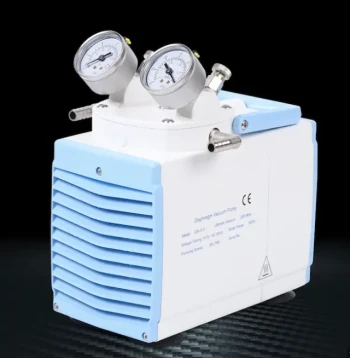
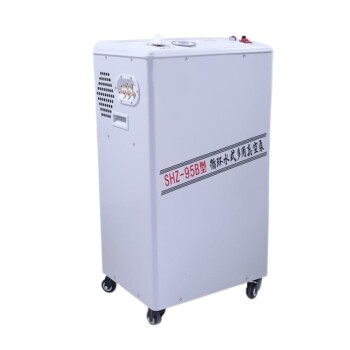
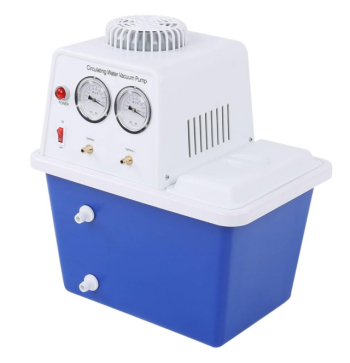
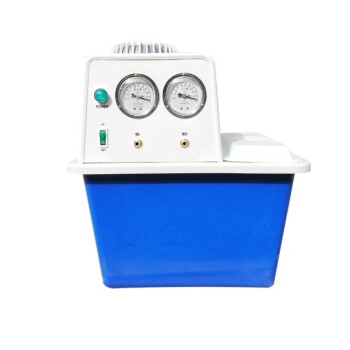
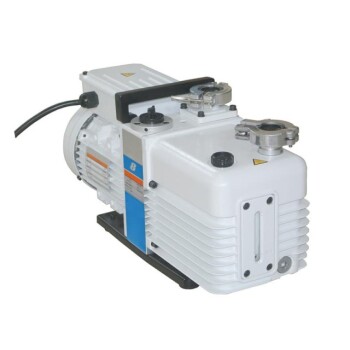
The use of a vacuum pump for suction filtration is a critical process control step, not just a method for bulk liquid removal. It provides the necessary mechanical force to achieve rapid separation of immobilized biocatalysts from washing liquids, specifically targeting the challenges posed by hydrophobic carriers saturated with water.
The core advantage of this method is the generation of forced convection, which accelerates solvent displacement from deep within the carrier pores. This significantly reduces the contact time between enzymes and the aqueous environment, preserving stability while ensuring a cleaner final product.
Mechanisms of Enhanced Separation
Accelerating Solvent Displacement
Hydrophobic carriers naturally resist the movement of water due to surface tension and capillary forces. Gravity filtration is often insufficient to overcome these forces within the internal structure of the carrier.
Vacuum filtration applies negative pressure to create forced convection. This active force pulls liquid rapidly through the carrier bed, effectively displacing solvents that would otherwise remain trapped in the pores.
Minimizing Aqueous Exposure
When handling biocatalysts, time is a critical variable. Prolonged exposure to aqueous environments can lead to enzyme leaching or instability.
By drastically increasing the rate of filtration, vacuum suction minimizes the exposure time of enzyme particles to the washing liquids. This rapid separation preserves the integrity of the immobilization bond and the activity of the enzyme.
Impact on Product Quality
Removal of Unbound Materials
Achieving a high-quality biocatalyst requires the complete elimination of residual components that are not chemically bound to the carrier.
Vacuum filtration ensures the effective removal of residual unbound enzymes and other impurities dissolved in the wash liquid. This results in a cleaner biocatalyst with a more defined specific activity.
Preparation for Downstream Processing
The efficiency of the filtration step directly impacts the subsequent stages of production.
By maximizing liquid removal, vacuum filtration improves the overall quality of the wet cake before it enters drying or storage stages. A drier, cleaner filter cake reduces the energy load on drying equipment and mitigates risks associated with long-term moisture retention.
Operational Considerations and Trade-offs
Managing Filter Cake Integrity
While powerful, vacuum filtration introduces mechanical stress to the catalyst bed. If the pressure differential is too high, it may cause the filter cake to compress tightly or crack.
Cracking leads to "channeling," where air bypasses the solids rather than pushing liquid through the pores. This reduces the efficiency of the forced convection and may leave pockets of moisture trapped within the carrier.
Solvent Volatility
When using volatile solvents, the reduced pressure from the vacuum can lower the boiling point, causing rapid evaporation. This may lead to uncontrolled cooling of the filter cake or the loss of valuable solvents, requiring careful pressure regulation.
Optimizing Your Filtration Strategy
To ensure you are leveraging vacuum filtration effectively for your specific bioprocess, consider the following process goals:
- If your primary focus is Enzyme Stability: prioritize high-flow vacuum settings to minimize the duration of aqueous exposure and prevent leaching.
- If your primary focus is Product Purity: ensure consistent vacuum pressure to drive forced convection deep into the pores for the complete removal of unbound residuals.
Vacuum filtration transforms the washing step from a passive drain into an active purification process.
Summary Table:
| Advantage | Mechanism | Impact on Biocatalyst |
|---|---|---|
| Forced Convection | Overcomes capillary forces via negative pressure | Rapidly displaces solvents from deep pores |
| Reduced Exposure | Increases filtration flow rate | Minimizes enzyme leaching and instability |
| Purity Control | Enhanced removal of unbound materials | Delivers a cleaner product with defined activity |
| Processing Efficiency | Optimizes filter cake dryness | Reduces energy load for downstream drying steps |
Optimize Your Filtration with KINTEK Precision
At KINTEK, we understand that effective separation is vital for maintaining the integrity of sensitive biocatalysts and high-purity materials. Our comprehensive range of laboratory equipment and consumables—including high-performance vacuum pumps, crushing and milling systems, and hydraulic presses—is engineered to meet the rigorous demands of modern research and production.
Whether you are managing moisture in hydrophobic carriers or seeking advanced high-temperature high-pressure reactors for chemical synthesis, KINTEK provides the reliable tools you need to ensure process stability and superior product quality.
Ready to elevate your laboratory efficiency? Contact us today to explore our full portfolio of solutions!
References
- Javier A. Martínez-Sanchez, Roberto Fernández‐Lafuente. Immobilized Biocatalysts of Eversa® Transform 2.0 and Lipase from Thermomyces Lanuginosus: Comparison of Some Properties and Performance in Biodiesel Production. DOI: 10.3390/catal10070738
This article is also based on technical information from Kintek Solution Knowledge Base .
Related Products
- Oil Free Diaphragm Vacuum Pump for Laboratory and Industrial Use
- Laboratory Vertical Water Circulating Vacuum Pump for Lab Use
- Circulating Water Vacuum Pump for Laboratory and Industrial Use
- Hydraulic Diaphragm Lab Filter Press for Laboratory Filtration
- Laboratory Benchtop Water Circulating Vacuum Pump for Lab Use
People Also Ask
- What are some typical applications for oil-free diaphragm vacuum pumps? Ensure Process Purity in Your Lab
- What is an oil-free diaphragm vacuum pump? The Ultimate Guide to Clean, Low-Maintenance Vacuum
- How does an oil-free diaphragm vacuum pump work? A Guide to Clean, Contamination-Free Vacuum
- What are the advantages of using oil-free diaphragm vacuum pumps? Achieve Clean, Low-Maintenance Vacuum
- What factors should be considered when selecting an oil-free diaphragm vacuum pump? A Guide to Optimal Performance & Longevity