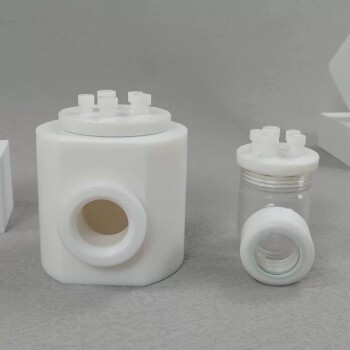
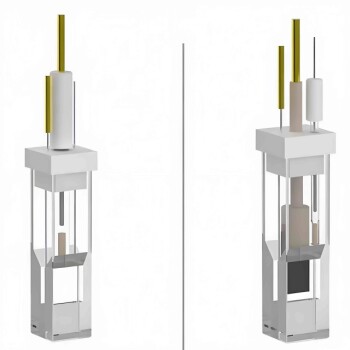
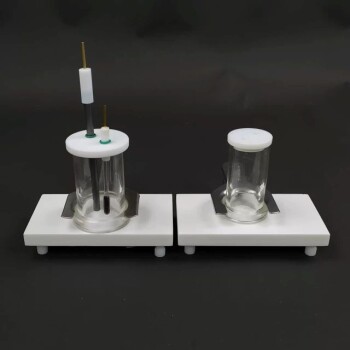
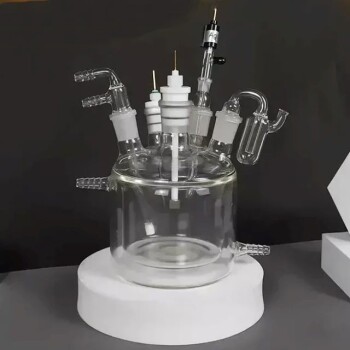
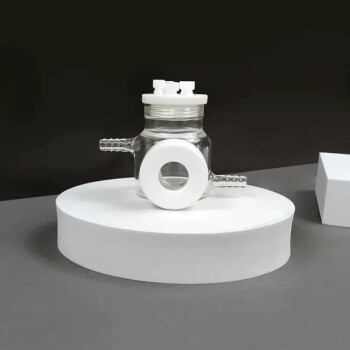
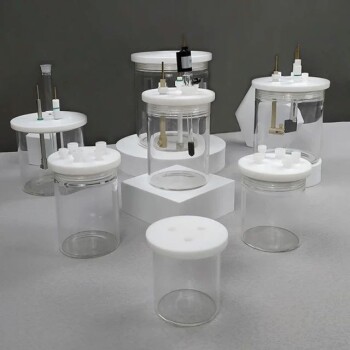
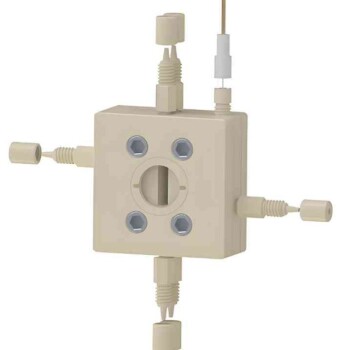
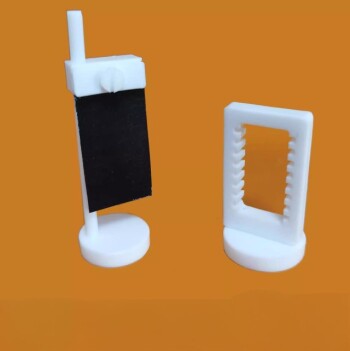
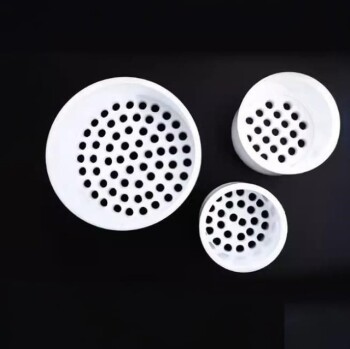
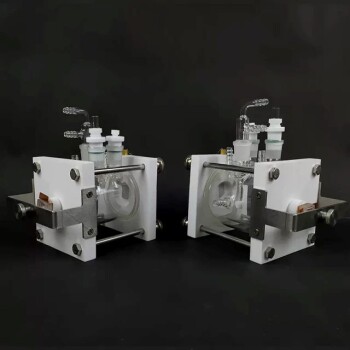
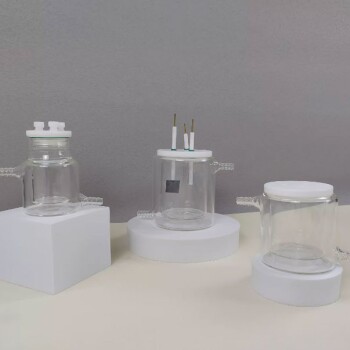
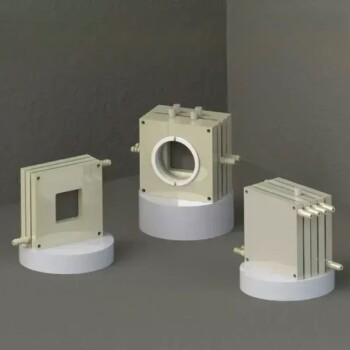
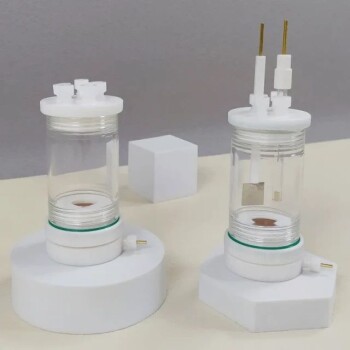
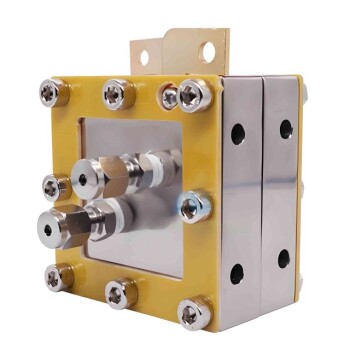
A Polytetrafluoroethylene (PTFE) lid functions as the critical stabilization interface for an operando electrochemical cell. Its primary role is to ensure experimental validity by chemically sealing the internal environment, preventing electrolyte contamination, and electrically isolating the electrodes to eliminate signal interference.
Core Takeaway: The PTFE lid is not just a cover; it is an active component in data integrity. By combining high chemical inertness with electrical insulation, it allows for the precise isolation of electrodes while maintaining a strictly controlled atmospheric environment essential for accurate operando measurements.
Preserving Chemical and Environmental Integrity
Ensuring Chemical Inertness
The most fundamental function of the PTFE lid is to provide a barrier with high chemical inertness.
In an operando setting, the cell contains reactive electrolytes and corrosion media. The PTFE material resists reacting with these substances, ensuring that the lid itself does not degrade or introduce impurities into the electrolyte.
Preventing Electrolyte Contamination
By maintaining a non-reactive surface, the lid actively prevents electrolyte contamination.
Any leaching of material from a standard plastic or metal lid could alter the electrochemical reactions being observed. PTFE ensures the electrolyte composition remains pure throughout the experiment.
Controlling the Atmospheric Environment
For experiments requiring specific gas conditions, the lid provides the necessary sealing properties to control the headspace.
As noted in advanced configurations, the lid ensures the environment remains strictly controlled during processes like nitrogen deoxygenation or carbon dioxide saturation. This prevents ambient air from skewing results during gas-sensitive reactions.
Ensuring Electrical Signal Accuracy
Electrical Insulation of Components
The PTFE lid acts as a robust electrical insulator between the various conductive components of the cell.
In an electrochemical setup, maintaining distinct voltage and current paths is mandatory. The lid physically separates the conductive parts, ensuring no unintended circuits are formed through the cell housing.
Eliminating Signal Interference
By isolating the reference and auxiliary electrodes, the lid helps eliminate electrical signal interference.
Accurate data collection relies on clean signals. The PTFE construction prevents "cross-talk" or noise that could occur if electrodes were in contact with a conductive or semi-conductive lid material.
Mechanical Stabilization and Data Reliability
Secure Electrode Fixation
The lid functions as a mechanical chassis, utilizing specialized ports to securely fix the electrodes and gas diffusion tubes.
This prevents movement or vibration of the reference and platinum counter electrodes during operation. Mechanical stability is vital for maintaining a constant distance between electrodes, which ensures consistent resistance and reliable data.
Reducing Crevice Corrosion
Using a PTFE lid helps effectively reduce the interference of crevice corrosion.
Crevice corrosion often occurs in stagnant micro-environments between sealing surfaces and electrodes. The material properties and design of the PTFE interface minimize these risks, protecting the electrochemical data from artifacts caused by localized corrosion.
Understanding the Trade-offs
Material Limitations vs. Benefits
While PTFE is ideal for chemical and electrical isolation, it is important to understand why it is chosen over other materials.
Metal lids offer high strength but require complex insulation to prevent short-circuiting. Glass lids offer transparency but are brittle and difficult to machine for precise electrode ports. PTFE strikes the necessary balance: it is chemically resistant like glass, but machinable and insulating like plastic, making it the superior choice for securing multiple electrodes.
Making the Right Choice for Your Goal
- If your primary focus is Signal Purity: rely on the PTFE lid’s electrical insulation to completely isolate the auxiliary and reference electrodes from external noise.
- If your primary focus is Long-term Stability: leverage the lid's chemical inertness to prevent corrosion media from degrading the cell or contaminating the electrolyte over time.
- If your primary focus is Gas Control: utilize the sealing properties of the lid to maintain a saturated environment (e.g., Nitrogen or CO2) without leakage.
The PTFE lid is the standard for operando cells because it guarantees that the only chemistry happening in your cell is the reaction you intend to measure.
Summary Table:
| Function | Benefit to Operando Research |
|---|---|
| Chemical Inertness | Prevents electrolyte contamination and material degradation. |
| Electrical Insulation | Eliminates signal interference and prevents short circuits. |
| Mechanical Fixation | Secures electrodes and gas tubes to maintain consistent geometry. |
| Atmospheric Control | Enables stable sealing for nitrogen deoxygenation or CO2 saturation. |
| Corrosion Resistance | Minimizes crevice corrosion artifacts for cleaner data sets. |
Elevate Your Electrochemical Research with KINTEK Precision
Maximize the accuracy of your operando measurements with KINTEK’s premium laboratory solutions. As experts in high-performance materials, KINTEK provides specialized electrolytic cells, electrodes, and high-quality PTFE consumables designed to eliminate signal noise and prevent contamination.
Whether you are conducting battery research, developing fuel cells, or utilizing our high-temperature reactors and hydraulic presses, we deliver the reliability your data demands.
Ready to optimize your experimental setup? Contact our technical team today to discover how our comprehensive range of lab equipment—from muffle furnaces to specialized PTFE components—can accelerate your breakthroughs.
References
- Hebe M. Villullas, Flávio C. Vicentin. A novel electrochemical cell for operando X-ray absorption measurements at low energies: Probing electrochemically induced electronic changes in palladium. DOI: 10.1016/j.elecom.2018.07.023
This article is also based on technical information from Kintek Solution Knowledge Base .
Related Products
- PTFE Electrolytic Cell Electrochemical Cell Corrosion-Resistant Sealed and Non-Sealed
- Side Window Optical Electrolytic Electrochemical Cell
- Thin-Layer Spectral Electrolysis Electrochemical Cell
- Electrolytic Electrochemical Cell for Coating Evaluation
- Custom PTFE Teflon Parts Manufacturer for PTFE Measuring Cylinder 10/50/100ml
People Also Ask
- What is the necessity of selecting a PTFE electrolytic cell? Ensure Precise Graphene Corrosion Testing Accuracy
- What is the proper method for cleaning the surface of an all-PTFE electrolytic cell? Ensure Accurate Results with a Pristine Surface
- How should an all-PTFE electrolytic cell be stored after use? Expert Maintenance Tips for Long-Lasting Performance
- What is the proper cleaning method for an all-PTFE electrolytic cell? Essential Tips for Surface Integrity
- What are the standard opening specifications for all-PTFE electrolytic cells? A Guide to Sealed vs. Non-Sealed Ports