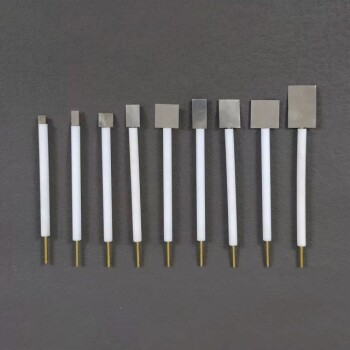
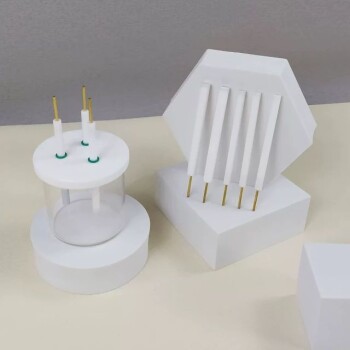
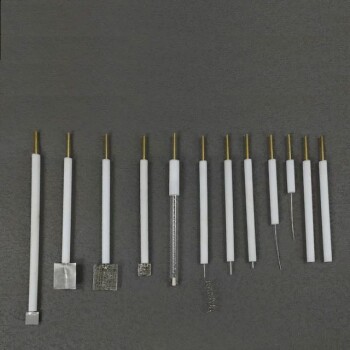
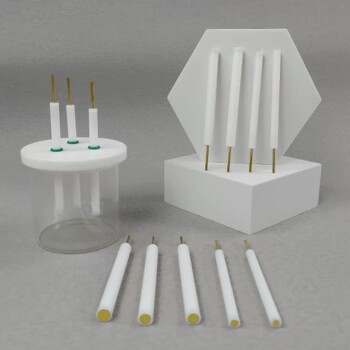
The primary technical advantages of a Platinum (Pt) plate electrode lie in its ability to function as an ideal "silent partner" in the electrochemical circuit. By combining exceptional chemical inertness with high electrical conductivity, a Pt plate ensures that the experimental data reflects only the behavior of the manganese coating, without interference from the counter electrode itself.
Core Takeaway In electrochemical testing, the validity of your data depends on the stability of your measurement tools. A Platinum plate electrode eliminates variables by preventing electrolyte contamination and minimizing polarization resistance, ensuring that the current response is driven purely by the coating being tested.
Chemical Stability and Signal Purity
Unwavering Chemical Inertness
The most critical advantage of Platinum is its resistance to dissolution. In aggressive electrolytes, such as the 3% NaCl solutions often used for testing manganese coatings, lesser materials might corrode.
Because Platinum does not undergo oxidation or dissolution, it prevents the release of impurity ions into the solution. This ensures the electrolyte remains chemically stable throughout the test.
Elimination of Parasitic Reactions
A Pt plate maintains stability across a wide potential range. It does not participate in unwanted reduction or oxidation reactions that could generate "noise" in your data.
This isolation is vital. It guarantees that the current measured by the potentiostat is attributed solely to the reactions occurring on the manganese working electrode, rather than side reactions at the counter electrode.
Electrical Performance and Geometry
Minimizing Polarization Resistance
The geometry of a "plate" electrode is functionally superior to a wire for rigorous testing. The primary reference highlights that the large surface area of a Pt plate effectively reduces the polarization resistance at the auxiliary electrode interface.
Lower resistance at the counter electrode prevents it from becoming a bottleneck in the system. This allows the potentiostat to drive the required current without hitting compliance voltage limits.
Smooth Current Transmission
Due to its high intrinsic conductivity and surface area, a Pt plate facilitates smooth current transmission within the circuit.
This ensures that the electrical circuit—comprising the working electrode, electrolyte, and counter electrode—remains efficient. Consequently, the resulting polarization curves are smoother and more accurate representations of the manganese coating's corrosion characteristics.
Understanding the Trade-offs
While Platinum plates are the technical gold standard, there are practical considerations to keep in mind to ensure they are used correctly.
Cost vs. Surface Area
Platinum is expensive. While a plate offers superior surface area compared to a wire, the cost increases significantly with size. You must balance the need for a large surface area (to minimize polarization) with the budget constraints of the project.
Sensitivity to Surface Contaminants
Although chemically inert, the large surface area of a plate can adsorb organic contaminants over time if not stored properly. This does not degrade the electrode but can slightly alter the active surface area, requiring regular cleaning (e.g., flame annealing or acid washing) to maintain peak performance.
Making the Right Choice for Your Goal
To maximize the utility of a Platinum plate electrode in your manganese coating tests, align its use with your specific experimental needs:
- If your primary focus is Measurement Accuracy: Rely on the Pt plate to provide a stable baseline free from ionic contamination, particularly in long-duration polarization tests.
- If your primary focus is Data Smoothness: Utilize the large surface area of the plate to minimize electrical noise and resistance, ensuring clean, interpretable Tafel plots.
By selecting a Platinum plate, you prioritize the integrity of your electrochemical environment, ensuring your results are artifacts of the sample, not the system.
Summary Table:
| Feature | Advantage for Electrochemical Testing |
|---|---|
| Chemical Inertness | Prevents electrolyte contamination and impurity release in 3% NaCl solutions. |
| Large Surface Area | Minimizes polarization resistance and prevents voltage compliance bottlenecks. |
| Wide Potential Range | Eliminates parasitic side reactions for cleaner, noise-free measurement data. |
| High Conductivity | Facilitates smooth current transmission for accurate and interpretable Tafel plots. |
Elevate Your Electrochemical Research Precision with KINTEK
Don't let instrumentation interference compromise your experimental integrity. KINTEK specializes in high-performance laboratory equipment, providing premium electrolytic cells and electrodes—including high-purity Platinum plate electrodes—engineered for stability and accuracy.
Whether you are analyzing manganese coatings or developing next-generation battery technologies, our comprehensive portfolio of furnaces, hydraulic presses, and battery research tools ensures your lab is equipped for success.
Ready to minimize measurement variables and achieve superior data purity? Contact our technical experts today to find the perfect electrochemical solutions for your specific application.
References
- Nerita Žmuidzinavičienė, Algirdas Šulčius. The Corrosion of Mn Coatings Electrodeposited from a Sulphate Bath with Te(VI) Additive and Influence of Phosphate Post-Treatment on Corrosion Resistance. DOI: 10.3390/coatings13091617
This article is also based on technical information from Kintek Solution Knowledge Base .
Related Products
- Platinum Sheet Electrode for Laboratory and Industrial Applications
- Rotating Platinum Disk Electrode for Electrochemical Applications
- Platinum Sheet Electrode for Battery Lab Applications
- Platinum Auxiliary Electrode for Laboratory Use
- High Purity Gold Platinum Copper Iron Metal Sheets
People Also Ask
- What is a common use for a platinum sheet electrode? As a Reliable Counter Electrode in Electrochemical Cells
- What is the most critical guideline for immersing a platinum sheet electrode in an electrolyte? Ensure Accurate Electrochemical Measurements
- What is the purity of the platinum sheet in a platinum sheet electrode? The Key to Reliable Electrochemical Data
- What is the expected lifespan of a platinum sheet electrode? Maximize Your Electrode's Service Life
- What are the available specifications for platinum sheet electrodes? Find the Perfect Fit for Your Electrochemical Needs