PTFE-lined high-pressure hydrothermal autoclaves enable the synthesis of cathode materials by providing a chemically inert, pressurized environment that facilitates reactions above a solvent's normal boiling point. This setup ensures high-purity material production by preventing vessel corrosion and metal ion contamination, while the resulting autogenous pressure promotes the controlled nucleation and growth of complex crystalline structures like $Co_xNi_{3-x}S_2$ or manganese dioxide.
Core Takeaway: The technical advantage of this system lies in its ability to combine extreme chemical resistance with high-pressure thermodynamics. This synergy allows researchers to overcome solubility limits and precisely regulate the morphology and phase purity of energy-storage materials.
Superior Chemical Stability and Purity
Protection Against Aggressive Solvents
The PTFE (polytetrafluoroethylene) liner is exceptionally inert, making it resistant to aggressive organic solvents such as methanol, acetonitrile, and NMP. This resistance is vital for solvothermal reactions where solvents must remain stable under heat and pressure to facilitate the intended chemical transformation.
Prevention of Metal Ion Contamination
By acting as a physical barrier, the PTFE liner protects the stainless steel outer shell from corrosive precursors and strong oxidants. This prevents unwanted metal ions from leaching into the reaction mixture, ensuring the high purity required for high-performance electrode materials.
Resistance to Strong Reducing and Oxidizing Agents
Cathode synthesis often involves harsh reagents like sodium borohydride or sulfur sources. PTFE maintains its structural integrity in the presence of these agents, preventing vessel degradation and ensuring the reaction environment remains chemically controlled.
Thermodynamic and Kinetic Advantages
Generating Autogenous Pressure
The sealed nature of the autoclave allows the system to generate autogenous pressure as the temperature rises. This pressure keeps solvents in a liquid state even when heated significantly above their atmospheric boiling points (typically 100°C to 200°C).
Enhanced Solubility and Diffusion
High-pressure conditions significantly increase the diffusion capacity of the solvent. This allows ions to penetrate deeply into substrate pore structures, such as biochar or nickel foam, facilitating in-situ nucleation and the formation of molecular-level composites.
Overcoming Solubility Limits
The combination of high temperature and pressure facilitates the dissolution and recrystallization of raw material powders that would otherwise remain insoluble. This is a critical requirement for the synthesis of advanced nanostructures like indium hydroxide or platinum-doped copper oxide.
Precision Control of Material Morphology
Regulated Nucleation and Crystal Growth
The stable, sealed environment provides the necessary conditions for controlled nucleation. This results in uniform nanorod configurations or nanocrystals with high catalytic activity, which are essential for enhancing the oxygen reduction reaction in electrochemical applications.
Phase and Structural Stability
High-pressure environments promote the transformation of precursors into specific crystalline phases, such as monoclinic CuO or beta-manganese dioxide. This structural precision ensures that the resulting cathode materials exhibit consistent electrochemical performance and long-term stability.
Successful Lattice Integration
For doped materials, the autoclave environment ensures that dopants (like platinum) are successfully integrated into the host lattice or uniformly distributed on the crystal surface. This level of uniformity is difficult to achieve using open-vessel synthesis methods.
Understanding the Trade-offs
Temperature Limitations of PTFE
While PTFE is highly resistant to chemicals, it has a functional temperature ceiling, typically around 250°C. Exceeding this limit can cause the liner to soften or deform, compromising the seal and potentially releasing toxic vapors.
Pressure and Mechanical Stress
The autogenous pressure generated is dependent on the filling degree of the liner. Overfilling the vessel can lead to excessive pressure that exceeds the mechanical safety limits of the stainless steel shell, posing a risk of vessel failure.
Heat Transfer Rates
PTFE is a thermal insulator, meaning it does not conduct heat as efficiently as the outer stainless steel shell. This can lead to a time lag between the furnace temperature and the actual internal reaction temperature, requiring careful calibration of heating cycles.
How to Apply This to Your Project
Making the Right Choice for Your Goal
- If your primary focus is high-purity phase control: Utilize the PTFE liner specifically to prevent metal leaching from the autoclave walls, ensuring that no stray iron or chromium ions interfere with your crystal lattice.
- If your primary focus is deep substrate penetration: Optimize the filling ratio to maximize autogenous pressure, which enhances the solvent's diffusion into porous scaffolds like nickel foam or carbon cloths.
- If your primary focus is morphology regulation: Focus on the precise control of the heating and cooling ramps, as the stable pressure environment will handle the nucleation kinetics once the threshold temperature is reached.
By leveraging the unique thermodynamic environment of a PTFE-lined autoclave, you can achieve the structural precision and chemical purity necessary for next-generation energy storage solutions.
Summary Table:
| Advantage Category | Technical Benefit | Impact on Material Synthesis |
|---|---|---|
| Chemical Stability | Inert PTFE liner prevents vessel corrosion | Ensures high purity; no metal ion contamination |
| Thermodynamics | Generates autogenous pressure above boiling point | Increases solubility and deep substrate penetration |
| Morphology Control | Stable, sealed nucleation environment | Produces uniform nanostructures and precise phases |
| Versatility | Resistance to aggressive solvents and reducers | Enables use of diverse precursors and harsh reagents |
Elevate Your Battery Research with KINTEK
Achieving the perfect crystal structure and phase purity in cathode materials requires equipment that performs under pressure. KINTEK specializes in high-performance laboratory solutions, offering a comprehensive range of high-temperature high-pressure reactors and autoclaves designed specifically for sensitive solvothermal and hydrothermal reactions.
Beyond our industry-leading reactors, our portfolio includes everything you need for advanced material preparation:
- Precision Preparation: Crushing and milling systems and high-accuracy hydraulic presses.
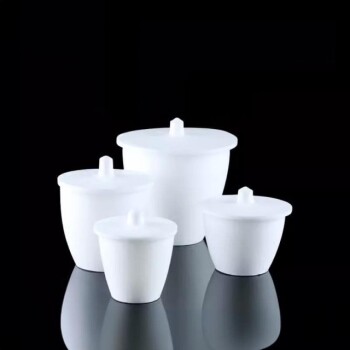
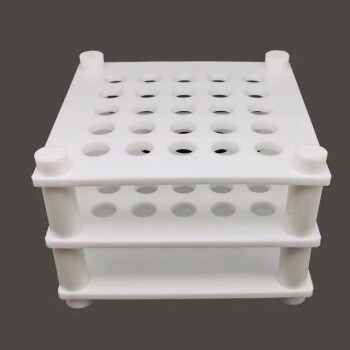
- Essential Consumables: High-quality PTFE products, ceramics, and crucibles to maintain sample integrity.
- Thermal Processing: Muffle, tube, and vacuum furnaces for post-synthesis heat treatment.
Ready to optimize your synthesis workflow? Contact our technical experts today to find the ideal equipment for your specific energy-storage research goals.
References
- Yanxia Yu, Xihong Lu. Carbon‐anchored Sb nanoparticles as high‐capacity and stable anode for aqueous alkaline batteries. DOI: 10.1002/bte2.20230016
This article is also based on technical information from Kintek Solution Knowledge Base .
Related Products
- High Pressure Laboratory Autoclave Reactor for Hydrothermal Synthesis
- Laboratory High Pressure Horizontal Autoclave Steam Sterilizer for Lab Use
- Stainless High Pressure Autoclave Reactor Laboratory Pressure Reactor
- Portable High Pressure Laboratory Autoclave Steam Sterilizer for Lab Use
- Mini SS High Pressure Autoclave Reactor for Laboratory Use
People Also Ask
- What role does a high-pressure reactor (autoclave) play in the synthesis of NiCuFe-LDH? Master Hydrothermal Growth
- What Role Does a High-Pressure Reactor or Autoclave Play in HA Catalyst Synthesis? Achieve High Surface Area Materials
- What equipment is required for hydrothermal synthesis of Ga0.25Zn4.67S5.08? Optimize Your Semiconductor Production
- What is the function of a high-pressure reactor in the hydrothermal synthesis of boehmite? Expert Process Insights
- What role does an autoclave play in the synthesis of MnO2 nanofibers? Mastering Hydrothermal Growth