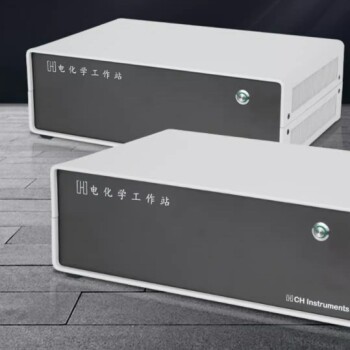
Electrodeposition equipment provides a significant technical advantage over immersion methods by actively driving negatively charged Graphene Quantum Dots (GQDs) onto TiO2 nanorods using a specific electric field. unlike the passive and random nature of immersion, this technique creates a targeted delivery system that results in stronger adhesion and precise control over material loading.
Core Takeaway By replacing random physical contact with electrically driven migration, electrodeposition induces robust chemical bonding rather than weak physical adsorption. This ensures the GQDs remain securely attached during repeated photocatalytic cycles, solving the common issue of material detachment found in immersion-based composites.
The Mechanism of Active Deposition
Directed Migration
Electrodeposition utilizes the inherent properties of the materials to ensure efficient coating. Because GQDs are negatively charged, the application of a specific electric field actively drives them toward the surface of the TiO2 nanorods.
This differs fundamentally from immersion, where particles float randomly until they happen to make contact with the surface. The electric field ensures that the GQDs are forcibly and efficiently directed to their target.
Precision in Loading
One of the primary technical challenges in nanomaterial synthesis is consistency. Electrodeposition allows for precise control over the loading amount of GQDs.
By adjusting the electrical parameters, you can dictate exactly how much material is deposited. This level of control is difficult to achieve with immersion, which relies on solution concentration and soaking time but lacks an active driving force.
Durability and Bond Strength
Stronger Chemical Bonding
The primary reference highlights that electrodeposition does more than just place the dots on the rods; it changes how they adhere. The electric field induces stronger chemical bonding between the GQDs and the TiO2 surface.
Immersion methods typically result in random physical adsorption. These physical bonds are relatively weak and susceptible to breaking under stress or environmental changes.
Preventing Detachment
The ultimate test of these materials is their performance over time. During repeated photocatalytic cycles, materials loaded via simple immersion often detach, leading to a rapid degradation in performance.
Because electrodeposition creates a robust chemical interface, the GQDs are prevented from detaching. This stability ensures that the material maintains its efficacy over a longer lifespan.
Understanding the Trade-offs
Equipment Complexity
While electrodeposition offers superior performance, it introduces complexity. It requires a power source, electrodes, and precise setup parameters to generate the necessary electric field.
Simplicity vs. Stability
Immersion is a "low barrier to entry" method requiring only a solution and time. However, this simplicity comes at the cost of the structural integrity and longevity provided by the electrodeposition process.
Making the Right Choice for Your Goal
To select the correct loading method, you must weigh the importance of long-term stability against process simplicity.
- If your primary focus is Long-Term Durability: Choose electrodeposition to ensure strong chemical bonding that withstands repeated catalytic cycles without detachment.
- If your primary focus is Precise Composition: Choose electrodeposition to actively control the exact loading amount of GQDs on the nanorods.
- If your primary focus is Rapid Prototyping: Immersion may suffice for initial tests where long-term stability is not yet the priority.
Electrodeposition transforms the loading process from a passive coating technique into an active bonding procedure, essential for high-performance applications.
Summary Table:
| Feature | Electrodeposition Method | Immersion Method |
|---|---|---|
| Mechanism | Active electrical migration (Directed) | Passive physical contact (Random) |
| Bonding Type | Strong chemical bonding | Weak physical adsorption |
| Loading Control | High precision via electrical parameters | Low (concentration-dependent) |
| Durability | High; prevents detachment during cycles | Low; prone to material loss |
| Setup Complexity | Requires electrodes & power source | Simple soaking process |
Elevate Your Material Synthesis with KINTEK Precision
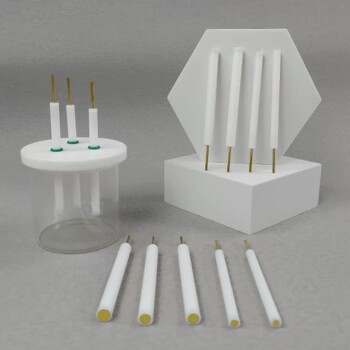
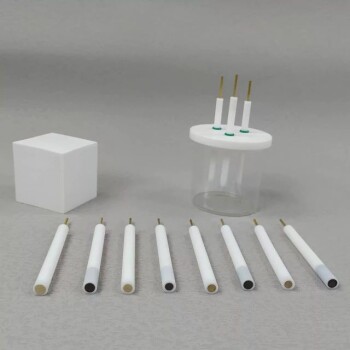
Unlock superior durability and precision in your photocatalytic research with KINTEK’s advanced laboratory solutions. Whether you are optimizing electrodeposition processes for GQD-TiO2 composites or require specialized electrolytic cells and high-performance electrodes, our equipment is designed to ensure robust chemical bonding and consistent results.
From high-temperature furnaces for nanorod preparation to precision battery research tools and high-pressure reactors, KINTEK provides the comprehensive toolkit needed by modern researchers to transition from passive prototyping to active, high-performance material engineering.
Ready to stabilize your catalysts? Contact KINTEK today to find the perfect equipment for your lab!
References
- Anuja Bokare, Folarin Erogbogbo. TiO2-Graphene Quantum Dots Nanocomposites for Photocatalysis in Energy and Biomedical Applications. DOI: 10.3390/catal11030319
This article is also based on technical information from Kintek Solution Knowledge Base .
Related Products
- Electron Beam Evaporation Coating Oxygen-Free Copper Crucible and Evaporation Boat
- Electrode Fixture for Electrochemical Experiments
- Molybdenum Tungsten Tantalum Evaporation Boat for High Temperature Applications
- Rotating Platinum Disk Electrode for Electrochemical Applications
- Electron Beam Evaporation Coating Gold Plating Tungsten Molybdenum Crucible for Evaporation
People Also Ask
- What is the container that holds the metal source material called in e-beam evaporation? Ensure Purity and Quality in Your Thin-Film Deposition
- What is e-beam evaporation? Achieve High-Purity Thin Film Deposition for Your Lab
- What is the voltage of e-beam evaporation? Achieve Precise Thin-Film Deposition
- What is the current of e-beam evaporation? A Guide to High-Purity Thin Film Deposition
- What are the applications of e-beam evaporation? Achieve High-Purity Coatings for Optics & Electronics