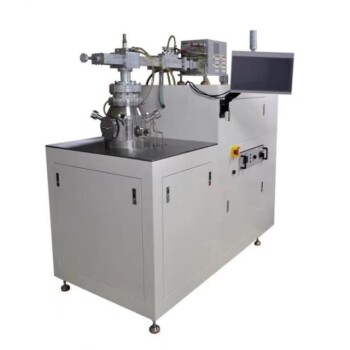
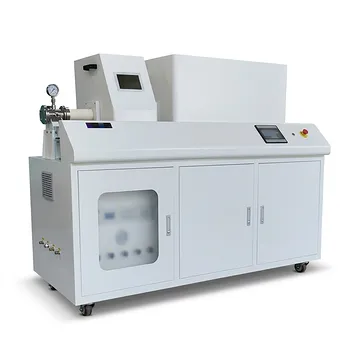
The Rotational Ellipsoidal Cavity (REC) reactor is a specialized chemical vapor deposition system characterized by its unique ellipsoidal resonant cavity and a quartz bell jar process chamber. This geometric design allows for the generation of a stable, high-density plasma ball that is positioned precisely above the substrate to facilitate diamond growth.
The REC reactor's primary technical advantage is its ability to maintain high energy density across a wide pressure range, ensuring the stable growth of high-quality diamond thin films on small to medium-sized substrates.
The Core Design Architecture
Ellipsoidal Resonant Cavity
The defining feature of this reactor is the ellipsoidal shape of its resonant cavity.
Unlike standard cylindrical cavities, this geometry is specifically engineered to focus electromagnetic energy into a concentrated zone.
This focusing effect is critical for establishing the high energy density required for diamond synthesis.
Quartz Bell Jar Integration
Situated within the cavity is a quartz bell jar, which functions as the vacuum process chamber.
This component isolates the reaction environment while allowing the external electromagnetic fields to penetrate and sustain the plasma.
The combination of the jar and the cavity ensures the process remains contained yet energetically efficient.
Plasma Dynamics and Performance
Precise Plasma Positioning
The REC design enables the creation of a distinct plasma ball that "hovers" directly above the substrate.
Because the cavity focuses energy so effectively, the plasma is not randomly dispersed but is instead locked into a stable position.
This proximity ensures that the reactive species needed for diamond growth are delivered efficiently to the growth surface.
Stability Across Pressure Ranges
A key technical characteristic of the REC reactor is its operational versatility regarding pressure.
The system can maintain high energy density across a wide range of process pressures without losing plasma stability.
This flexibility allows operators to fine-tune growth conditions for different film qualities or growth rates.
Understanding the Limitations
Substrate Size Constraints
While the REC reactor offers high stability, it is inherently limited by its focal geometry.
The primary reference indicates the system is optimized for small to medium-sized substrates, typically around 2 inches in diameter.
Scaling this specific design up for significantly larger substrates is challenging because the focused "plasma ball" may not provide uniform coverage over a wider area.
Making the Right Choice for Your Goal
To determine if an REC reactor is the correct tool for your diamond deposition needs, consider the following trade-offs:
- If your primary focus is high-quality thin films: The REC reactor is an excellent choice due to its stable plasma ball and high energy density, which promote high-quality crystal growth.
- If your primary focus is large-scale industrial output: You may face limitations, as the design is specifically optimized for substrates with a diameter of approximately 2 inches.
The REC reactor represents a precision solution for high-fidelity diamond synthesis on a medium scale.
Summary Table:
| Feature | Technical Characteristic | Impact on Diamond Growth |
|---|---|---|
| Cavity Geometry | Ellipsoidal Resonant Cavity | Focuses energy for maximum plasma density |
| Chamber Type | Quartz Bell Jar | Enables vacuum isolation with high RF transparency |
| Plasma Stability | Localized "Plasma Ball" | Ensures consistent delivery of reactive species |
| Pressure Range | Wide Operational Versatility | Allows fine-tuning of growth rates and film quality |
| Substrate Size | Optimized for ~2-inch diameters | Ideal for high-fidelity, medium-scale production |
Elevate Your Diamond Synthesis with KINTEK Precision
Are you looking to achieve superior film quality and unmatched plasma stability in your research? KINTEK specializes in advanced laboratory solutions, including high-performance MPCVD systems and high-temperature reactors tailored for precision material growth.
Our comprehensive portfolio supports your entire workflow—from crushing and milling systems to high-pressure autoclaves and essential ceramic consumables. Whether you are focused on battery research or high-fidelity diamond deposition, KINTEK provides the expertise and equipment to drive your innovation forward.
Ready to optimize your deposition process? Contact our technical experts today to find the perfect solution for your lab!
References
- Oleg Babčenko, Alexander Kromka. GROWTH AND PROPERTIES OF DIAMOND FILMS PREPARED ON 4-INCH SUBSTRATES BY CAVITY PLASMA SYSTEMs. DOI: 10.37904/nanocon.2020.3701
This article is also based on technical information from Kintek Solution Knowledge Base .
Related Products
- Electric Rotary Kiln Small Rotary Furnace for Activated Carbon Regeneration
- Cylindrical Resonator MPCVD Machine System Reactor for Microwave Plasma Chemical Vapor Deposition and Lab Diamond Growth
- Customizable High Pressure Reactors for Advanced Scientific and Industrial Applications
- Visual High-Pressure Reactor for In-Situ Observation
- Stainless High Pressure Autoclave Reactor Laboratory Pressure Reactor
People Also Ask
- What is a rotary kiln electric furnace? Achieve Superior Uniform Heating for Your Materials
- What is the temperature of activated carbon regeneration? Unlock the 1000°F Process for Reuse
- What is the regeneration temperature of activated carbon? Optimize Your Process with the Right Method
- What are the characteristics of the slipping, slumping, and rolling modes of bed motion? Optimize Your Rotary Process
- What are the parts of a carbon regeneration kiln? A Guide to Its Core Components and Function