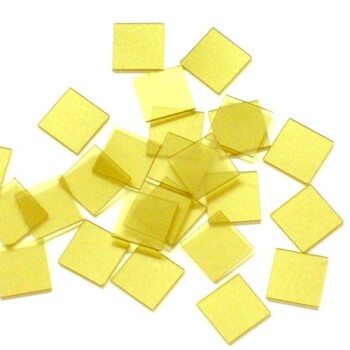
Typical characteristics of HPHT diamonds center on metallic "flux" inclusions—residues of the molten catalyst used during growth—and distinct color patterns. While these diamonds can be chemically pure, they frequently contain microscopic traces of iron, nickel, or cobalt, appearing as dark, opaque specks or exhibiting a metallic luster under reflected light.
Core Insight: The defining signature of an HPHT diamond is the presence of metallic inclusions derived from the manufacturing catalyst. Unlike natural diamonds, which capture mineral crystals, or CVD diamonds, which contain non-metallic graphite, HPHT stones encapsulate actual metal, sometimes making them magnetic and visually distinct under magnification.
The Primary Characteristic: Metallic Flux Inclusions
The most definitive feature of High-Pressure High-Temperature (HPHT) diamonds is the nature of their internal flaws. Because these diamonds are grown in a molten metal solution, small droplets of this solution often become trapped within the crystal lattice.
Composition of Inclusions
These inclusions consist of the metallic catalysts used to facilitate diamond growth.
The specific metals usually include iron, nickel, and cobalt.
Visual Appearance
To the naked eye or under standard magnification, these inclusions often appear as black or opaque specks.
However, unlike the carbon spots found in other diamonds, these specks can exhibit a metallic luster when viewed under reflected light.
Differentiation from Other Diamonds
This is a critical identification tool for gemologists.
Natural diamonds rarely capture pure metals during formation. Similarly, CVD (Chemical Vapor Deposition) lab-grown diamonds typically contain non-metallic black graphitic inclusions. Therefore, if a metallic inclusion is spotted, the stone is almost certainly HPHT-grown.
Color and Structural Characteristics
Beyond solid inclusions, the HPHT growth process leaves specific structural and optical signatures that differ from natural diamond formation.
Color Tints and Nitrogen
HPHT diamonds are often produced with yellowish or brownish tints.
This occurs because the diamonds are exposed to nitrogen within the growth chamber. While the HPHT method is capable of producing high-grade colorless (D-F) diamonds, the presence of nitrogen is a common byproduct that affects the stone's hue.
Geometric Color Distribution
The way color manifests in an HPHT diamond is often uneven.
Experts look for geometric color zoning, where the color concentrates in specific growth sectors. This differs from the more organic or random color distribution often seen in natural stones.
Crystal Shape and Grain
The external crystal shape of a rough HPHT diamond is distinct.
While natural diamonds typically form as octahedrons (eight-sided), HPHT crystals usually exhibit a cubo-octahedral shape. Internally, this results in a granular structure and specific growth patterns that are reliable identifiers for trained graders.
Optical Phenomena and Fluorescence
The specific conditions of high pressure and temperature create unique reactions to light and radiation.
Fluorescence Patterns
Under UV light, HPHT diamonds often display unique fluorescence colors.
A common diagnostic feature is a cross-shaped pattern on the crown or pavilion of the stone when viewed under imaging instruments.
Phosphorescence
Some HPHT diamonds exhibit phosphorescence.
This means the diamond continues to glow for a brief period after the UV light source has been turned off. This "after-glow" is a strong indicator of synthetic origin.
Lack of Strain Patterns
When viewed through polarizing filters, natural diamonds almost always show complex "strain patterns" due to the chaotic nature of their formation deep in the earth.
HPHT diamonds, grown in a controlled, constant-pressure environment, typically do not show strain patterns, or they exhibit very weak, simple banding.
Understanding the Trade-offs
While HPHT diamonds offer an accessible entry point to diamond ownership, the manufacturing process introduces distinct limitations that buyers must understand.
Magnetic Attraction
Because the inclusions contain iron, nickel, or cobalt, some HPHT diamonds are actually magnetic.
Strong magnets can pick up these stones if the metallic inclusions are large enough, which is an immediate giveaway of their artificial origin.
Clarity vs. Color
The HPHT process is fast and effective at creating large stones, often resulting in high color grades.
However, this speed can compromise clarity. The resulting stones may require careful screening to avoid those with visible metallic specks, meaning you might find a stone with excellent color (D-F) but slightly lower clarity due to the flux remnants.
Making the Right Choice for Your Goal
When evaluating an HPHT diamond, your specific requirements should dictate your scrutiny of these characteristics.
- If your primary focus is Visual Perfection: Inspect the stone under strong reflected light to ensure no metallic inclusions are reflecting back at the eye, as these can be more distracting than standard carbon spots.
- If your primary focus is Identification: Use the combination of lack of strain patterns, geometric color zoning, and reaction to a magnet to distinguish these stones from natural or CVD counterparts.
- If your primary focus is Budget: Accept that slight yellowish tints (caused by nitrogen) or minor metallic inclusions are inherent to the process and often allow for a lower price point on larger carat weights.
The presence of metal is not a defect, but a chemical fingerprint of the immense pressure used to create the stone.
Summary Table:
| Feature | HPHT Diamond Characteristic | Identification Insight |
|---|---|---|
| Inclusion Type | Metallic Flux (Iron, Nickel, Cobalt) | Appear as opaque specks with a metallic luster |
| Crystal Shape | Cubo-octahedral | Distinct from natural octahedral shapes |
| Color Zoning | Geometric/Cross-shaped | Concentrates in specific growth sectors |
| Fluorescence | Often shows an 'after-glow' | Phosphorescence is a strong indicator of HPHT |
| Magnetism | Potential magnetic attraction | Caused by high concentrations of metal catalysts |
| Strain Patterns | Absent or very weak | Indicates a controlled, stable growth environment |
Enhance Your Material Research with KINTEK Precision
Precision starts with the right equipment. Whether you are studying diamond growth or advancing material science, KINTEK provides the specialized tools you need for high-pressure and high-temperature environments. Our comprehensive range includes:
- High-Pressure High-Temperature Reactors & Autoclaves for controlled synthesis.
- Advanced Crushing, Milling, and Sieving Systems for material preparation.
- Muffle, Tube, and Vacuum Furnaces for precise thermal processing.
- Hydraulic Presses (Pellet, Hot, Isostatic) for high-density sample creation.
From high-purity ceramics and crucibles to cutting-edge battery research tools, KINTEK is committed to empowering labs and manufacturers worldwide with reliable, high-performance solutions.
Ready to upgrade your laboratory capabilities? Contact us today to find the perfect equipment for your application!
Related Products
- Manual High Temperature Heated Hydraulic Press Machine with Heated Plates for Lab
- Laboratory High Pressure Vacuum Tube Furnace
- Customizable Laboratory High Temperature High Pressure Reactors for Diverse Scientific Applications
- CVD Diamond for Thermal Management Applications
- HFCVD Machine System Equipment for Drawing Die Nano-Diamond Coating
People Also Ask
- What is a hot hydraulic press? Harness Heat and Pressure for Advanced Manufacturing
- What is a heated hydraulic press used for? Essential Tool for Curing, Molding, and Laminating
- Why is a heated hydraulic press used for warm pressing NASICON green tapes? Optimize Your Solid Electrolyte Density
- What does a hydraulic heat press do? Achieve Industrial-Scale, Consistent Pressure for High-Volume Production
- Why is a heated laboratory hydraulic press necessary for composite laminates? Achieve Void-Free Structural Integrity