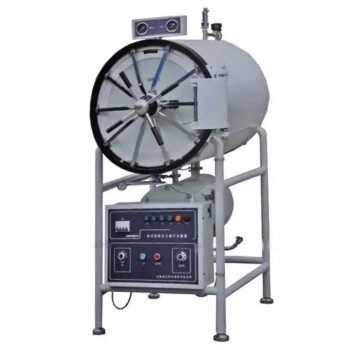
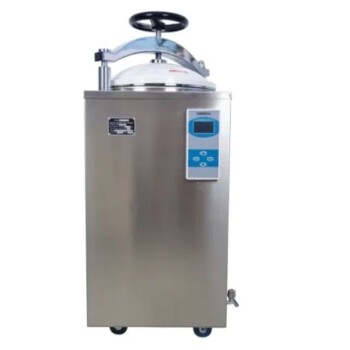
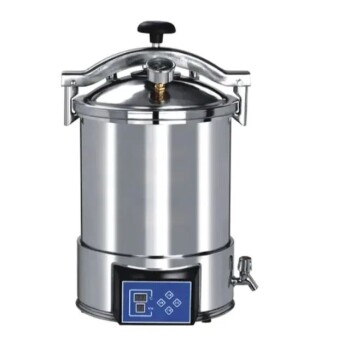
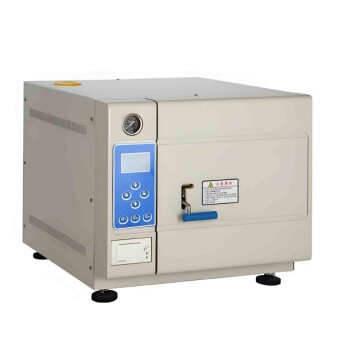
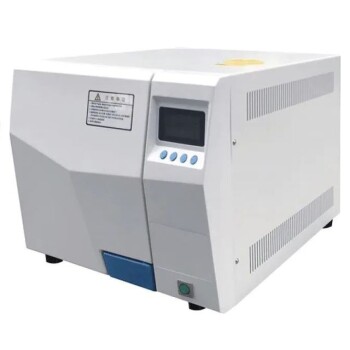
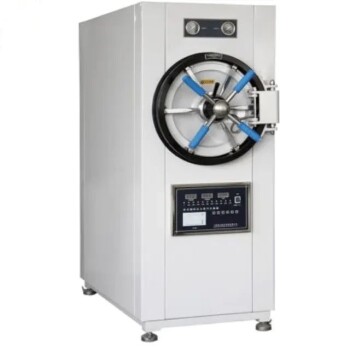
The core function of an autoclave in high-pressure hydrothermal system (HPHS) testing is to generate a sealed, controlled experimental environment that simulates extreme operating conditions. By heating deionized water within a confined space, the device creates high-pressure steam—reaching approximately 28 MPa—to rigorously assess the durability of ceramic materials.
The autoclave serves as a stress-test chamber, subjecting materials to high temperatures, intense pressure, and corrosive fluids simultaneously. This process is indispensable for validating the chemical and mechanical integrity of proton-conducting ceramics before they are used in practical applications.
The Mechanics of Environmental Simulation
Generating High-Pressure Steam
The primary mechanism of the HPHS autoclave involves heating deionized water within a sealed vessel.
Because the volume is fixed, the increasing temperature forces the water to transition into steam, drastically raising the internal pressure.
In testing scenarios for ceramics like BZCY (Barium Zirconium Cerium Yttrium oxide), this pressure can reach levels as high as 28 MPa.
Simulating Corrosive Conditions
Beyond simple pressure, the autoclave replicates a corrosive fluid environment.
High-temperature steam is highly reactive and can degrade materials that appear stable under standard atmospheric conditions.
This allows researchers to observe how the ceramic interacts with aggressive aqueous media over extended periods.
Evaluating Material Integrity
Assessing Chemical Stability
The most critical role of the autoclave is determining if the ceramic's chemical structure can withstand harsh environments.
For proton-conducting materials, exposure to high-pressure steam reveals potential chemical breakdowns or phase changes.
If the material survives the autoclave without significant degradation, it demonstrates the stability required for real-world deployment.
Testing Mechanical Reliability
Physical strength is often compromised when a material undergoes chemical attack.
The HPHS testing environment exposes the ceramic to mechanical stress induced by the high-pressure atmosphere.
This ensures that the material maintains its structural integrity and does not crack or crumble under operational loads.
Understanding the Constraints and Risks
Specificity of Conditions
While highly effective, an autoclave test is specific to the parameters set, such as the 28 MPa pressure point.
It simulates a "worst-case" or specific operating scenario, but may not capture every fluctuating variable found in a dynamic, real-world system.
Operational Intensity
The generation of 28 MPa represents a significant energy input and a hazardous physical environment.
Designing equipment to safely contain these forces adds complexity and cost to the testing phase compared to standard ambient testing.
Making the Right Choice for Your Goal
When incorporating HPHS autoclave testing into your material development workflow, consider your specific objectives:
- If your primary focus is Validation: Ensure your autoclave parameters (pressure and temperature) meet or slightly exceed the maximum expected operating conditions of the final application to prove reliability.
- If your primary focus is Research: Use the controlled environment to incrementally increase pressure (up to the 28 MPa benchmark) to identify the exact failure point of the ceramic.
The autoclave is not just a heating vessel; it is the gatekeeper that determines whether a ceramic is robust enough to transition from the laboratory to the field.
Summary Table:
| Feature | HPHS Autoclave Function | Benefit for Ceramic Testing |
|---|---|---|
| Pressure Generation | Reaches up to 28 MPa | Simulates extreme deep-sea or industrial environments. |
| Atmosphere Control | High-temperature steam | Evaluates resistance to corrosive aqueous media. |
| Structural Assessment | Simultaneous heat/pressure stress | Validates mechanical integrity and crack resistance. |
| Material Validation | Phase stability testing | Ensures chemical structures remain stable during use. |
Elevate Your Materials Research with KINTEK's Advanced Pressure Solutions
Ensure your ceramics can withstand the most rigorous industrial demands. KINTEK specializes in high-performance laboratory equipment, offering industry-leading high-temperature high-pressure reactors and autoclaves designed specifically for HPHS testing, catalyst research, and material validation.
From muffle and vacuum furnaces to specialized hydrostatic presses and ceramic crucibles, we provide the precision tools necessary to push the boundaries of material science. Our equipment empowers researchers to simulate conditions up to 28 MPa and beyond with unmatched safety and reliability.
Ready to bridge the gap from laboratory success to field-ready performance?
Contact KINTEK Experts Today to find the perfect autoclave or high-pressure system for your specific testing requirements.
References
- Jiazhuo Peng, Sen Lin. Study on properties of BaZr<sub>0.7</sub>Ce<sub>0.2</sub>Y<sub>0.1</sub>O<sub>3−δ</sub> ceramics prepared by high-pressure sintering. DOI: 10.2109/jcersj2.19186
This article is also based on technical information from Kintek Solution Knowledge Base .
Related Products
- High Pressure Laboratory Autoclave Reactor for Hydrothermal Synthesis
- Mini SS High Pressure Autoclave Reactor for Laboratory Use
- Stainless High Pressure Autoclave Reactor Laboratory Pressure Reactor
- Portable High Pressure Laboratory Autoclave Steam Sterilizer for Lab Use
- Automatic High Temperature Heated Hydraulic Press Machine with Heated Plates for Lab
People Also Ask
- What role does a high-pressure reactor (autoclave) play in the synthesis of NiCuFe-LDH? Master Hydrothermal Growth
- What Role Does a High-Pressure Reactor or Autoclave Play in HA Catalyst Synthesis? Achieve High Surface Area Materials
- What equipment is required for hydrothermal synthesis of Ga0.25Zn4.67S5.08? Optimize Your Semiconductor Production
- What is the function of a high-pressure reactor in the hydrothermal synthesis of boehmite? Expert Process Insights
- What role does an autoclave play in the synthesis of MnO2 nanofibers? Mastering Hydrothermal Growth