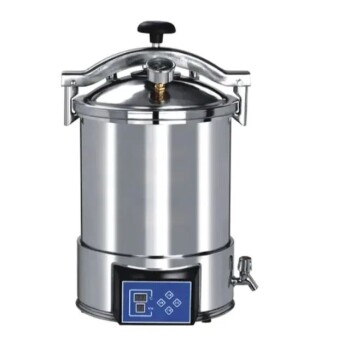
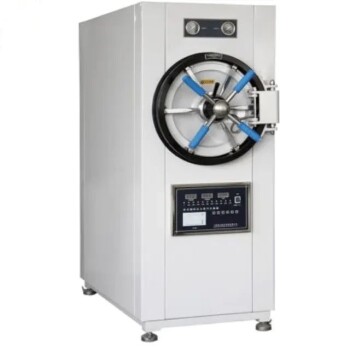
A high-pressure reactor (autoclave) provides a sealed, high-pressure hydrogen environment and precise isothermal control required to drive the sequential reduction of nitrobenzene. These reactors typically maintain hydrogen pressures between 0.4 MPa and 5.0 MPa and temperatures ranging from 80 °C to 200 °C. By ensuring the reaction remains in the liquid phase and maximizing gas-to-liquid mass transfer, the autoclave facilitates the conversion of nitrobenzene to intermediates like aniline or fully saturated products like cyclohexylamine.
A high-pressure reactor serves as the critical environment for nitrobenzene hydrogenation by overcoming the solubility limits of hydrogen gas. It stabilizes the reaction kinetics through precise temperature regulation and superior sealing, ensuring safety and repeatable data.
The Role of High-Pressure Hydrogen Environments
Maximizing Hydrogen Solubility
The primary function of the autoclave is to maintain a high-pressure atmosphere, often reaching 3 MPa to 5 MPa. This elevated pressure significantly increases the solubility of hydrogen molecules within the solvent or liquid substrate.
Increased solubility ensures that the solid catalyst—whether an iron nanocatalyst or Ru/OMC—has a constant and abundant supply of hydrogen. This is essential for achieving the high-purity yields required in deep conversion processes.
Driving Sequential Reduction Stages
Sequential hydrogenation requires specific energy thresholds to move from the nitro group reduction (forming aniline) to the saturation of the benzene ring (forming cyclohexylamine). High-pressure reactors provide the stable driving force necessary to push the reaction beyond the initial aniline stage.
By adjusting the pressure (e.g., from 0.4 MPa for basic reduction to 3 MPa for ring saturation), researchers can control the extent of the hydrogenation. This flexibility allows for the targeted production of specific chemical intermediates.
Precise Thermal and Phase Management
Isothermal Control and Heat Dissipation
Hydrogenation is an exothermic process that generates significant thermal energy. An autoclave utilizes integrated heating jackets and temperature controllers to maintain a constant isothermal environment, such as 80 °C or 110 °C.
Effective thermal management prevents "runaway" reactions and protects the catalyst from deactivation due to overheating. It also ensures that kinetic studies remain accurate by keeping the reaction rate consistent.
Preventing Solvent Volatilization
High-pressure reactors allow reactions to take place at temperatures (like 200 °C) that would normally cause organic solvents to boil away. The sealed, pressurized environment keeps solvents like ethanol in a liquid state.
In solvent-free systems, the pressure keeps the reactants in a molten liquid or gaseous state. This maintains the necessary contact between the hydrogen gas, the liquid nitrobenzene, and the solid catalyst.
Mechanical Optimization for Kinetic Efficiency
Mass Transfer via Integrated Stirring
High-pressure reactors are equipped with high-speed stirring mechanisms to ensure efficient mass transfer. This mechanical action breaks down gas bubbles and distributes them throughout the liquid phase.
Without vigorous stirring, the reaction would become "diffusion-limited," where the catalyst cannot access hydrogen fast enough. Stirring ensures that the three phases (gas, liquid, and solid catalyst) interact continuously.
Sealing Performance and Data Integrity
The superior sealing of a stainless steel autoclave prevents the leakage of flammable hydrogen gas and volatile organic compounds. This is a critical safety feature when working at pressures as high as 50 bar.
Consistent sealing also ensures data consistency in kinetic experiments. By preventing the loss of pressure or reactants, the reactor allows for the accurate measurement of catalytic efficiency and hydrogen spillover effects.
Understanding the Trade-offs
Pressure vs. Selectivity
While higher pressure generally increases the reaction rate, it can sometimes reduce product selectivity. If the pressure is too high, the reactor may jump past the desired intermediate (aniline) and produce unwanted byproducts or fully saturated cyclohexylamine.
Equipment Cost vs. Performance
High-pressure autoclaves require specialized materials, such as stainless steel or Hastelloy, and sophisticated monitoring systems. While these provide superior safety and control, they represent a significant capital investment compared to low-pressure glass reactors.
Throughput vs. Control
Batch autoclaves provide excellent control over reaction conditions but may limit throughput in industrial settings. Scaling up requires balancing the need for precise isothermal conditions with the volume of the reactants.
Applying Reactor Conditions to Your Goals
How to Apply This to Your Project
- If your primary focus is producing high-purity aniline: Utilize a moderate pressure (approx. 0.4 to 2 MPa) and stable isothermal heating to ensure the nitro group is reduced without saturating the benzene ring.
- If your primary focus is the production of cyclohexylamine: Apply higher pressures (3 MPa to 5 MPa) and ensure high-speed stirring to facilitate the deep hydrogenation required for ring saturation.
- If your primary focus is kinetic data and catalyst testing: Prioritize a multi-position reactor system with integrated pressure monitoring to ensure repeatability and parallel testing under identical conditions.
The successful hydrogenation of nitrobenzene depends on the autoclave's ability to balance high-pressure hydrogen delivery with meticulous thermal and mechanical control.
Summary Table:
| Parameter | Operating Range | Core Benefit for Hydrogenation |
|---|---|---|
| Hydrogen Pressure | 0.4 MPa - 5.0 MPa | Maximizes H2 solubility; drives sequential reduction to cyclohexylamine. |
| Temperature | 80 °C - 200 °C | Provides stable isothermal control to prevent thermal runaway and catalyst damage. |
| Mass Transfer | High-speed Stirring | Breaks down gas bubbles to ensure efficient gas-liquid-solid interaction. |
| Reactor Material | Stainless Steel / Hastelloy | Ensures safety and chemical resistance under high-pressure (up to 50 bar). |
| Phase Management | Sealed Environment | Prevents solvent volatilization, maintaining reactions in the liquid phase. |
Precision Engineering for Your Hydrogenation Success
Are you looking to optimize your chemical synthesis with precision and safety? KINTEK specializes in advanced laboratory solutions, offering a premier range of high-temperature high-pressure reactors and autoclaves engineered for demanding applications like nitrobenzene reduction.
Whether you require stainless steel or Hastelloy reactors, high-speed stirring mechanisms, or integrated cooling solutions, our equipment ensures maximum mass transfer and stable isothermal control for repeatable, high-purity yields. From catalyst testing to pilot-scale production, KINTEK provides the reliability your research deserves.
Ready to elevate your lab's capabilities? Contact our technical experts today to find the perfect reactor system or consumable solution tailored to your specific project requirements!
References
- Jiale Wu, Huiquan Li. Sequential hydrogenation of nitroaromatics to alicyclic amines <i>via</i> highly-dispersed Ru–Pd nanoparticles anchored on air-exfoliated C<sub>3</sub>N<sub>4</sub> nanosheets. DOI: 10.1039/d2ra07612h
This article is also based on technical information from Kintek Solution Knowledge Base .
Related Products
- Stainless High Pressure Autoclave Reactor Laboratory Pressure Reactor
- Mini SS High Pressure Autoclave Reactor for Laboratory Use
- High Pressure Laboratory Autoclave Reactor for Hydrothermal Synthesis
- Customizable High Pressure Reactors for Advanced Scientific and Industrial Applications
- Portable High Pressure Laboratory Autoclave Steam Sterilizer for Lab Use
People Also Ask
- Why is a laboratory high-pressure reactor necessary for synthesizing fly ash-based zeolite? Achieve Pure Crystallization
- Why is a laboratory high-pressure reactor used in the hydrothermal synthesis of hydroxyapatite catalysts?
- What role does a laboratory high-pressure reactor play in the leaching process of spent cathode materials? Optimize Recovery
- What conditions do laboratory high-pressure reactors provide for HTC? Optimize Your Biochar Production Processes
- How are high-pressure reactors used to prepare metaphosphate electrocatalysts? Master In-Situ Precursor Growth