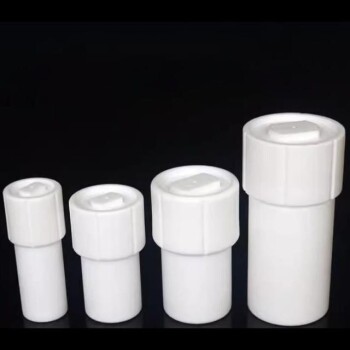
A high-strength stainless steel reaction vessel serves as a dynamic control chamber during the thermal treatment phase of Organometallic Chemical Deposition (OMCD). Its function is twofold: it first acts as an open channel to purge impurities using pure oxygen, and subsequently transforms into a sealed, pressurized environment to enforce the thermodynamic conditions necessary for precise chemical synthesis.
By transitioning from an open purge system to a closed pressure vessel, this component creates a unique environment defined by autogenous pressure and constant oxidation. This precise control is the determining factor in successfully converting precursors into high-quality crystalline Iridium Dioxide (IrO2).
The Dual-Stage Mechanism
The reaction vessel does not merely hold the chemical precursors; it actively manages the reaction environment through two distinct operational phases.
Phase 1: Purification via Open Flow
Initially, the vessel operates in an open state. This allows for a continuous, regulated flow of pure oxygen through the chamber.
The primary function of this phase is decontamination. The oxygen stream actively carries away moisture and volatile components that would otherwise degrade the quality of the final material.
Phase 2: Pressurization via Sealing
Once the purging process is complete, the vessel is hermetically sealed. This step traps a high-purity oxygen atmosphere inside the chamber.
As the thermal treatment progresses, the sealed environment contains the expanding gases. This generates autogenous pressure—pressure created internally by the reaction itself rather than an external compressor.
Critical Outcomes of the Sealed Environment
The high-strength steel construction is essential to withstand the conditions created during the sealed phase, directly influencing the material properties of the output.
Ensuring a Constant Oxidizing Atmosphere
The sealed vessel isolates the reaction from the external environment. This ensures that thermal decomposition occurs exclusively within a high-purity oxygen matrix.
This isolation prevents the re-introduction of contaminants or atmospheric gases that could alter the chemical composition of the decomposing precursor.
Promoting Crystalline Growth
The interaction between the confined high pressure and the oxidizing atmosphere is the catalyst for the final material structure.
This specific environment promotes the growth of crystalline Iridium Dioxide (IrO2). Without the pressure and containment provided by the vessel, the precursor might not achieve the desired crystalline stability.
Understanding the Trade-offs
While the sealed stainless steel vessel is critical for high-quality OMCD, relying on this method introduces specific operational constraints.
Process Continuity Limits
The necessity of sealing the vessel to generate autogenous pressure inherently dictates a batch processing approach. unlike continuous flow systems, the reaction must stop and the vessel must be reset between cycles, potentially limiting high-volume throughput.
Pressure Management Risks
Creating an autogenous pressure environment places significant stress on the equipment. The vessel must be strictly rated for high-strength applications to prevent failure, requiring rigorous safety protocols compared to atmospheric pressure deposition methods.
How to Apply This to Your Project
To maximize the efficacy of your OMCD process, align your operational protocols with the vessel's specific functions.
- If your primary focus is Material Purity: optimize the duration of the initial open-flow phase to ensure all moisture and volatiles are fully evacuated before sealing.
- If your primary focus is Structural Integrity (Crystallinity): prioritize the integrity of the vessel's seal and pressure rating to guarantee the autogenous pressure required for IrO2 growth is maintained without leakage.
The reaction vessel is not a passive container, but a precision instrument that dictates the thermodynamic success of your synthesis.
Summary Table:
| OMCD Phase | Operational State | Primary Vessel Function | Material Outcome |
|---|---|---|---|
| Purification | Open Flow | Decontamination via O2 purge | Removal of moisture and volatiles |
| Pressurization | Hermetically Sealed | Generation of autogenous pressure | Promotes crystalline growth (IrO2) |
| Decomposition | Sealed Isolation | Maintains high-purity O2 matrix | Ensures chemical purity and stability |
Elevate Your Chemical Synthesis with KINTEK
Precision in Organometallic Chemical Deposition (OMCD) requires more than just a container; it demands a high-performance environment. At KINTEK, we specialize in providing researchers and industrial manufacturers with top-tier high-temperature high-pressure reactors and autoclaves designed to withstand the rigorous demands of autogenous pressure and thermal treatment.
Whether you are synthesizing high-quality crystalline Iridium Dioxide or developing next-generation catalysts, our high-strength stainless steel vessels offer the durability and seal integrity your project needs. Our comprehensive range of laboratory equipment includes:
- Advanced Reactors: High-pressure autoclaves and chemical reaction vessels.
- Thermal Systems: Muffle, tube, and vacuum furnaces for precise temperature control.
- Processing Tools: Crushing, milling, and hydraulic pellet presses.
- Consumables: High-purity ceramics, crucibles, and PTFE products.
Ready to optimize your synthesis results? Contact KINTEK today to discuss your specific application and find the perfect laboratory solutions for your material research.
References
- Ziba S. H. S. Rajan, Rhiyaad Mohamed. Organometallic chemical deposition of crystalline iridium oxide nanoparticles on antimony-doped tin oxide support with high-performance for the oxygen evolution reaction. DOI: 10.1039/d0cy00470g
This article is also based on technical information from Kintek Solution Knowledge Base .
Related Products
- Stainless High Pressure Autoclave Reactor Laboratory Pressure Reactor
- Custom PTFE Teflon Parts Manufacturer for Three-Necked Round Bottom Flask
- Custom PTFE Teflon Parts Manufacturer for Microwave Digestion Tank
- Customizable High Pressure Reactors for Advanced Scientific and Industrial Applications
- High Purity Pure Graphite Crucible for Evaporation
People Also Ask
- Why is a laboratory high-pressure reactor used in the hydrothermal synthesis of hydroxyapatite catalysts?
- Why is a laboratory high-pressure reactor necessary for synthesizing fly ash-based zeolite? Achieve Pure Crystallization
- What role does a laboratory high-pressure reactor play in the leaching process of spent cathode materials? Optimize Recovery
- What conditions do laboratory high-pressure reactors provide for HTC? Optimize Your Biochar Production Processes
- How are high-pressure reactors used to prepare metaphosphate electrocatalysts? Master In-Situ Precursor Growth