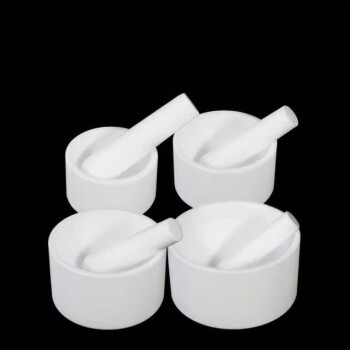
The combination of stainless steel grinding jars and specific diameter grinding balls dictates the structural integrity of your composite by delivering uniform, high-intensity mechanical energy. This configuration allows for the precise refinement of softer materials, such as exfoliating graphite, while simultaneously preserving the crystalline structure of harder oxide components.
Core Takeaway The correct selection of stainless steel jars and high-hardness balls (e.g., 10mm) enables a selective milling process. This setup refines particle size to enhance electrical conductivity without compromising the chemical stability of the material's oxide foundation.
The Mechanism of Mechanical Energy Transfer
To control the structure of your composite, you must first understand how energy is delivered within the mill. The interaction between the jar material and the ball geometry creates a specific kinetic environment.
Uniform High-Intensity Input
Using stainless steel grinding jars allows the system to withstand and deliver high-intensity mechanical energy. At rotational speeds such as 400 rpm, the jar facilitates a consistent transfer of force throughout the powder mixture.
The Role of Ball Diameter
The diameter of the grinding media is directly correlated to impact force. 10mm diameter balls provide a specific balance of mass and surface area, ensuring the energy input is high enough to effect change but controlled enough to avoid total structural destruction.
Kinetic Energy and Mass
Large-diameter stainless steel balls possess greater mass, which translates into higher kinetic energy during movement. This increased energy is the primary driver for physical changes within the milled material.
Structural Preservation vs. Refinement
The most critical impact of this configuration is its ability to distinguish between different components in a composite mixture. This selectivity is vital for advanced material performance.
Refinement of Graphite
The mechanical energy provided by this setup is sufficient to refine graphite particle size. This process effectively exfoliates the graphite, transforming it into a state where its conductive properties can be fully utilized.
Preserving Crystalline Integrity
Despite the high energy input, this specific configuration does not damage the crystalline structure of oxide components. The oxides retain their original lattice arrangement, ensuring the material remains chemically stable.
Synergistic Material Properties
By refining the graphite without destroying the oxide, the resulting composite support benefits from dual properties. It retains the chemical stability of the oxides while gaining the superior electrical conductivity of graphene.
Optimizing for Different Material Types
While the primary reference focuses on graphite/oxide composites, understanding the broader implications of ball size and impact force is essential for other material classes.
Crushing Ductile Metals
When working with ductile materials like magnesium and aluminum scraps, the high impact force of large-diameter balls is non-negotiable. These forces are required to crush, deform, and induce cold welding between particles.
Facilitating Solid-State Reactions
For metallic matrices, the strong impact forces from large stainless steel balls drive microstructural evolution. This facilitates effective solid-state reactions between the matrix and added reagents.
The Importance of Filling Rate
Hardware alone does not guarantee success; the filling rate (e.g., 60 percent) largely determines efficiency. Proper filling ensures powders are effectively crushed and mixed to a uniform state, rather than just tumbling without impact.
Making the Right Choice for Your Goal
Selecting the right milling media is a balance between the need for structural refinement and the need for structural preservation.
- If your primary focus is Conductivity and Stability: Use stainless steel jars with 10mm balls to exfoliate graphite for conductivity while preserving the crystalline structure of oxides.
- If your primary focus is Mechanical Alloying: Utilize large-diameter balls to generate the high impact forces necessary to crush and cold-weld ductile metals like aluminum or magnesium.
- If your primary focus is Homogeneity: Ensure you maintain an appropriate filling rate (approx. 60%) to guarantee thorough crushing and uniform mixing of all components.
Ultimately, the correct milling configuration allows you to harvest the benefits of high-energy refinement without sacrificing the fundamental stability of your base materials.
Summary Table:
| Component | Configuration | Impact on Material Structure |
|---|---|---|
| Grinding Jar | Stainless Steel | Delivers high-intensity mechanical energy; withstands 400+ rpm. |
| Grinding Media | 10mm Diameter Balls | Balances mass and surface area to exfoliate graphite without damaging oxides. |
| Ductile Metals | Large Diameter Media | Provides high impact forces necessary for crushing, deformation, and cold welding. |
| Composite Mix | 60% Filling Rate | Ensures efficient mechanical energy transfer and uniform particle homogeneity. |
Elevate Your Material Research with KINTEK Precision Solutions
Unlock the full potential of your composites with high-performance laboratory equipment from KINTEK. Whether you are refining conductive graphite or engineering complex metallic matrices, our specialized range of stainless steel grinding jars, milling systems, and high-hardness media provides the precision and durability your research demands.
Why partner with KINTEK?
- Comprehensive Portfolio: From high-temperature furnaces and vacuum systems to advanced hydraulic presses and cryogenic solutions.
- Expertly Engineered: Our crushing and milling systems are designed for uniform energy transfer and structural preservation.
- Tailored for Innovation: We support battery research, chemical synthesis, and metallurgy with high-quality consumables like PTFE and ceramics.
Don't settle for inconsistent results. Contact KINTEK today to find the perfect configuration for your laboratory needs and see how our advanced tools can transform your material performance.
References
- Ilgar Ayyubov, András Tompos. Preparation of Pt electrocatalyst supported by novel, Ti(1−x)MoxO2-C type of composites containing multi-layer graphene. DOI: 10.1007/s11144-021-02138-x
This article is also based on technical information from Kintek Solution Knowledge Base .
Related Products
- Laboratory Ball Mill Jar Mill with Metal Alloy Grinding Jar and Balls
- Laboratory Jar Mill with Agate Grinding Jar and Balls
- Laboratory Jar Ball Mill with Alumina Zirconia Grinding Jar and Balls
- Custom PTFE Teflon Parts Manufacturer Grinding Bowl
People Also Ask
- What is the function of a laboratory ball mill in the preparation of AMMCs? Optimize Dispersion & Grain Refinement
- What is the primary function of a laboratory ball mill in the modification of sulfide-based solid electrolytes with LiPO2F2?
- What is the function of a laboratory ball mill in the pretreatment of waste tire char (WTC)? Optimize Material Reactivity
- What is the primary function of a laboratory ball mill in Rice Husk Ash (RHA) modification? Achieve Peak Densification
- How do laboratory ball mills facilitate the mechanochemical synthesis of ZIF-8? Solvent-Free Synthesis Explained