Knowledge What is sieving and how does it work? A Guide to Accurate Particle Size Analysis
Author avatar

Tech Team · Kintek Solution

Updated 6 days ago

What is sieving and how does it work? A Guide to Accurate Particle Size Analysis


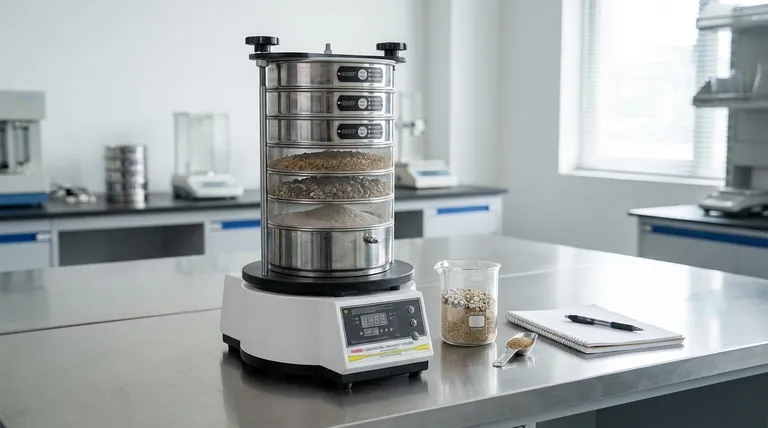
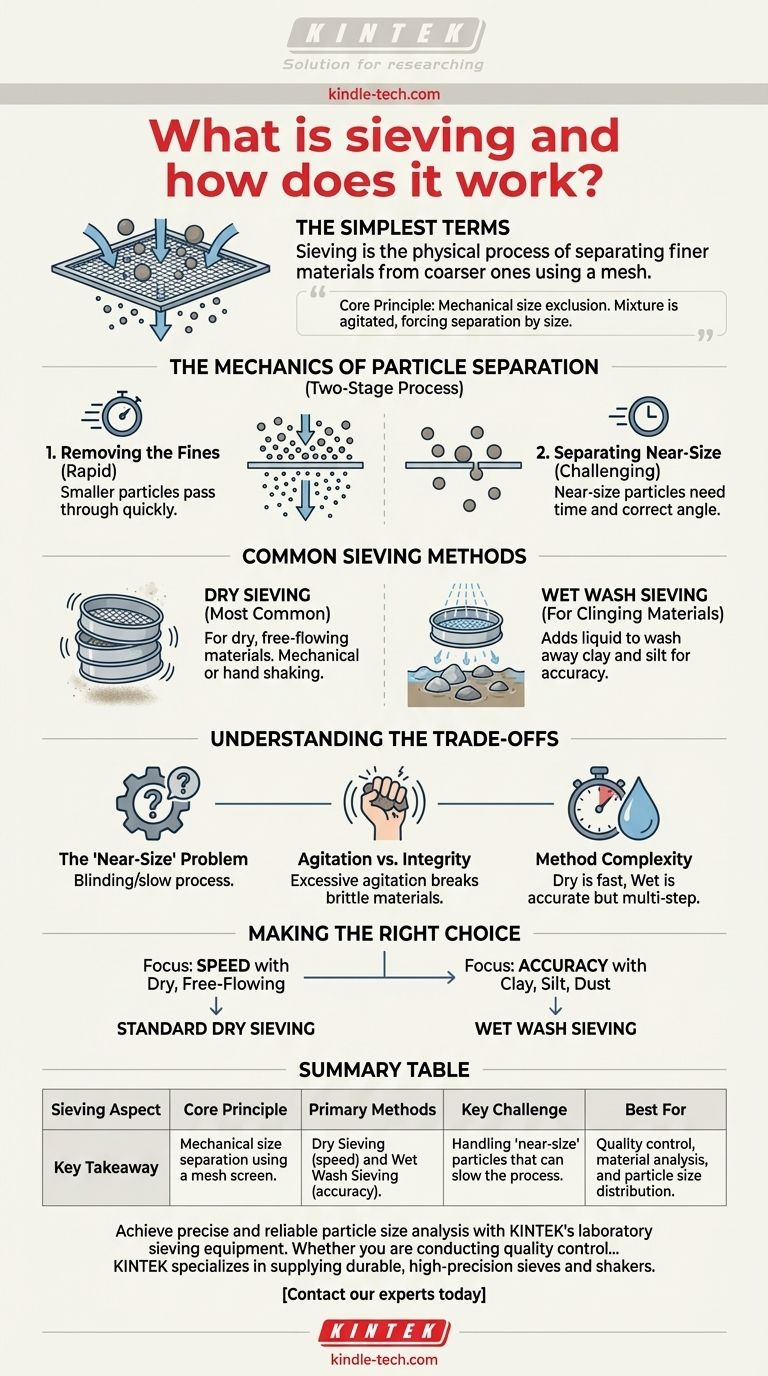
In the simplest terms, sieving is the physical process of separating finer materials from coarser ones. This is accomplished by using a meshed or perforated surface, like a screen, which allows smaller particles to pass through while retaining the larger ones.

The core principle of sieving is mechanical size exclusion. A mixture is agitated on a surface with uniform openings, forcing a separation where particles smaller than the openings fall through, and larger particles are left behind.
What is sieving and how does it work? A Guide to Accurate Particle Size Analysis

The Mechanics of Particle Separation

Sieving is a fundamental technique used across countless industries for quality control and material analysis. Understanding its two-stage process reveals how it achieves a reliable separation based on particle size.

The Fundamental Principle

The entire process relies on a sieve mesh or screen with precisely sized apertures. When a sample of material is placed on this surface, a combination of gravity and agitation is used to encourage separation.

Stage One: Removing the Fines

The initial phase of sieving is rapid. Particles that are significantly smaller than the sieve's openings quickly pass through the mesh with minimal effort. This first step efficiently clears out the bulk of the fine material.

Stage Two: Separating Near-Size Particles

The second stage is more challenging and time-consuming. This phase focuses on particles that are very close to the size of the mesh openings. These "near-size" particles must be presented to an opening at the correct angle to pass, which requires sustained agitation of the sieve.

Common Sieving Methods

While the principle remains the same, the method can be adapted based on the characteristics of the material being tested. The primary distinction is whether or not a liquid is used.

Dry Sieving

This is the most common method, used for materials that are dry and free-flowing. The sample is simply placed in the sieve (or a stack of sieves) and shaken mechanically or by hand until a sufficient separation is achieved.

Wet Wash Sieving

For some materials, simply shaking is not enough. Wet wash sieving involves adding water or another liquid to the sample. This is critical in industries like aggregate production, where it helps wash away clay and silt that may be clinging to larger rocks, ensuring an accurate measurement.

Understanding the Trade-offs

While sieving is a straightforward concept, achieving accurate and repeatable results requires acknowledging its inherent limitations and making conscious choices.

The "Near-Size" Particle Problem

The most significant challenge is dealing with particles that are only slightly smaller or larger than the mesh openings. These particles can become lodged in the openings (blinding) or take a very long time to pass through, affecting the efficiency and accuracy of the separation.

Agitation vs. Particle Integrity

Effective sieving requires agitation (shaking or vibrating) to ensure all particles are tested against the mesh. However, excessive or improper agitation can cause brittle materials to break down, creating more fines and skewing the final results.

Method Complexity

Dry sieving is fast and requires minimal setup. Wet sieving provides a more accurate result for sticky or agglomerated materials but introduces more steps, including the need to dry the material afterward before weighing it.

Making the Right Choice for Your Goal

Selecting the correct sieving method is crucial for obtaining meaningful data about your material's particle size distribution.

  • If your primary focus is speed with a dry, free-flowing material: Standard dry sieving is the most efficient and practical approach.
  • If your primary focus is accuracy with materials containing clay, silt, or fine dust: Wet wash sieving is essential to clean the particles and prevent clumping for a true size analysis.

Ultimately, mastering sieving is about understanding how to apply this foundational technique to reveal the true character of your material.

Summary Table:

Sieving Aspect Key Takeaway
Core Principle Mechanical size separation using a mesh screen.
Primary Methods Dry Sieving (speed) and Wet Wash Sieving (accuracy).
Key Challenge Handling "near-size" particles that can slow the process.
Best For Quality control, material analysis, and particle size distribution.

Achieve precise and reliable particle size analysis with KINTEK's laboratory sieving equipment.

Whether you are conducting quality control for construction aggregates, analyzing powders for pharmaceuticals, or characterizing soil samples, the right sieving tools are critical for accurate results. KINTEK specializes in supplying durable, high-precision sieves and shakers that deliver the consistent performance your laboratory demands.

Contact our experts today to find the perfect sieving solution for your specific materials and application requirements.

Visual Guide
What is sieving and how does it work? A Guide to Accurate Particle Size Analysis Visual Guide

Related Products

People Also Ask

Related Products

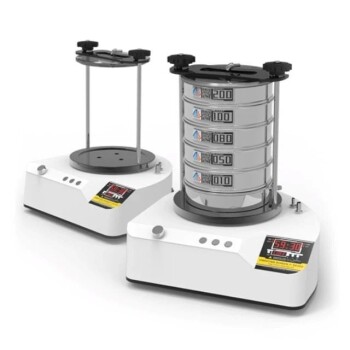
Laboratory Test Sieves and Vibratory Sieve Shaker Machine

Laboratory Test Sieves and Vibratory Sieve Shaker Machine

Efficiently process powders, granules, and small blocks with a high-frequency vibration sieve. Control vibration frequency, screen continuously or intermittently, and achieve accurate particle size determination, separation, and classification.

Three-dimensional electromagnetic sieving instrument

Three-dimensional electromagnetic sieving instrument

KT-VT150 is a desktop sample processing instrument for both sieving and grinding. Grinding and sieving can be used both dry and wet. The vibration amplitude is 5mm and the vibration frequency is 3000-3600 times/min.

Laboratory Vibratory Sieve Shaker Machine for Dry and Wet Three-Dimensional Sieving

Laboratory Vibratory Sieve Shaker Machine for Dry and Wet Three-Dimensional Sieving

KT-VD200 can be used for sieving tasks of dry and wet samples in the laboratory. The screening quality is 20g-3kg. The product is designed with a unique mechanical structure and an electromagnetic vibrating body with a vibration frequency of 3000 times per minute.

Laboratory Vibratory Sieve Shaker Machine Slap Vibrating Sieve

Laboratory Vibratory Sieve Shaker Machine Slap Vibrating Sieve

KT-T200TAP is a slapping and oscillating sieving instrument for laboratory desktop use, with 300 rpm horizontal circular motion and 300 vertical slapping motions to simulate manual sieving to help sample particles pass through better.

Laboratory Wet Three-Dimensional Vibratory Sieve Shaker Machine

Laboratory Wet Three-Dimensional Vibratory Sieve Shaker Machine

The wet three-dimensional vibrating sieving instrument focuses on solving the sieving tasks of dry and wet samples in the laboratory. It is suitable for sieving 20g - 3kg dry, wet or liquid samples.

Custom PTFE Teflon Parts Manufacturer for PTFE Mesh F4 Sieve

Custom PTFE Teflon Parts Manufacturer for PTFE Mesh F4 Sieve

PTFE mesh sieve is a specialized test sieve designed for particle analysis in various industries, featuring a non-metallic mesh woven from PTFE filament. This synthetic mesh is ideal for applications where metal contamination is a concern . PTFE sieves are crucial for maintaining the integrity of samples in sensitive environments, ensuring accurate and reliable results in particle size distribution analysis.

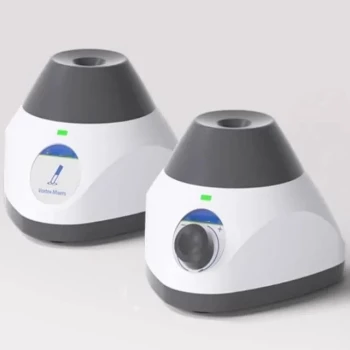
Laboratory Vortex Mixer Orbital Shaker Multifunctional Rotation Oscillation Mixer

Laboratory Vortex Mixer Orbital Shaker Multifunctional Rotation Oscillation Mixer

The inching mixer is small in size, mixes quickly and thoroughly, and the liquid is in a vortex shape, which can mix all the test solutions attached to the tube wall.

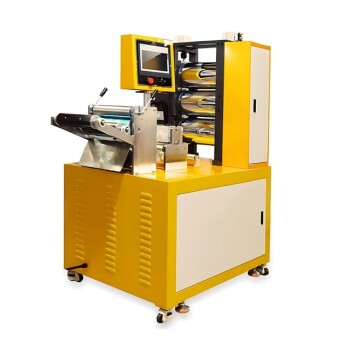
Small Lab Rubber Calendering Machine

Small Lab Rubber Calendering Machine

Small lab rubber calendering machine is used for producing thin, continuous sheets of plastic or rubber materials. It is commonly employed in laboratories, small-scale production facilities, and prototyping environments to create films, coatings, and laminates with precise thickness and surface finish.

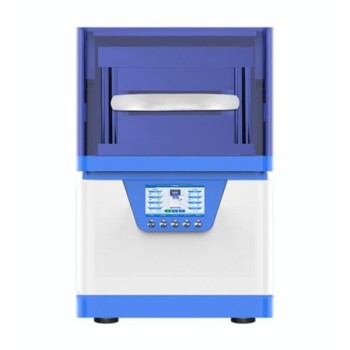
Automatic Laboratory Heat Press Machine

Automatic Laboratory Heat Press Machine

Precision automatic heat press machines for labs—ideal for material testing, composites, and R&D. Customizable, safe, and efficient. Contact KINTEK today!

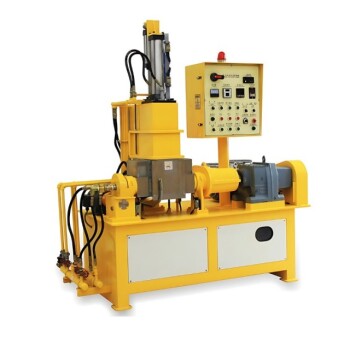
Lab Internal Rubber Mixer Rubber Kneader Machine for Mixing and Kneading

Lab Internal Rubber Mixer Rubber Kneader Machine for Mixing and Kneading

Lab internal rubber mixer is suitable for mixing, kneading and dispersing various chemical raw materials such as plastics, rubber, synthetic rubber, hot melt adhesive and various low-viscosity materials.

Double Plate Heating Press Mold for Lab

Double Plate Heating Press Mold for Lab

Discover precision in heating with our Double Plate Heating Mold, featuring high-quality steel and uniform temperature control for efficient lab processes. Ideal for various thermal applications.

Lab Plastic PVC Calender Stretch Film Casting Machine for Film Testing

Lab Plastic PVC Calender Stretch Film Casting Machine for Film Testing

The cast film machine is designed for the molding of polymer cast film products and has multiple processing functions such as casting, extrusion, stretching, and compounding.

Powerful Plastic Crusher Machine

Powerful Plastic Crusher Machine

KINTEK's powerful plastic crusher machines process 60-1350 KG/H of diverse plastics, ideal for labs and recycling. Durable, efficient, and customizable.

Single Punch Tablet Press Machine and Mass Production Rotary Tablet Punching Machine for TDP

Single Punch Tablet Press Machine and Mass Production Rotary Tablet Punching Machine for TDP

Rotary tablet punching machine is an automatic rotating and continuous tableting machine. It is mainly used for tablet manufacturing in the pharmaceutical industry, and is also suitable for industrial sectors such as food, chemicals, batteries, electronics, ceramics, etc. to compress granular raw materials into tablets.

Single Punch Electric Tablet Press Machine TDP Tablet Punching Machine

Single Punch Electric Tablet Press Machine TDP Tablet Punching Machine

The electric tablet punching machine is a laboratory equipment designed for pressing various granular and powdery raw materials into discs and other geometric shapes. It is commonly used in pharmaceutical, healthcare products, food, and other industries for small batch production and processing. The machine is compact, lightweight, and easy to operate, making it suitable for use in clinics, schools, laboratories, and research units.

Single Punch Electric Tablet Press Machine Laboratory Powder Tablet Punching TDP Tablet Press

Single Punch Electric Tablet Press Machine Laboratory Powder Tablet Punching TDP Tablet Press

The single-punch electric tablet press is a laboratory-scale tablet press suitable for corporate laboratories in pharmaceutical, chemical, food, metallurgical and other industries.

Precision Wire Saw Laboratory Cutting Machine with 800mm x 800mm Workbench for Diamond Single Wire Circular Small Cutting

Precision Wire Saw Laboratory Cutting Machine with 800mm x 800mm Workbench for Diamond Single Wire Circular Small Cutting

Diamond wire cutting machines are mainly used for precision cutting of ceramics, crystals, glass, metals, rocks, thermoelectric materials, infrared optical materials, composite materials, biomedical materials and other material analysis samples. Especially suitable for precision cutting of ultra-thin plates with thickness up to 0.2mm.

Heated Hydraulic Press Machine with Integrated Manual Heated Plates for Lab Use

Heated Hydraulic Press Machine with Integrated Manual Heated Plates for Lab Use

Efficiently process heat-pressing samples with our Integrated Manual Heated Lab Press. With a heating range up to 500°C, it's perfect for various industries.

High Energy Planetary Ball Mill Machine for Laboratory Horizontal Tank Type

High Energy Planetary Ball Mill Machine for Laboratory Horizontal Tank Type

The KT-P2000H uses a unique Y-axis planetary trajectory, and utilizes the collision, friction and gravity between the sample and the grinding ball.

Metallographic Specimen Mounting Machine for Laboratory Materials and Analysis

Metallographic Specimen Mounting Machine for Laboratory Materials and Analysis

Precision metallographic mounting machines for labs—automated, versatile, and efficient. Ideal for sample prep in research and quality control. Contact KINTEK today!


Leave Your Message