Knowledge test sieve What is sieving used for in science? A Guide to Particle Size Analysis & Control
Author avatar

Tech Team · Kintek Solution

Updated 2 months ago

What is sieving used for in science? A Guide to Particle Size Analysis & Control


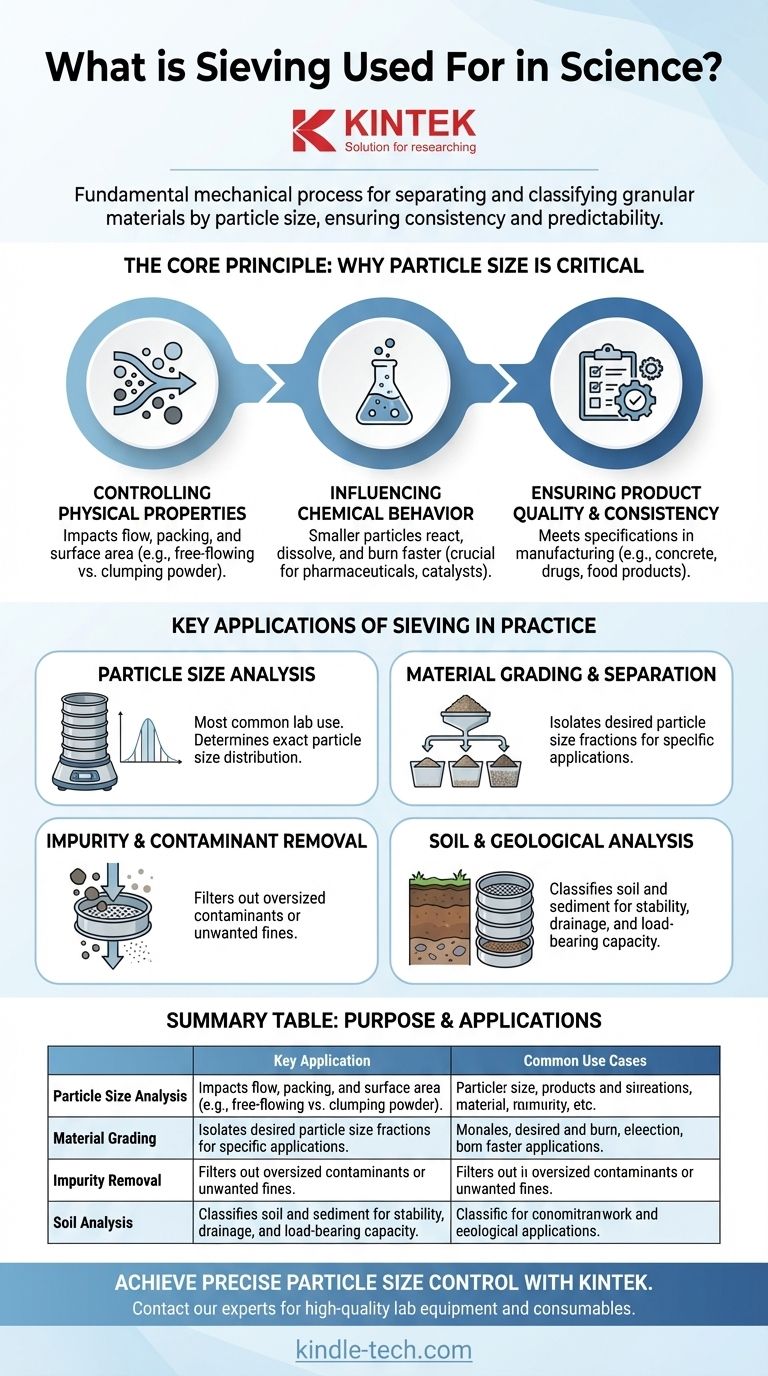
In a scientific context, sieving is a fundamental mechanical process used to separate and classify granular materials based on their particle size. It is widely employed in laboratory, quality control, and research settings to perform particle size analysis, grade materials into specific size fractions, and measure the impurity content of powders, granules, and even solids suspended in liquids.

The true purpose of sieving goes beyond simple separation. It is a critical tool for ensuring consistency and predictability, because a particle's size directly dictates its physical and chemical properties. By controlling size, you control how a material will behave and perform in its final application.

The Core Principle: Why Particle Size is Critical

Understanding the size distribution within a sample is essential because size directly influences a material's behavior. This is the "why" behind the process.

Controlling Physical Properties

A particle's size impacts its bulk characteristics, such as how it flows, packs together, and its overall surface area.

For example, a coarse, granular powder will flow freely from a hopper, while a very fine powder might clump and stick, causing blockages in a manufacturing process.

Influencing Chemical Behavior

Smaller particles have a much larger surface-area-to-volume ratio than larger particles.

This means a given mass of fine powder will react faster, dissolve more quickly, and burn more rapidly than the same mass of coarse granules. This is a crucial factor in pharmaceuticals, catalysts, and fuel development.

Ensuring Product Quality and Consistency

In manufacturing, the final product's performance often depends on a precise particle size distribution.

Whether producing concrete, formulating a drug, or making a food product, sieving is used as a primary quality control check to ensure the ingredients and final product meet required specifications.

Key Applications of Sieving in Practice

Sieving is applied in several distinct ways to achieve different scientific and industrial goals.

Particle Size Analysis

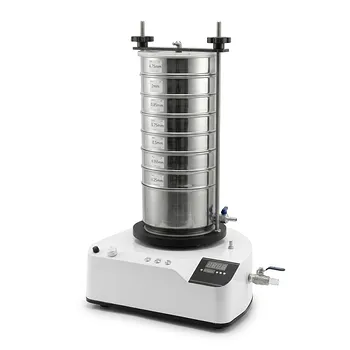
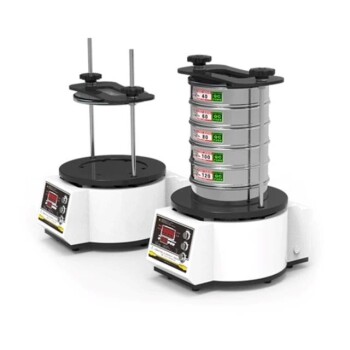
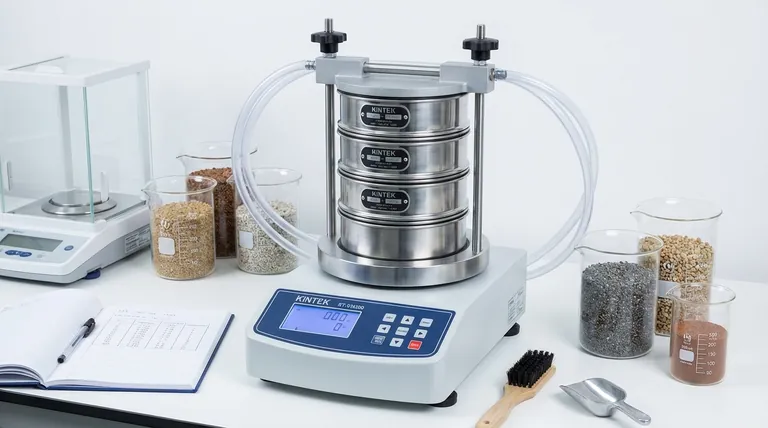
This is the most common laboratory use. A sample is placed on top of a stack of analytical sieves with progressively smaller mesh openings.

The stack is mechanically shaken, allowing particles to fall through until they are retained by a sieve they cannot pass. By weighing the material on each sieve, you can determine the exact particle size distribution of the sample.

Material Grading and Separation

In production settings, sieving is used to separate a bulk material into different size ranges, or "fractions."

This is done to isolate the desired particle size for a specific application, such as separating fine sand from coarse aggregate for use in specialized concrete mixes.

Impurity and Contaminant Removal

Sieving acts as a simple and effective filter. It can be used to remove oversized contaminants from a raw material or to remove unwanted fine dust (fines) from a granulated final product.

Soil and Geological Analysis

In civil engineering and geology, sieving is a standard method for classifying soil and sediment. Analyzing the distribution of sand, silt, and gravel is critical for determining a soil's stability, drainage, and load-bearing capacity.

Understanding the Trade-offs and Limitations

While powerful, sieving is not a perfect or universal solution. An expert understands its boundaries.

Ineffective for Very Fine Particles

Mechanical sieving has a practical lower limit, typically around 20 to 40 micrometers. For nanoparticles or very fine powders (sub-sieve range), other methods like laser diffraction or air classification are necessary.

The Influence of Particle Shape

Sieving fundamentally measures a particle's second-smallest dimension. Elongated or flat particles (like needles or flakes) can pass through mesh openings end-on or sideways.

This can lead to a misrepresentation of the true particle size distribution if the sample is not composed of roughly spherical particles.

Risk of Material Degradation

The agitation required for sieving can sometimes cause fragile particles to break down, a process known as attrition. This can artificially create more fine particles, skewing the very analysis you are trying to perform.

Applying This to Your Goal

Your specific use of sieving will depend on your objective.

  • If your primary focus is quality control: You will likely use one or two key sieves to verify that a material meets a pre-defined size specification, often as a simple pass/fail test.
  • If your primary focus is research and development: You will perform a full analysis with a stacked set of sieves to build a complete particle size distribution curve and understand how it impacts performance.
  • If your primary focus is material preparation: You will use sieving on a larger scale to separate a bulk material into distinct size fractions needed for a formulation or manufacturing process.

Ultimately, sieving provides the foundational data needed to control a material's physical behavior and guarantee its performance in any application.
What is sieving used for in science? A Guide to Particle Size Analysis & Control

Summary Table:

Purpose Key Application Common Use Cases
Particle Size Analysis Determine size distribution Quality control, R&D, material characterization
Material Grading Separate into size fractions Preparing specific particle sizes for formulations
Impurity Removal Filter contaminants Purifying raw materials or final products
Soil Analysis Classify soil types Geology, civil engineering, agriculture

Achieve precise particle size control with the right equipment from KINTEK.

Whether your goal is rigorous quality control, detailed R&D analysis, or efficient material preparation, having reliable sieving equipment is fundamental. KINTEK specializes in high-quality lab equipment and consumables, providing the tools you need to ensure material consistency and performance.

Contact our experts today to discuss your specific application and find the perfect sieving solution for your laboratory's needs.

Visual Guide
What is sieving used for in science? A Guide to Particle Size Analysis & Control Visual Guide

Related Products

People Also Ask

Related Products

Three-dimensional electromagnetic sieving instrument

Three-dimensional electromagnetic sieving instrument

KT-VT150 is a desktop sample processing instrument for both sieving and grinding. Grinding and sieving can be used both dry and wet. The vibration amplitude is 5mm and the vibration frequency is 3000-3600 times/min.

Laboratory Vibratory Sieve Shaker Machine for Dry and Wet Three-Dimensional Sieving

Laboratory Vibratory Sieve Shaker Machine for Dry and Wet Three-Dimensional Sieving

KT-VD200 can be used for sieving tasks of dry and wet samples in the laboratory. The screening quality is 20g-3kg. The product is designed with a unique mechanical structure and an electromagnetic vibrating body with a vibration frequency of 3000 times per minute.

Laboratory Test Sieves and Sieving Machines

Laboratory Test Sieves and Sieving Machines

Precision lab test sieves & sieving machines for accurate particle analysis. Stainless steel, ISO-compliant, 20μm-125mm range. Request specs now!

Laboratory Wet Three-Dimensional Vibratory Sieve Shaker Machine

Laboratory Wet Three-Dimensional Vibratory Sieve Shaker Machine

The wet three-dimensional vibrating sieving instrument focuses on solving the sieving tasks of dry and wet samples in the laboratory. It is suitable for sieving 20g - 3kg dry, wet or liquid samples.

Laboratory Test Sieves and Vibratory Sieve Shaker Machine

Laboratory Test Sieves and Vibratory Sieve Shaker Machine

Efficiently process powders, granules, and small blocks with a high-frequency vibration sieve. Control vibration frequency, screen continuously or intermittently, and achieve accurate particle size determination, separation, and classification.

Vibratory Sieve Shaker Machine Dry Three-Dimensional Vibrating Sieve

Vibratory Sieve Shaker Machine Dry Three-Dimensional Vibrating Sieve

The KT-V200 product focuses on solving common sieving tasks in the laboratory. It is suitable for sieving 20g-3kg dry samples.

Laboratory Vibratory Sieve Shaker Machine Slap Vibrating Sieve

Laboratory Vibratory Sieve Shaker Machine Slap Vibrating Sieve

KT-T200TAP is a slapping and oscillating sieving instrument for laboratory desktop use, with 300 rpm horizontal circular motion and 300 vertical slapping motions to simulate manual sieving to help sample particles pass through better.

Custom PTFE Teflon Parts Manufacturer for PTFE Mesh F4 Sieve

Custom PTFE Teflon Parts Manufacturer for PTFE Mesh F4 Sieve

PTFE mesh sieve is a specialized test sieve designed for particle analysis in various industries, featuring a non-metallic mesh woven from PTFE filament. This synthetic mesh is ideal for applications where metal contamination is a concern . PTFE sieves are crucial for maintaining the integrity of samples in sensitive environments, ensuring accurate and reliable results in particle size distribution analysis.

Laboratory manual slicer

Laboratory manual slicer

Manual microtome is a high-precision cutting device designed for laboratories, industry and medical fields. It is suitable for the preparation of thin slices of various materials such as paraffin samples, biological tissues, battery materials, food, etc.

Professional Cutting Tools for Carbon Paper Cloth Diaphragm Copper Aluminum Foil and More

Professional Cutting Tools for Carbon Paper Cloth Diaphragm Copper Aluminum Foil and More

Professional tools for cutting lithium sheets, carbon paper, carbon cloth, separators, copper foil, aluminum foil, etc., with round and square shapes and different sizes of blades.

Mini Planetary Ball Mill Machine for Laboratory Milling

Mini Planetary Ball Mill Machine for Laboratory Milling

Discover the KT-P400 desktop planetary ball mill, ideal for grinding and mixing small samples in the lab. Enjoy stable performance, long service life, and practicality. Functions include timing and overload protection.

Powerful Plastic Crusher Machine

Powerful Plastic Crusher Machine

KINTEK's powerful plastic crusher machines process 60-1350 KG/H of diverse plastics, ideal for labs and recycling. Durable, efficient, and customizable.

12 Inch 24 Inch High Precision Automatic Diamond Wire Cutting Machine Laboratory Saw Precision Wire EDM Cutting Machine

12 Inch 24 Inch High Precision Automatic Diamond Wire Cutting Machine Laboratory Saw Precision Wire EDM Cutting Machine

The high precision automatic diamond wire cutting machine is a versatile cutting tool that uses a diamond wire to cut through a wide range of materials, including conductive and non-conductive materials, ceramics, glass, rocks, gems, jade, meteorites, monocrystalline silicon, silicon carbide, polycrystalline silicon, refractory bricks, epoxy boards, and ferrite bodies. It is especially suitable for cutting various brittle crystals with high hardness, high value, and easy to break.

Laboratory Ball Mill Jar Mill with Metal Alloy Grinding Jar and Balls

Laboratory Ball Mill Jar Mill with Metal Alloy Grinding Jar and Balls

Grind and mill with ease using metal alloy grinding jars with balls. Choose from 304/316L stainless steel or tungsten carbide and optional liner materials. Compatible with various mills and features optional functions.

Vibrating Disc Mill Small Laboratory Grinding Machine

Vibrating Disc Mill Small Laboratory Grinding Machine

Discover the versatile Vibrating Disc Mill for efficient laboratory grinding. Ideal for geology, metallurgy, biology, and more. Explore now!

Laboratory High Throughput Tissue Grinding Mill Grinder

Laboratory High Throughput Tissue Grinding Mill Grinder

KT-MT is a high-quality, small, and versatile tissue grinder used for crushing, grinding, mixing, and cell wall breaking in various fields, including food, medical, and environmental protection. It is equipped with 24 or 48 2ml adapters and ball grinding tanks and is widely employed for DNA, RNA, and protein extraction.

High Energy Planetary Ball Mill Milling Machine for Laboratory

High Energy Planetary Ball Mill Milling Machine for Laboratory

Experience fast and effective sample processing with the F-P2000 high-energy planetary ball mill. This versatile equipment offers precise control and excellent grinding capabilities. Perfect for laboratories, it features multiple grinding bowls for simultaneous testing and high output. Achieve optimal results with its ergonomic design, compact structure, and advanced features. Ideal for a wide range of materials, it ensures consistent particle size reduction and low maintenance.

Laboratory Jar Mill with Agate Grinding Jar and Balls

Laboratory Jar Mill with Agate Grinding Jar and Balls

Grind your materials with ease using Agate Grinding Jars with Balls. Sizes from 50ml to 3000ml, perfect for planetary and vibration mills.

Laboratory Micro Horizontal Jar Mill for Precision Sample Preparation in Research and Analysis

Laboratory Micro Horizontal Jar Mill for Precision Sample Preparation in Research and Analysis

Discover the Micro Horizontal Jar Mill for precise sample preparation in research and analysis. Ideal for XRD, geology, chemistry, and more.

Laboratory Disc Cup Vibratory Mill for Sample Grinding

Laboratory Disc Cup Vibratory Mill for Sample Grinding

The vibrating disc mill is suitable for non-destructive crushing and fine grinding of samples with large particle sizes, and can quickly prepare samples with analytical fineness and purity.


Leave Your Message