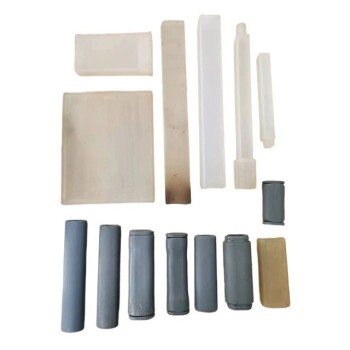
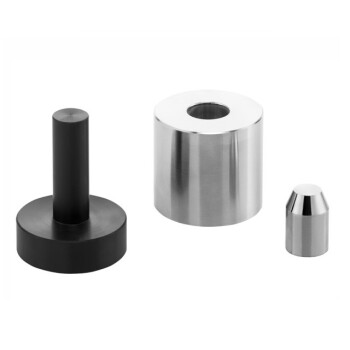
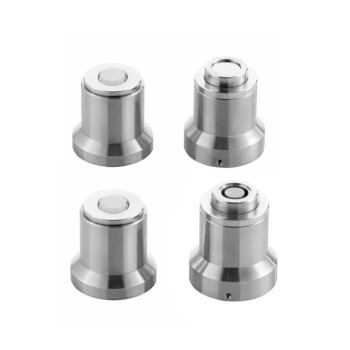
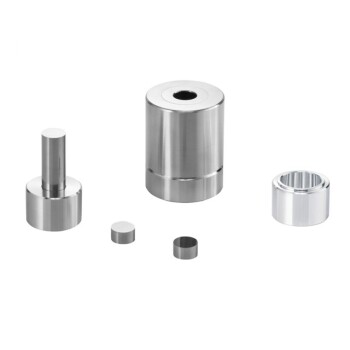
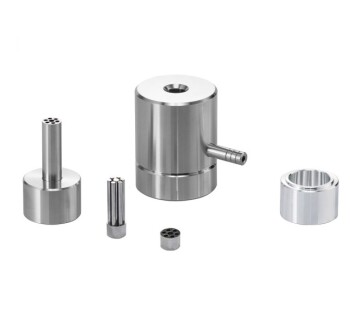
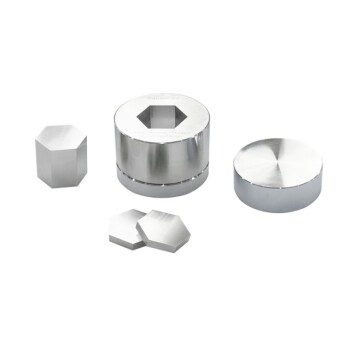
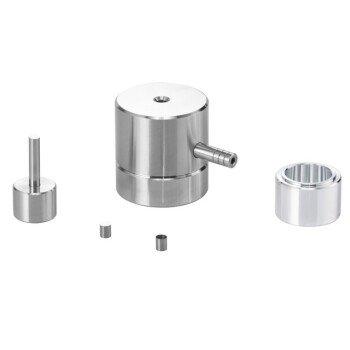
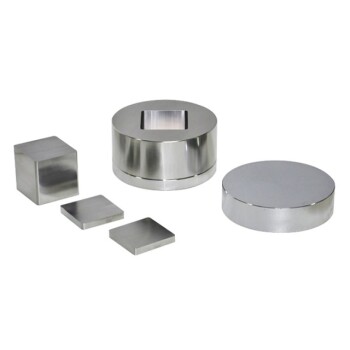
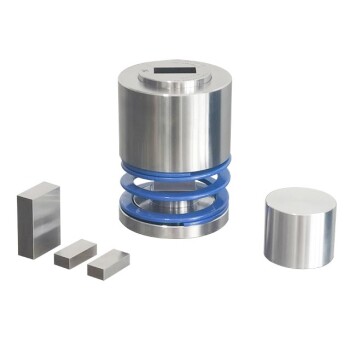
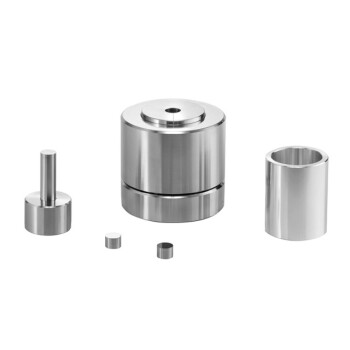
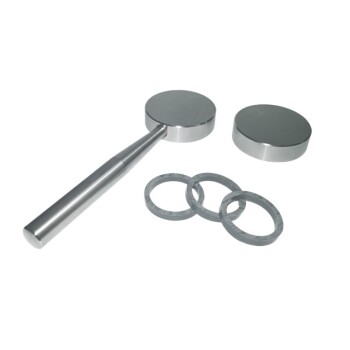
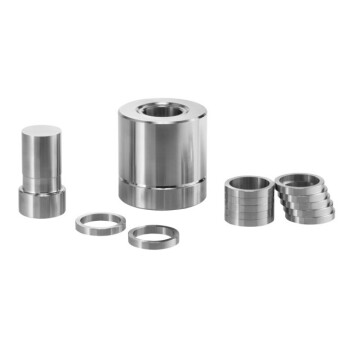
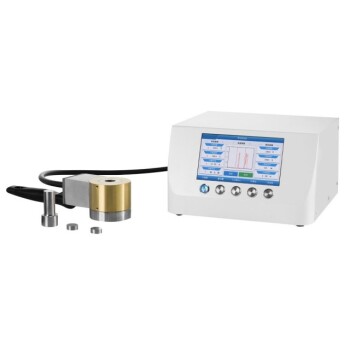
The core purpose of specialized pressurized molds and pressure-testing shells is to apply and maintain a constant external stack pressure, typically ranging from 1.5 MPa to over 10 MPa, throughout the electrochemical testing process. This mechanical constraint is critical to compensate for the significant volume expansion and contraction of active materials, ensuring that the solid electrodes and solid electrolyte remain in physical contact.
The Central Insight Unlike traditional batteries where liquid electrolytes flow to fill voids, all-solid-state batteries (ASSBs) rely entirely on physical contact for ion transport. The specialized mold acts as a dynamic clamp, preventing the formation of gaps and cracks that naturally occur as the battery "breathes" during charge and discharge cycles.
The Mechanics of Interface Stability
Counteracting Volume Changes
During operation, the internal components of an all-solid-state battery undergo massive physical shifts. Lithium metal deposition increases volume at the anode, while cathode materials (such as high-nickel NCM-811) may shrink or expand depending on their state of charge.
Without an external force to accommodate these shifts, the rigid components would push apart. The pressurized mold provides a continuous compressive force that effectively "follows" these volume changes to keep the stack tight.
Preventing Delamination
The primary failure mode in unpressurized solid-state cells is contact loss or delamination. If the electrode particles physically detach from the solid electrolyte, the pathway for ions is broken.
The pressure shell prevents this separation, ensuring that the interface remains intact even as the active materials change shape. This suppression of physical separation is directly responsible for preventing irreversible capacity decay.
Reducing Interfacial Resistance
Physical gaps create immediate spikes in impedance (resistance). By forcing the components together, the mold ensures maximum surface area contact between the electrode and the electrolyte.
This tight contact is essential for reducing interfacial resistance, allowing the battery to cycle efficiently without wasting energy as heat or suffering from voltage drops.
Understanding the Trade-offs
Mechanical Complexity vs. Performance
While high pressure is necessary for performance, it introduces significant engineering challenges. The heavy steel molds required to maintain pressures (sometimes up to 360 MPa for specific research cells) are bulky and heavy, which lowers the overall energy density of the battery pack if calculated at the system level.
The Risk of Over-Pressurization
Applying pressure is a balancing act. While insufficient pressure leads to delamination and high resistance, excessive pressure can be detrimental.
Too much mechanical force can fracture brittle solid electrolytes or cause lithium metal to creep through the electrolyte layer, leading to internal short circuits. The mold must deliver precise, calibrated pressure—not just maximum force.
Making the Right Choice for Your Goal
When selecting or designing pressure-testing equipment for solid-state batteries, consider your specific objective:
- If your primary focus is fundamental material research: Prioritize molds capable of extremely high, adjustable pressures to characterize the intrinsic limits of your solid electrolyte interfaces.
- If your primary focus is commercial cell prototyping: Focus on finding the minimum viable pressure (typically closer to 1.5 - 5 MPa) required for stable cycling, as this represents a more realistic constraint for mass-produced battery packs.
Ultimately, the pressurized mold is not just a container; it is an active component of the electrochemical system that substitutes for the lack of liquid adaptability.
Summary Table:
| Feature | Purpose in ASSB Testing | Impact on Performance |
|---|---|---|
| Constant Pressure | Compensates for volume expansion/contraction | Prevents delamination and capacity decay |
| Mechanical Clamp | Maintains electrode-electrolyte physical contact | Ensures continuous ion transport pathways |
| Interface Tightening | Maximizes surface area contact | Reduces interfacial resistance and voltage drops |
| Calibrated Force | Provides 1.5 MPa to 10+ MPa pressure | Balances contact stability with electrolyte integrity |
Elevate Your Battery Research with KINTEK Precision Engineering
Achieving stable electrochemical performance in all-solid-state batteries requires more than just high-quality materials—it demands precise mechanical control. KINTEK specializes in advanced laboratory equipment designed to meet the rigorous demands of battery research. From high-pressure specialized molds and hydraulic presses (pellet, hot, isostatic) to electrolytic cells, electrodes, and high-temperature furnaces, our portfolio empowers researchers to overcome interfacial resistance and volume expansion challenges.
Whether you are conducting fundamental material studies or commercial prototyping, KINTEK provides the specialized tools you need to maintain perfect interface stability. Contact us today to discover how our comprehensive range of battery research tools and laboratory consumables can accelerate your path to the next energy breakthrough.
Related Products
- Isostatic Molding Pressing Molds for Lab
- Button Battery Tablet Press Sealing Mold for Lab Use
- Button Battery Disassembly and Sealing Mold for Lab Use
- Carbide Lab Press Mold for Laboratory Applications
- Special Shape Press Mold for Lab
People Also Ask
- What are the advantages of isostatic pressing? Achieve Superior Material Integrity and Design Freedom
- How big is the isostatic pressing market? A Deep Dive into the $1.2B+ Advanced Manufacturing Enabler
- What are the applications of isostatic pressing technology? Achieve Superior Material Density and Uniformity
- What is the application of isostatic pressing? Achieve Uniform Density in High-Performance Components
- What is the pressure for isostatic pressing? Unlock the Key to Uniform Material Densification