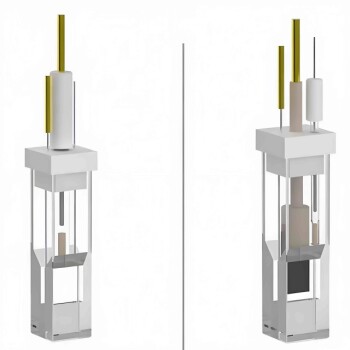
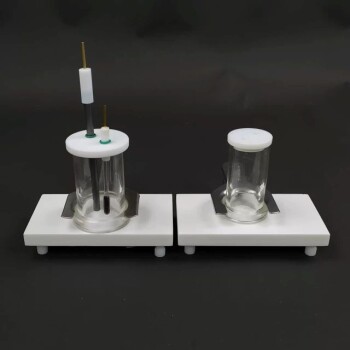
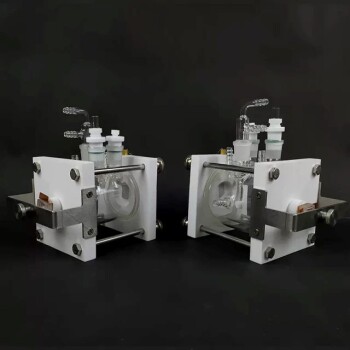
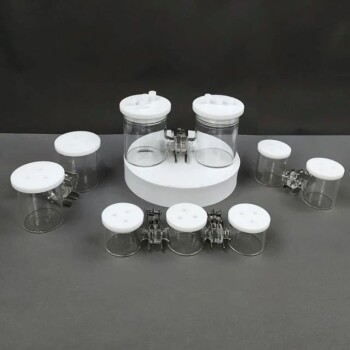
Proper installation requires a rigid, systematic protocol focusing on mechanical stability and surface cleanliness. You must begin by cleaning all surfaces to prevent contamination, then secure the cell vertically to the stand using a leak-proof pad if necessary. Finally, install the electrodes with proper spacing, connect the inlet and outlet tubing, and perform a rigorous leak check before applying any power.
The reliability of your electrochemical data is defined before the experiment begins; ensuring leak-free tubing connections and contamination-free electrode surfaces is as critical as the experiment itself.
Preparation and Mechanical Setup
Cleaning the Environment
Before handling the cell, you must eliminate potential contaminants that could alter your results. Wipe the electrode clamps, cell fixtures, and the stand surface with deionized water or alcohol. This removes residual electrolyte, grease, and dust from previous runs.
Securing the Cell Body
Place the all-PTFE electrolytic cell onto the base of the stand. Tighten the fixing knobs firmly to ensure the cell is positioned vertically and does not wobble.
Safety Measures for Corrosives
If your protocol involves corrosive electrolytes, placement is critical. Always place a leak-proof pad underneath the cell to protect the stand and surrounding equipment from potential spills.
Electrode and Fluid Configuration
Installing the Electrodes
Position the three electrodes (working, reference, and counter) into the reaction vessel. Ensure there is appropriate spacing between them to prevent short circuits or interference.
Connecting the Fluid System
According to the primary installation protocol, you must connect the electrolyte inlet and outlet tubing. Once connected, thoroughly check these junctions for any signs of leakage.
Managing Electrolyte Levels
When introducing the electrolyte—whether via tubing or direct addition—verify that the electrodes are fully submerged to ensure connectivity. However, you must ensure the electrode rods (connectors) are not immersed in the liquid to prevent corrosion and signal noise.
Electrical Connections
Wiring the Workstation
Connect the electrode wires to the corresponding ports on your electrochemical workstation. Ensure the clamps bite firmly onto the electrode terminals for a low-impedance connection.
Verifying the Power State
Do not turn on the power supply until the physical installation is complete and verified. Connections made while the power is live can cause electric arcs or safety incidents.
Common Pitfalls to Avoid
Over-Submersion of Electrodes
A frequent error is filling the cell too high. While the active electrode surface must be submerged, contact between the electrolyte and the metal connection rods will introduce parasitic reactions and corrupt your data.
Ignoring Tubing Integrity
PTFE is chemically resistant but mechanically softer than metal; tubing connections can loosen or deform. Failing to perform a dedicated leak check after connecting the inlet/outlet tubing is a leading cause of mid-experiment failure.
Contaminated Fixtures
Simply rinsing the cell is not enough. Failing to wipe down the external clamps and stand with alcohol can introduce trace impurities into the cell during the setup process, altering sensitive cyclic voltammetry results.
Making the Right Choice for Your Goal
To ensure your specific experimental needs are met, prioritize the following steps:
- If your primary focus is high-purity analysis: Prioritize the pre-experiment cleaning of clamps and fixtures with deionized water or alcohol to eliminate trace contamination.
- If your primary focus is safety with corrosives: Ensure the cell is vertically fixed without wobble and explicitly utilize a leak-proof pad under the setup.
- If your primary focus is long-duration experiments: Double-check the inlet/outlet tubing connections for leaks, as even micro-leaks can drain the electrolyte over time.
A meticulous installation procedure is the invisible foundation of reproducible electrochemical science.
Summary Table:
| Installation Step | Key Action | Purpose |
|---|---|---|
| Cleaning | Wipe fixtures with DI water/alcohol | Prevent contamination of sensitive results |
| Positioning | Secure cell vertically on a leak-proof pad | Ensure stability and protect equipment from corrosives |
| Electrodes | Maintain spacing; submerge only active surfaces | Prevent short circuits and corrosion of connection rods |
| Fluid System | Secure inlet/outlet tubing and check for leaks | Avoid electrolyte loss and ensure long-term stability |
| Electrical | Firm clamp connection; power off during setup | Prevent electric arcs and maintain low impedance |
Maximize Your Electrochemical Precision with KINTEK
Don't let installation errors compromise your research. KINTEK specializes in premium laboratory equipment and consumables, offering a sophisticated range of electrolytic cells, electrodes, and high-performance PTFE products designed for the most demanding electrochemical applications. From battery research tools to high-temperature reactors, our solutions ensure the reliability and reproducibility your data demands.
Ready to upgrade your lab's performance?
Contact Our Experts Today to find the perfect electrolytic setup and consumables tailored to your specific research goals.
Related Products
- PTFE Electrolytic Cell Electrochemical Cell Corrosion-Resistant Sealed and Non-Sealed
- Double Layer Five-Port Water Bath Electrolytic Electrochemical Cell
- Electrolytic Electrochemical Cell with Five-Port
- Thin-Layer Spectral Electrolysis Electrochemical Cell
- Optical Water Bath Electrolytic Electrochemical Cell
People Also Ask
- What is the necessity of selecting a PTFE electrolytic cell? Ensure Precise Graphene Corrosion Testing Accuracy
- What is the proper method for cleaning the surface of an all-PTFE electrolytic cell? Ensure Accurate Results with a Pristine Surface
- How should an all-PTFE electrolytic cell be stored after use? Expert Maintenance Tips for Long-Lasting Performance
- What is the proper cleaning method for an all-PTFE electrolytic cell? Essential Tips for Surface Integrity
- What are the standard opening specifications for all-PTFE electrolytic cells? A Guide to Sealed vs. Non-Sealed Ports