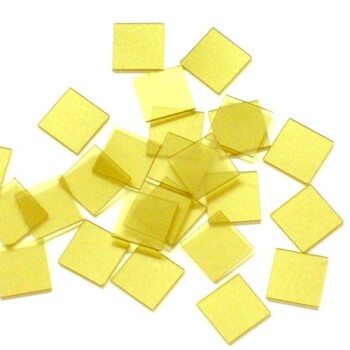
The fundamental distinction between single-crystal and polycrystalline diamond lies in their atomic uniformity and structural continuity. A single-crystal diamond (SCD) exists as one continuous, unbroken lattice structure, which allows light to pass through with minimal interference. In contrast, polycrystalline diamond (PCD) is a composite material made of numerous smaller crystals—or "grains"—fused together.
Core Takeaway The choice between these materials is dictated by the presence of grain boundaries. Single-crystal diamonds offer the atomic perfection required for transparency and electronics, while polycrystalline diamonds utilize a multi-grain structure to provide durability for heavy industrial abrasion.
The Structural Foundation
Single-Crystal Architecture
A single-crystal diamond is characterized by a uniform atomic arrangement that extends uninterrupted throughout the entire material.
Because the crystal lattice is continuous, it lacks internal boundaries. This structural perfection is what makes these diamonds transparent and suitable for use as gemstones.
Polycrystalline Composition
Polycrystalline diamond (PCD) is an aggregate material composed of many distinct, small crystallites.
These individual grains are fused together, creating a structure full of grain boundaries. These boundaries define the material's physical behavior, distinguishing it sharply from its single-crystal counterpart.
Optical and Electrical Implications
Light Transmission and Scattering
The primary differentiator for visual applications is how these materials handle light.
In single-crystal diamonds, the lack of boundaries allows for high transparency. This is why they are the standard for jewelry and optical windows.
Conversely, the multiple grains in PCD cause strong light absorption and scattering. This prevents light from passing through cleanly, making PCD unsuitable for gemstones but effective for applications where appearance is irrelevant.
Electronic Performance
Beyond optics, the structural continuity of single-crystal diamond dictates its electrical properties.
SCD exhibits superior electrical characteristics because electrons do not encounter grain boundary constraints. This allows for the efficient flow of energy and data.
Consequently, SCD is the material of choice for cutting-edge technologies, including quantum computers, semiconductor lasers, and supercomputer CPU chips.
Understanding the Trade-offs
The Limitation of Grain Boundaries
While PCD is incredibly tough, its grain boundaries act as defects in high-precision scenarios.
These boundaries interrupt the flow of electrons and scatter photons. Therefore, you cannot use PCD for applications requiring high optical clarity or precision electrical conductivity, such as radiation detectors or integrated circuits.
Manufacturing and Size Constraints
Growing large, perfect single crystals is a complex and often expensive process.
PCD, while optically inferior, can be manufactured in formats specifically designed for mechanical stress. Its complex structure is engineered for utility rather than purity.
Applications in Industry and Science
High-Technology and Gemstones
Due to their transparency and electrical superiority, single-crystal diamonds are utilized in fields requiring precision.
Common applications include jewelry, quantum communications, cold cathode field emission displays, and support rods for high-power radar microwave tubes.
Heavy Industrial Tooling
Polycrystalline diamond is favored where optical properties do not matter, but abrasive strength does.
The composite nature of PCD makes it ideal for harsh environments. It is standard in the manufacturing of mining drills and industrial cutting tools.
Making the Right Choice for Your Goal
To determine which form of diamond is appropriate for your specific application, consider the following parameters:
- If your primary focus is Optical Clarity or Electronics: You must select single-crystal diamond (SCD) to utilize its continuous lattice for transparency and unimpeded electrical conductivity.
- If your primary focus is Abrasive Durability: You should choose polycrystalline diamond (PCD), as its multi-grain composite structure provides the necessary toughness for cutting and drilling without the cost of optical perfection.
Select the material structure that aligns with the physical demands of your specific engineering challenge.
Summary Table:
| Feature | Single-Crystal Diamond (SCD) | Polycrystalline Diamond (PCD) |
|---|---|---|
| Atomic Structure | Continuous, unbroken lattice | Aggregate of fused small grains |
| Grain Boundaries | None | Multiple internal boundaries |
| Optical Property | Transparent (High light transmission) | Opaque (High light scattering) |
| Electrical Performance | Superior (No electron scattering) | Limited by grain boundary defects |
| Primary Strength | Precision and purity | Abrasive toughness and durability |
| Key Applications | Gemstones, Quantum computing, CPUs | Mining drills, Industrial cutting tools |
Elevate Your Research with KINTEK’s Precision Diamond Solutions
Whether you are pioneering the next generation of quantum computers or developing high-performance industrial cutting tools, the structural integrity of your materials is paramount. KINTEK specializes in high-quality laboratory equipment and advanced materials, providing the precise tools needed to process and utilize both single-crystal and polycrystalline diamonds.
Our extensive portfolio supports high-tech R&D with:
- High-Temperature High-Pressure Reactors & Autoclaves for diamond synthesis research.
- Crushing and Milling Systems for processing PCD materials.
- Ceramics and Crucibles tailored for extreme thermal environments.
Don't settle for less than perfection in your lab. Our experts are ready to help you select the ideal equipment and consumables for your specific engineering challenges.
Contact KINTEK Today to Discuss Your Project
Related Products
- 915MHz MPCVD Diamond Machine Microwave Plasma Chemical Vapor Deposition System Reactor
- CVD Diamond for Thermal Management Applications
People Also Ask
- How does a microwave plasma reactor facilitate the synthesis of diamond? Master MPCVD with Precision Technology
- What are the advantages of a Microwave Plasma CVD reactor for MCD/NCD coatings? Precision Multilayer Diamond Engineering
- How do vacuum pumps and valves collaborate in MPCVD? Achieve Precise Pressure Control for Superior CNT Synthesis
- What are the primary advantages of the CVD method for growing diamonds? Engineering High-Purity Gems and Components
- How is a diamond formed from CVD? The Science of Growing Diamonds Atom by Atom