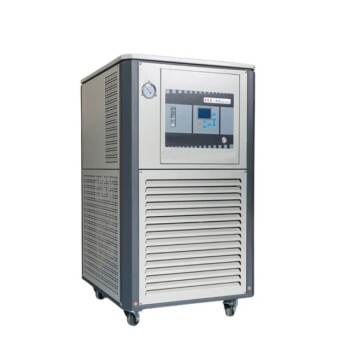
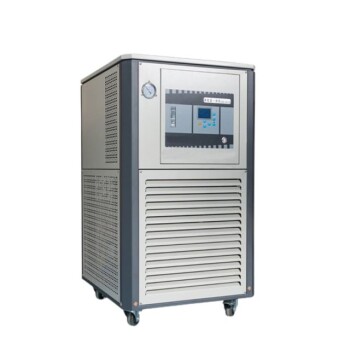
The high-pressure hydrothermal reactor acts as the essential synthesis chamber for Cu-MOF precursors. It provides a sealed, high-temperature environment (typically 160 °C for 16 hours) that allows solvents to reach temperatures well above their atmospheric boiling points. This creates the internal autogenous pressure necessary to drive the coordination reaction between copper ions and organic ligands, resulting in structurally intact, blue Cu-MOF precipitates.
The reactor enables solvothermal synthesis by creating a superheated environment where increased solubility and pressure facilitate the formation of stable coordination bonds. This process is the foundation for achieving high crystallinity and specific geometric morphologies in the resulting framework.
Facilitating the Solvothermal Environment
Breaking Solubility Barriers
The reactor creates a superheated liquid environment that significantly increases the solubility of raw materials. By heating the solution beyond its boiling point under pressure, it ensures that precursors—which might be insoluble at room temperature—dissolve and react thoroughly.
Accelerating Reaction Kinetics
The high-pressure environment inside the autoclave accelerates the kinetics of the coordination reaction. This allows for a more efficient bond formation between the copper metal ions and the organic ligands, which is critical for the assembly of the framework.
Ensuring Structural Integrity and Morphology
Controlled Crystal Growth
Maintaining a constant temperature of 160 °C for an extended period (16 hours) provides the stable conditions required for orderly crystal growth. This precision ensures that the resulting Cu-MOF precipitates are structurally intact and possess high crystallinity.
Promoting Specific Morphologies
The sealed environment allows for the development of well-defined geometric morphologies. By controlling the pressure and temperature, researchers can influence which crystal planes are exposed, ensuring the precursor has the necessary physical properties for its intended application.
Establishing the Framework Foundation
In the case of Cu-MOF and its composites, such as urea-coated versions, the reactor ensures thorough hydrolysis and crystallization. This establishes a solid structural foundation, which is essential if the MOF is to be further processed into nanoporous carbon or other derivatives.
Understanding the Technical Trade-offs
Safety and Pressure Management
The primary risk associated with these reactors is autogenous pressure. If the temperature is not precisely controlled or if the reactor is overfilled, the pressure can exceed the vessel's safety limits, leading to mechanical failure or leakage.
Scalability vs. Precision
While these reactors are excellent for laboratory-scale synthesis and achieving high purity, they present challenges for mass production. Large-scale hydrothermal synthesis requires significantly more energy and specialized equipment to maintain uniform temperature and pressure across a larger volume.
Time-Intensive Processing
The requirement for long reaction times (e.g., 16 hours) limits the throughput of the synthesis process. While necessary for high-quality crystal growth, these "soak times" must be balanced against project timelines and resource availability.
Making the Right Choice for Your Goal
- If your primary focus is high crystallinity: Ensure the reactor is maintained at the specific temperature (e.g., 160 °C) for the full duration to allow for complete, orderly coordination.
- If your primary focus is morphology control: Focus on the "soak time" and the cooling rate of the reactor, as these factors directly influence the final shape and surface area of the Cu-MOF.
- If your primary focus is experimental safety: Never exceed 80% of the reactor's total volume to allow sufficient headspace for pressure expansion during the heating cycle.
By mastering the high-pressure environment of the hydrothermal reactor, you can reliably produce the high-quality, crystalline precursors necessary for advanced materials science applications.
Summary Table:
| Feature | Role in Cu-MOF Preparation | Outcome |
|---|---|---|
| Solvothermal Environment | Creates superheated liquid above boiling points | Increases precursor solubility |
| Autogenous Pressure | Accelerates coordination reaction kinetics | Efficient bond formation between ions & ligands |
| Thermal Stability | Maintains constant 160 °C environment | Ensures high crystallinity & specific morphology |
| Sealed Design | Facilitates thorough hydrolysis & crystallization | Establish structural integrity for derivatives |
Elevate Your Material Synthesis with KINTEK Precision
Achieving high crystallinity and precise morphology in Cu-MOF precursors requires equipment that delivers uncompromising stability and safety. KINTEK specializes in high-performance laboratory solutions designed to meet the rigorous demands of advanced materials research.
Our extensive portfolio includes:
- Synthesis & Reaction: High-temperature high-pressure reactors and autoclaves, electrolytic cells, electrodes, and comprehensive battery research tools.
- Thermal Processing: A full range of high-temperature furnaces (muffle, tube, rotary, vacuum, CVD, PECVD, MPCVD, atmosphere, and dental).
- Sample Preparation: Hydraulic presses (pellet, hot, isostatic), crushing and milling systems, and sieving equipment.
- Lab Utilities: Cooling solutions (ULT freezers, freeze dryers), homogenizers, shakers, and essential consumables like PTFE products, ceramics, and crucibles.
Ready to optimize your lab's efficiency and research outcomes? Contact our experts today to find the perfect hydrothermal reactor or furnace for your specific application. Let KINTEK provide the reliability you need for your next breakthrough.
References
- Cheng-Kuo Tsai, Ruey‐an Doong. Enhanced Visible-Light-Responsive Photocatalytic Degradation of Ciprofloxacin by the CuxO/Metal-Organic Framework Hybrid Nanocomposite. DOI: 10.3390/nano13020282
This article is also based on technical information from Kintek Solution Knowledge Base .
Related Products
- Customizable Laboratory High Temperature High Pressure Reactors for Diverse Scientific Applications
- High Pressure Laboratory Autoclave Reactor for Hydrothermal Synthesis
- Customizable High Pressure Reactors for Advanced Scientific and Industrial Applications
- Stainless High Pressure Autoclave Reactor Laboratory Pressure Reactor
- Mini SS High Pressure Autoclave Reactor for Laboratory Use
People Also Ask
- How do high-pressure and high-temperature reactors ensure the effective treatment of lignocellulosic wastewater in WAO?
- What equipment is required for high-pressure high-temperature reactions? Master Extreme Chemistry Safely
- How do you control high pressure in a reactor? A Guide to Safe & Stable Operation
- How does initial oxygen pressure affect the wet oxidation of pharmaceutical sludge? Master Your Oxidation Depth
- Why is argon better than nitrogen for inert atmosphere? Ensure Absolute Reactivity & Stability