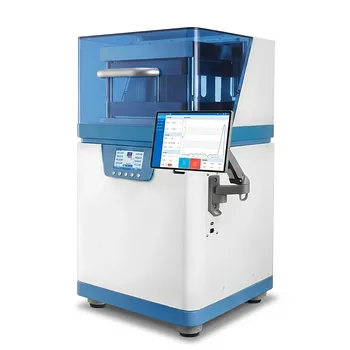
High-pressure and fixed-bed reactors are the primary tools used to simulate industrial catalytic environments for performance testing. They provide the necessary controlled pressure (typically 10–30 bar) and uniform gas flow required to accurately measure how nitrogen-doped carbon supports influence metal-support interactions, product selectivity, and long-term catalytic stability in reactions such as Fischer-Tropsch Synthesis (FTS) and $CO_2$ hydrogenation.
High-pressure reactors bridge the gap between laboratory-scale material science and industrial application. They allow researchers to validate how nitrogen-doped carbon structures perform under realistic kinetic conditions, ensuring that laboratory findings translate to efficient chemical production.
Simulating Industrial Reaction Environments
Replicating Real-World Operating Pressures
Industrial processes like Fischer-Tropsch Synthesis require specific pressure ranges to drive chemical equilibrium toward desired products. High-pressure reactors allow testing at 10–30 bar, simulating the stresses and thermodynamic conditions a catalyst will face in a commercial plant.
Managing Mixed Reactant Gases
In $CO_2$ hydrogenation or syngas conversion, multiple gases (such as $CO, CO_2$, and $H_2$) must interact with the catalyst simultaneously. The reactor ensures these mixed gases are delivered at a constant, high-pressure state, which is critical for maintaining stable reaction kinetics during evaluation.
Precise Control of Kinetic Parameters
Regulating Gas Hourly Space Velocity (GHSV)
Fixed-bed reactors allow for the precise control of GHSV, which measures the ratio of gas flow rate to the volume of the catalyst. This parameter is vital for determining the "residence time" or how long the reactants stay in contact with the nitrogen-doped active sites.
Ensuring Uniform Flow Through the Catalyst Bed
A fixed-bed configuration forces reactant gases to flow uniformly through the catalyst particles. This uniformity is essential for an accurate assessment of the catalyst’s activity, preventing "channeling" where gas bypasses the catalyst and leads to false performance data.
Evaluating Nitrogen-Doped Carbon Interactions
Assessing Metal-Support Interactions
The presence of nitrogen in the carbon support is designed to stabilize metal nanoparticles, such as platinum or ruthenium. High-pressure evaluation reveals how well these nitrogen functional groups prevent metal leaching or sintering when subjected to the high temperatures and pressures of active catalysis.
Determining Product Selectivity and Stability
Evaluation in these reactors determines the catalyst’s ability to produce specific hydrocarbons, such as those in the diesel range. By running the reactor over extended periods, researchers can also measure the deactivation rate, proving whether the nitrogen doping truly enhances the catalyst's lifespan.
Understanding the Trade-offs
Technical Complexity and Safety
Operating high-pressure reactors requires specialized sealing and safety protocols to manage autogenous pressure and hazardous gases. While they provide the most accurate data, the equipment is significantly more complex and expensive to maintain than ambient-pressure systems.
Heat Transfer and Bed Packing
In fixed-bed reactors, improper catalyst bed packing can lead to pressure drops or uneven temperature distribution (hot spots). These physical inconsistencies can mask the true chemical performance of the nitrogen-doped carbon material, leading to data that is difficult to replicate.
How to Apply This to Your Project
Selecting the Right Evaluation Method
- If your primary focus is industrial scalability: Utilize a high-pressure fixed-bed reactor to establish a baseline for GHSV and pressure-dependent selectivity.
- If your primary focus is catalyst synthesis and N-doping: Use a high-pressure hydrothermal autoclave to facilitate the chemical interaction between nitrogen sources (like dicyandiamide) and the carbon precursor.
- If your primary focus is electrode stability for electrolysis: Focus on high-pressure environments that promote the growth of nanorod arrays with high crystallinity to improve oxygen evolution reaction (OER) activity.
By accurately simulating the harsh conditions of industrial chemistry, these reactors provide the definitive proof of a nitrogen-doped catalyst's value.
Summary Table:
| Feature | Function in Catalyst Evaluation | Key Parameter Optimized |
|---|---|---|
| High-Pressure Control | Simulates industrial environments (10–30 bar) | Thermodynamic equilibrium & kinetics |
| Fixed-Bed Design | Ensures uniform gas flow through catalyst | Gas Hourly Space Velocity (GHSV) |
| Thermal Stability | Evaluates nitrogen-metal support interactions | Metal leaching & sintering resistance |
| Product Analysis | Determines selectivity for specific hydrocarbons | Diesel-range yield & deactivation rate |
Elevate Your Catalyst Research with KINTEK Precision
Transition from laboratory-scale discovery to industrial-grade performance with KINTEK’s specialized laboratory equipment. We offer a comprehensive range of high-temperature high-pressure reactors and autoclaves, tailored for evaluating advanced nitrogen-doped carbon catalysts in challenging reactions like Fischer-Tropsch and $CO_2$ hydrogenation.
Why choose KINTEK?
- Precision Engineering: Achieve stable 10–30 bar environments for accurate kinetic modeling.
- Comprehensive Portfolio: From fixed-bed systems to high-temperature furnaces (CVD, PECVD) and crushing/milling systems, we provide everything for your catalyst workflow.
- Industry-Standard Reliability: Our equipment is built to handle hazardous gases and autogenous pressure with superior sealing technology.
Ready to validate your material's efficiency? Contact our technical experts today to find the perfect reactor or autoclave solution for your project.
References
- Chao Deng, Chundong Zhang. Research Advances on Nitrogen-Doped Carbon Materials in COx Hydrogenation. DOI: 10.3390/atmos14101510
This article is also based on technical information from Kintek Solution Knowledge Base .
Related Products
- Customizable Laboratory High Temperature High Pressure Reactors for Diverse Scientific Applications
- Customizable High Pressure Reactors for Advanced Scientific and Industrial Applications
- Stainless High Pressure Autoclave Reactor Laboratory Pressure Reactor
- Mini SS High Pressure Autoclave Reactor for Laboratory Use
- High Pressure Laboratory Autoclave Reactor for Hydrothermal Synthesis
People Also Ask
- How do high-pressure and high-temperature reactors ensure the effective treatment of lignocellulosic wastewater in WAO?
- What equipment is required for high-pressure high-temperature reactions? Master Extreme Chemistry Safely
- How do you control high pressure in a reactor? A Guide to Safe & Stable Operation
- Why is argon better than nitrogen for inert atmosphere? Ensure Absolute Reactivity & Stability
- How does initial oxygen pressure affect the wet oxidation of pharmaceutical sludge? Master Your Oxidation Depth