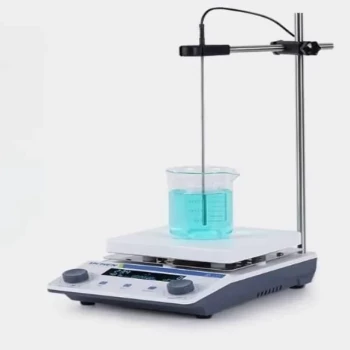
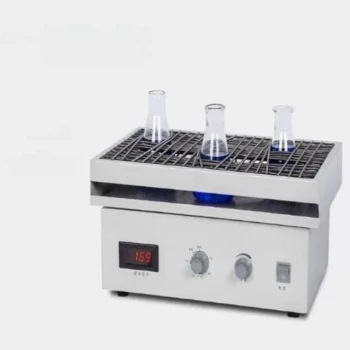
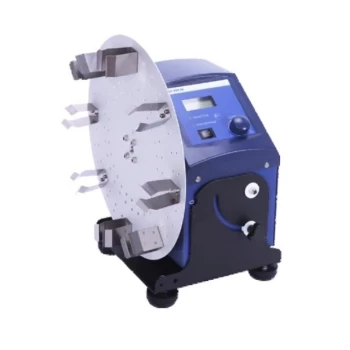
The primary function of a laboratory magnetic stirrer during thermal extraction is to guarantee kinetic uniformity within the solution. By providing continuous, automated agitation, the device prevents the sedimentation of plant particles and ensures that heat from the water bath is distributed evenly throughout the mixture, allowing for the efficient release of bioactive ingredients.
Core Takeaway Success in thermal extraction relies on eliminating variables; a magnetic stirrer creates a homogenous suspension that ensures every plant particle experiences the exact same temperature and solvent exposure, maximizing the yield of bioactive compounds.
Achieving Kinetic Uniformity
Preventing Particle Sedimentation
In a static solution, heavier plant particles naturally settle at the bottom of the extraction vessel. A magnetic stirrer counters this by maintaining a continuous suspension of solid materials within the solvent. This ensures that the plant matter remains fully engaged with the extraction medium rather than clumping together or settling out of the effective reaction zone.
Ensuring Thermal Homogeneity
When using a constant-temperature water bath—often set to specific parameters like 60 degrees Celsius—heat must penetrate the extraction vessel uniformly. Without agitation, thermal gradients form, creating hot spots near the walls and cooler zones in the center. The stirrer induces forced convection, distributing thermal energy evenly to ensure the entire solution stays at the target temperature.
Facilitating Bioactive Release
The ultimate goal of the extraction is the thorough release of bioactive ingredients. By maintaining kinetic uniformity, the stirrer ensures that the physical conditions (temperature and movement) are consistent for the duration of the process. This mechanical assistance is essential for preventing incomplete extraction caused by localized saturation or uneven heating.
The Physics of Consistency
Eliminating Concentration Gradients
While the primary focus is on plant extracts, the principle of stirring acts to eliminate solute concentration gradients. Just as in batch reactions, stirring prevents dissolved compounds from stagnating around the solid material. This ensures that fresh solvent is continuously brought into contact with the plant particles, maintaining a high driving force for mass transfer.
Simulation of Dynamic Interaction
The magnetic stirrer drives the fluid to simulate dynamic flow conditions. This creates a physical environment where the interaction between the solid plant material and the liquid solvent is vigorous and constant. This mirrors the scouring and mixing effects necessary for rapid diffusion, preventing the "shielding" effect where saturated solvent blocks further extraction.
Critical Operational Factors
The Importance of Controlled Speed
While agitation is necessary, the rotational speed must be controlled and consistent. In related synthesis processes, controlled speed prevents localized agglomeration and ensures molecular-level mixing. In the context of extraction, the speed must be sufficient to suspend particles without being so aggressive that it causes splashing or decoupling of the magnetic bar.
Risk of Incomplete Interaction
If the stirring mechanism fails or is not utilized, the process reverts to a static extraction. This leads to catalyst or particle precipitation, which significantly decreases the surface area available for the reaction. In thermal extraction, this results in a direct loss of efficiency, as the solvent cannot effectively penetrate settled layers of plant material.
Making the Right Choice for Your Goal
To maximize the efficacy of your thermal extraction process, consider how the stirrer aligns with your specific objectives:
- If your primary focus is Maximum Yield: Ensure the stir speed is high enough to maintain a full suspension, preventing any sedimentation that would inhibit the release of bioactive ingredients.
- If your primary focus is Reproducibility: Use the stirrer to strictly control the thermal environment, eliminating temperature gradients that could cause batch-to-batch variations.
Consistent agitation is the bridge between a raw plant material and a high-quality, uniform extract.
Summary Table:
| Feature | Role in Thermal Extraction | Benefit to Process |
|---|---|---|
| Continuous Suspension | Prevents plant particle sedimentation | Maximizes contact between solvent and solid |
| Forced Convection | Eliminates thermal gradients and hot spots | Ensures consistent temperature (e.g., 60°C) |
| Mass Transfer | Reduces concentration gradients | Accelerates the diffusion of bioactive ingredients |
| Controlled Agitation | Maintains dynamic flow conditions | Ensures batch-to-batch reproducibility |
Elevate Your Extraction Precision with KINTEK
Maximize your bioactive yields and ensure flawless reproducibility in your lab with KINTEK’s advanced laboratory equipment. Whether you are performing thermal extractions or complex synthesis, KINTEK specializes in providing the high-performance tools you need—from precision magnetic stirrers and homogenizers to high-temperature furnaces, autoclaves, and specialized reactors.
Our comprehensive range of laboratory consumables, including PTFE products, ceramics, and crucibles, is designed to withstand rigorous extraction environments. Don't let inconsistent agitation or uneven heating compromise your research. Contact KINTEK today to find the perfect equipment solution for your lab!
References
- Eduardo González, P.A. Luque. A Study of the Optical and Structural Properties of SnO2 Nanoparticles Synthesized with Tilia cordata Applied in Methylene Blue Degradation. DOI: 10.3390/sym14112231
This article is also based on technical information from Kintek Solution Knowledge Base .
Related Products
- Laboratory Small Constant Temperature Heated Magnetic Stirrer Heater and Stirrer
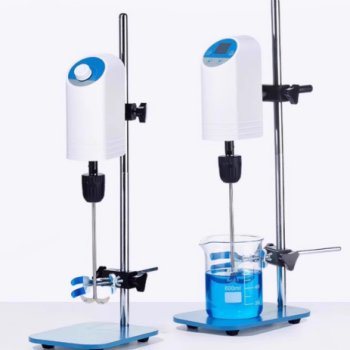
- High Performance Laboratory Stirrers for Diverse Applications
- Custom PTFE Teflon Parts Manufacturer for Magnetic Stirring Bar
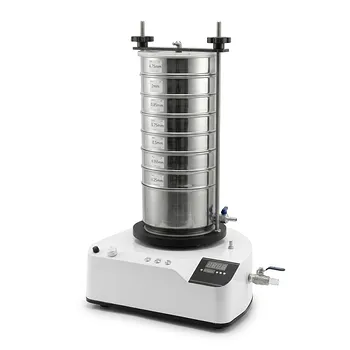
- Laboratory Vibratory Sieve Shaker Machine for Dry and Wet Three-Dimensional Sieving
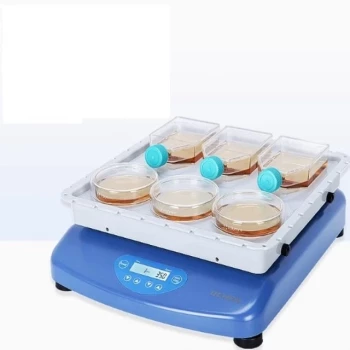
- Laboratory Vortex Mixer Orbital Shaker Multifunctional Rotation Oscillation Mixer
People Also Ask
- What role does a magnetic stirrer with heating play in ZnO nanoparticle synthesis? Precision Control for Quality Results
- What role does a constant temperature heating magnetic stirrer play in MFC-HAp synthesis? Achieve Material Homogeneity
- What is the function of a laboratory magnetic stirrer in Ni–Cr–P electrodeposition? Optimize Ion Transport & Coating
- Why is a laboratory magnetic stirrer required for benzoic acid esters? Boost Reaction Speed & Yield with High RPM
- What role does a laboratory magnetic stirrer play in TiO2 and TiO2-Ag sol preparation? Master Chemical Kinetics