The primary function of a planetary ball mill in the wet grinding of BCZYYb electrolyte powders is to serve as a high-energy homogenization and refinement tool. Specifically, it is used in the initial synthesis stage to mix oxide precursors—such as barium carbonate, cerium oxide, and zirconium oxide—with ethanol solvents and dispersants to ensure a uniform, highly reactive raw material blend.
Core Takeaway The planetary ball mill provides the kinetic energy necessary to break down agglomerates and increase the specific surface area of raw materials. This mechanical refinement is the critical prerequisite for achieving the chemical homogeneity required for successful solid-state reactions and dual-phase formation in the final electrolyte.
The Mechanics of Wet Grinding for BCZYYb
Achieving Uniform Dispersion
In the synthesis of proton-conducting oxides like BCZYYb, simple stirring is insufficient. The planetary ball mill utilizes high-speed rotation to generate intense centrifugal forces.
This energy ensures that the oxide precursors (barium carbonate, cerium oxide, and zirconium oxide) are thoroughly mixed with the ethanol solvent and dispersants. The result is a slurry where the diverse chemical components are distributed evenly throughout the mixture.
Particle Size Refinement
The mill relies on the impact and shear forces generated by the grinding media. As the mill rotates, the grinding balls collide with the powder particles with high energy.
This mechanical action effectively fractures the raw material particles, significantly reducing their size. This process breaks down hard agglomerates that naturally form in the raw oxide powders.
Why This Process is Critical for Electrolyte Performance
Enhancing Chemical Reactivity
The primary goal of wet grinding is not just to make particles smaller, but to make them more reactive. By refining the particle size, the mill drastically increases the contact surface area between the different reactants.
This increased surface area is vital for the subsequent processing steps. It lowers the activation energy required for the solid-state diffusion, ensuring the reaction proceeds efficiently.
Facilitating Dual-Phase Formation
BCZYYb electrolytes rely on a specific dual-phase structure for their proton-conducting properties. The planetary ball mill ensures that the precursors are mixed at a microscopic level before heating begins.
This homogeneity is necessary to prevent localized inconsistencies. Without this high-energy mixing, the final material might suffer from phase segregation or incomplete reactions, compromising the electrolyte's performance.
Understanding the Trade-offs
Risk of Contamination
While planetary ball milling is effective, it introduces high-energy friction between the grinding media and the container walls. This can lead to the abrasion of the milling tools, potentially introducing impurities into the BCZYYb powder.
Optimization Complexity
The process requires careful balancing of parameters. If the milling duration is too short, the mixture remains inhomogeneous. However, excessive milling time can lead to diminishing returns on particle size reduction and increased risk of contamination.
Making the Right Choice for Your Goal
To maximize the effectiveness of the planetary ball mill for BCZYYb synthesis, consider the following strategic priorities:
- If your primary focus is Reactivity: Prioritize the ratio of grinding media to powder to maximize the impact energy and reduce particle size as quickly as possible.
- If your primary focus is Purity: Ensure the use of high-wear-resistant grinding media (such as zirconia) to prevent the introduction of foreign contaminants during the high-energy mixing process.
Effective wet grinding is the foundational step that dictates the structural integrity and conductivity of the final electrolyte material.
Summary Table:
| Function | Mechanism | Benefit for BCZYYb |
|---|---|---|
| Homogenization | High-speed centrifugal mixing | Ensures uniform distribution of Ba, Ce, and Zr precursors |
| Size Reduction | High-energy impact and shear | Breaks down agglomerates and increases specific surface area |
| Reactivity Boost | Mechanical activation | Lowers activation energy for solid-state diffusion |
| Phase Control | Microscopic blending | Prevents phase segregation for superior proton conductivity |
Elevate Your Material Synthesis with KINTEK Precision
Achieving the perfect dual-phase structure in BCZYYb electrolytes requires more than just mixing—it requires the high-energy precision of KINTEK's planetary ball mills and crushing systems.
At KINTEK, we specialize in providing researchers and industrial manufacturers with top-tier laboratory equipment, from high-temperature furnaces and zirconia grinding media to pellet presses and high-pressure reactors. Our solutions are designed to minimize contamination while maximizing chemical reactivity, ensuring your electrolyte powders meet the highest standards of conductivity and purity.
Ready to optimize your wet grinding process? Contact our technical experts today to find the ideal milling configuration for your laboratory needs!
Related Products
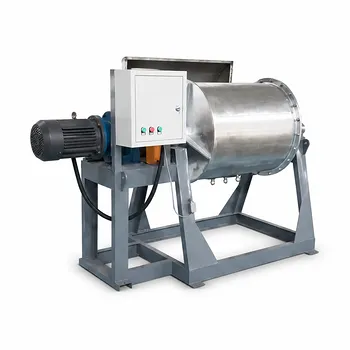
- High Energy Planetary Ball Mill for Laboratory Horizontal Tank Type Milling Machine
- Laboratory Planetary Ball Mill Rotating Ball Milling Machine
- High-Energy Omnidirectional Planetary Ball Mill Milling Machine for Laboratory
- High Energy Planetary Ball Mill Milling Machine for Laboratory
- Laboratory Horizontal Planetary Ball Mill Milling Machine
People Also Ask
- What is the role of a planetary ball mill in sulfide-based solid-state batteries? Engineer High-Performance Cathodes
- What are the parameters of a planetary ball mill? Master Speed, Time, and Media for Perfect Grinding
- What is the function of a planetary ball mill for nanostructured eutectic steel? Essential Prep for High-Strength Alloys
- What role does a planetary ball mill play in the preparation of NASICON-type solid electrolytes like LATP and LAGP?
- What is the function of a planetary ball mill in solid-state electrolyte prep? Milling vs. SDS Methods Explained