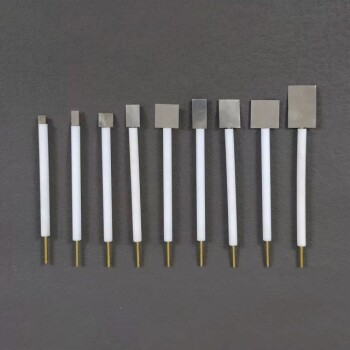
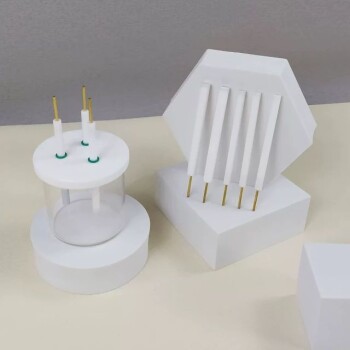
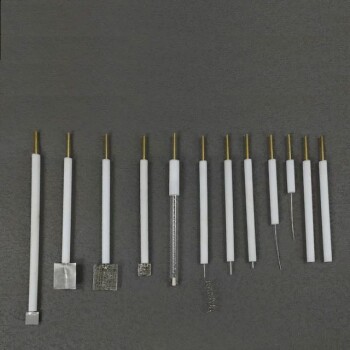
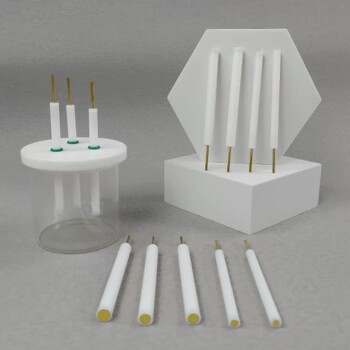
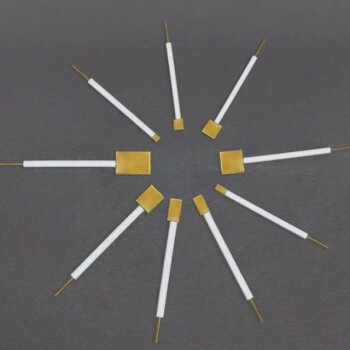
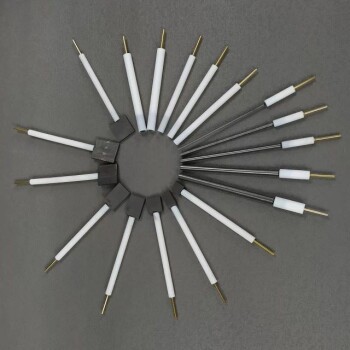
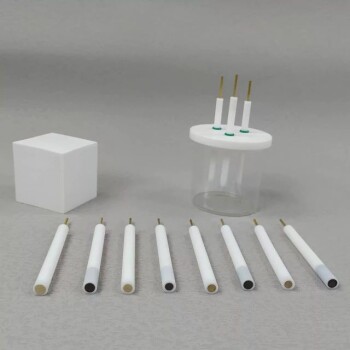
The platinum electrode acts as the anode within an electrolytic circuit, serving as the stable platform required to drive the electrolysis of the surrounding fluid. By facilitating a controlled potential difference against the copper cathode, it enables the generation of hydrogen gas bubbles that mechanically lift the graphene/nickel film from the substrate.
The platinum electrode provides a chemically inert medium to complete the electrical circuit, allowing for the precise generation of micro-bubbles at the film-substrate interface. This "bubble-assisted" mechanism enables a non-destructive, large-area transfer while protecting the purity of the graphene and the integrity of the copper foil.
The Mechanics of Electrolytic Bubble Transfer
Completing the Electrolytic Circuit
In this system, the platinum wire is immersed in an electrolyte to serve as the anode, while the copper foil (hosting the graphene/nickel/PMMA film) acts as the cathode. Together, they form a complete circuit that allows current to flow through the electrolyte solution.
Inducing Interface Delamination
When a specific potential difference is applied, the electrolysis of water occurs, leading to the formation of hydrogen gas bubbles at the cathode. These micro-bubbles develop specifically at the interface between the graphene/nickel film and the copper foil.
Mechanical Separation via Micro-Bubbles
The mechanical force exerted by these rising bubbles gently "peels" the target film away from the metal substrate. This method is preferred over traditional chemical etching because it allows for a large-area transfer without dissolving or destroying the underlying copper.
Why Platinum is the Critical Material Choice
Chemical Inertness and Purity
Platinum is used because of its extreme electrochemical stability. Unlike other metals, it does not release impurity ions into the electrolyte during the process, which prevents contamination of the graphene/nickel film.
Ensuring Process Accuracy
Because platinum is electrochemically inert, it does not interfere with the chemical composition of the electrolyte. This ensures that the electrical potential applied is used solely for gas evolution rather than side reactions like electrode corrosion.
Maintaining Consistent Current Density
The stability of the platinum electrode allows for a uniform distribution of current. This uniformity is essential for generating a consistent layer of bubbles across the entire copper foil, preventing uneven peeling or localized damage to the film.
Understanding the Trade-offs
Voltage Management vs. Film Integrity
While the bubble method is non-destructive to the substrate, precise voltage control is required. If the potential difference is too high, the rapid and violent evolution of gas can cause mechanical tearing or micro-cracks in the graphene layer.
Electrolyte Selection and Conductivity
The efficiency of the platinum electrode depends heavily on the conductivity of the electrolyte. Choosing an electrolyte that is too dilute increases resistance, requiring higher voltages that may lead to heat generation and film degradation.
Substrate Reusability vs. Process Time
The primary advantage of using a platinum-driven bubble transfer is the ability to reuse the copper substrate. However, this process is often slower than traditional acid etching, requiring a trade-off between material costs and manufacturing throughput.
How to Apply This to Your Transfer Project
Making the Right Choice for Your Goal
- If your primary focus is substrate conservation: Use the platinum-anode bubble method, as it leaves the copper foil intact for multiple growth cycles.
- If your primary focus is film purity: Ensure the platinum electrode is of high purity (99.9%+) to prevent any metal ion migration that could degrade the graphene's electronic properties.
- If your primary focus is large-scale uniformity: Carefully calibrate the distance between the platinum anode and the copper cathode to ensure a perfectly even distribution of hydrogen bubbles.
The platinum electrode is the silent enabler of high-quality graphene transfer, providing the electrochemical stability necessary to separate delicate films using only the power of micro-bubbles.
Summary Table:
| Key Feature | Role of Platinum in Electrolytic Transfer |
|---|---|
| Circuit Role | Acts as a stable, chemically inert anode |
| Mechanism | Drives water electrolysis to generate hydrogen micro-bubbles |
| Film Protection | Ensures non-destructive mechanical peeling of graphene/nickel |
| Contamination Control | Prevents metal ion migration, maintaining high film purity |
| Substrate Impact | Preserves copper foil for multiple reuse cycles |
Elevate Your Material Research with KINTEK
Achieving high-purity graphene transfer requires precision and the right electrochemical tools. KINTEK specializes in advanced laboratory equipment, offering a comprehensive range of electrolytic cells, electrodes, and CVD systems tailored for cutting-edge material science.
From high-temperature furnaces and vacuum systems to essential consumables like crucibles and PTFE products, KINTEK provides the reliability your lab needs for consistent, high-quality results. Whether you are focused on battery research or film delamination, our team is ready to help you optimize your setup.
Contact KINTEK today to discuss your laboratory needs and discover how our expertise can drive your innovation forward!
References
- E. Cruz, D. Niebieskikwiat. Exchange Coupling Effects on the Magnetotransport Properties of Ni-Nanoparticle-Decorated Graphene. DOI: 10.3390/nano13121861
This article is also based on technical information from Kintek Solution Knowledge Base .
Related Products
- Platinum Sheet Electrode for Laboratory and Industrial Applications
- Rotating Platinum Disk Electrode for Electrochemical Applications
- Platinum Sheet Electrode for Battery Lab Applications
- Platinum Auxiliary Electrode for Laboratory Use
- RRDE rotating disk (ring disk) electrode / compatible with PINE, Japanese ALS, Swiss Metrohm glassy carbon platinum
People Also Ask
- What is a common use for a platinum sheet electrode? As a Reliable Counter Electrode in Electrochemical Cells
- What is the most critical guideline for immersing a platinum sheet electrode in an electrolyte? Ensure Accurate Electrochemical Measurements
- What is the purity of the platinum sheet in a platinum sheet electrode? The Key to Reliable Electrochemical Data
- What is the expected lifespan of a platinum sheet electrode? Maximize Your Electrode's Service Life
- What are the available specifications for platinum sheet electrodes? Find the Perfect Fit for Your Electrochemical Needs