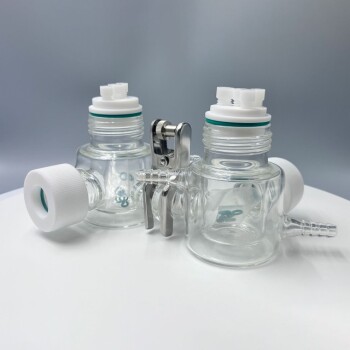
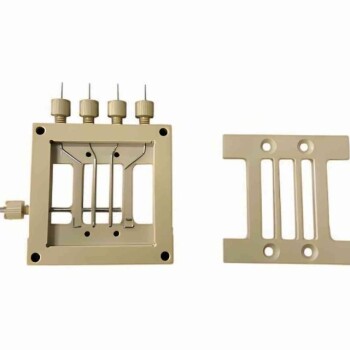
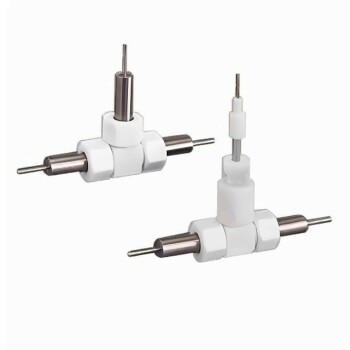
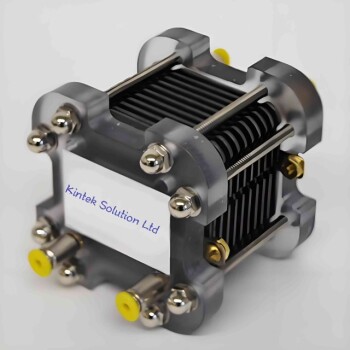
The primary function of a specialized electrolytic cell in tritium analysis is to drastically increase the concentration of tritium within a water sample by selectively reducing the sample's volume. By applying a high, constant electrical current to a large-volume sample (approximately 250 ml), the cell separates the water into hydrogen and oxygen gases.
Because ordinary "light" water electrolyzes faster than "heavy" tritiated water, the ordinary water is preferentially expelled as gas. This process retains the tritium in the remaining liquid, enriching the concentration by a factor of 10 to 15 to facilitate accurate detection.
Environmental water samples often contain tritium levels below the detection threshold of standard equipment. By chemically concentrating the sample, this specialized cell effectively lowers the detection limit, making accurate measurement via liquid scintillation counting possible.
The Mechanism of Enrichment
Exploiting Isotope Differences
The core principle behind this technology is the difference in electrolysis rates between isotopes.
Hydrogen has a lighter mass than tritium. Consequently, the bonds in ordinary water molecules break more easily under electrical current than those in tritiated water molecules.
Selective Gas Discharge
As the constant current drives the reaction, ordinary hydrogen and oxygen are generated and discharged through specific exhaust ports.
The tritiated water remains in the liquid phase longer. Over time, this results in a smaller volume of water with a significantly higher ratio of tritium.
Volume Reduction Targets
The system is designed to process relatively large samples, typically starting around 250 ml.
Through the enrichment process, this volume is reduced significantly. The goal is to achieve a 10 to 15 times concentration, shrinking the sample volume while preserving the radioactive isotopes for analysis.
Operational Requirements for Precision
High Current Application
To process a 250 ml sample efficiently, the cell utilizes a high current of approximately 5 A.
This robust energy input is necessary to drive the electrolysis process at a speed practical for laboratory workflows.
Thermal Regulation and Cooling
Electrolysis at high currents generates significant heat.
To prevent the evaporation of tritiated water—which would ruin the analysis—the cell must operate within a controlled, low-temperature environment.
Supplementary systems, often involving an Ultra-Low Temperature (ULT) freezer or external cooling unit, are required to keep the cell cold. This ensures that volume loss occurs only through electrolysis (gas separation), not through thermal evaporation.
Understanding the Trade-offs
Managing Gas Safety
The process generates substantial amounts of hydrogen and oxygen gas.
Because these gases are highly flammable, the cell must be equipped with efficient exhaust ports. Proper ventilation is not optional; it is a critical safety requirement.
Balancing Speed and Retention
There is an inherent tension between the speed of electrolysis and the retention of tritium.
If the process runs too hot or without adequate cooling, the "separation factor" decreases. This leads to tritium loss, causing the final measurement to underestimate the actual radioactivity in the environment.
Making the Right Choice for Your Goal
To maximize the effectiveness of a tritium concentration system, you must align the equipment's capabilities with your specific analytical needs.
- If your primary focus is detection sensitivity: Ensure the cell is capable of achieving the full 15x concentration factor to capture trace levels of background radiation.
- If your primary focus is measurement accuracy: Prioritize systems with robust external cooling integration to minimize evaporative loss during the high-current phase.
The specialized electrolytic cell is the critical bridge between a dilute environmental sample and a quantifiable data point.
Summary Table:
| Feature | Specification/Detail |
|---|---|
| Primary Function | Volume reduction & tritium concentration enrichment |
| Enrichment Factor | 10 to 15 times the initial concentration |
| Starting Sample Volume | Approximately 250 ml |
| Operating Current | High constant current (~5 A) |
| Key Mechanism | Preferential electrolysis of light hydrogen isotopes |
| Cooling Requirement | External cooling (ULT Freezer) to prevent evaporation |
| Safety Feature | Exhaust ports for flammable gas (H2 and O2) discharge |
Maximize Your Tritium Detection Sensitivity with KINTEK
Precision in environmental analysis starts with the right concentration. KINTEK specializes in high-performance electrolytic cells and electrodes designed to meet the rigorous demands of tritium enrichment. Our solutions integrate seamlessly with our ULT freezers and cooling systems to ensure zero evaporative loss and maximum isotope retention.
From high-temperature reactors to specialized laboratory consumables, KINTEK provides researchers and environmental labs with the tools needed for accurate, reproducible results. Ready to lower your detection limits?
Contact Our Technical Experts Today
References
- Edyta Słupek, Jacek Gębicki. New generation of green sorbents for desulfurization of biogas streams. DOI: 10.21175/rad.abstr.book.2023.17.3
This article is also based on technical information from Kintek Solution Knowledge Base .
Related Products
- H Type Electrolytic Cell Triple Electrochemical Cell
- PTFE Electrolytic Cell Electrochemical Cell Corrosion-Resistant Sealed and Non-Sealed
- Electrolytic Electrochemical Cell for Coating Evaluation
- Quartz Electrolytic Electrochemical Cell for Electrochemical Experiments
- Electrolytic Electrochemical Cell with Five-Port
People Also Ask
- What is a H type cell? A Guide to Divided Electrochemical Cells for Accurate Experiments
- How should the electrolyte be prepared and added to the H-type electrolytic cell? Best Practices for Purity and Safety
- What is the technical necessity of using an H-type electrolytic cell for NO3RR tests? Protect Your Ammonia Yields
- How does the design of an H-type electrolytic cell benefit the neutral water electrolysis process for metal recovery?
- What is the primary function of an H-type electrolytic cell in NitRR? Ensure Accurate Product Yields