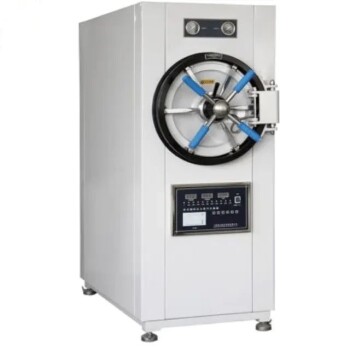
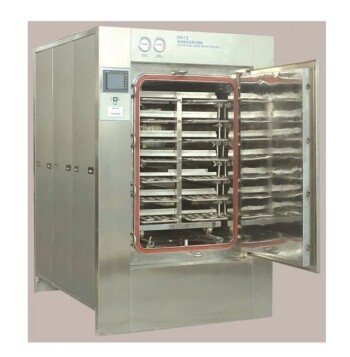
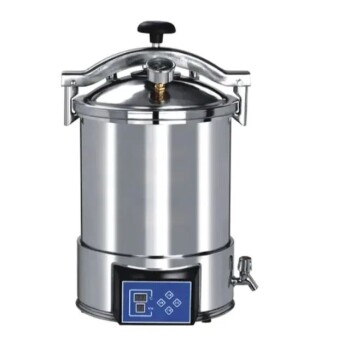
The primary function of a stainless steel hydrothermal synthesis autoclave is to create a high-pressure, sealed environment that allows reaction solutions to be heated significantly above their atmospheric boiling points. By encapsulating the copper sulfate precursor solution within this closed system, the device generates self-pressurization that alters the physical chemistry of the solution, specifically enhancing solubility and lowering the energy barriers required for crystallization.
Core Takeaway The autoclave allows you to bypass standard laboratory limitations by maintaining solvents in a liquid state at high temperatures. This unique environment facilitates the direct growth of copper sulfate nanocrystals on substrates (such as FTO) under conditions that are impossible to achieve in open vessels.
Creating the Critical Reaction Environment
To understand the autoclave's role, you must look beyond simple heating. It acts as a vessel for manipulating phase diagrams.
Overcoming Solvent Limitations
In a standard open beaker, an aqueous solution cannot exceed 100°C; it simply boils away. A hydrothermal autoclave seals the system hermetically.
This allows the temperature to be raised well above the solvent's boiling point while maintaining the solvent in a liquid phase.
Generating Internal Pressure
As the temperature rises within the sealed stainless steel shell, the vapor pressure of the liquid increases.
This self-generated pressure is the catalyst for the reaction. It forces the reactants to interact more vigorously than they would at atmospheric pressure.
Mechanisms of Crystal Growth
The high-pressure environment inside the autoclave directly influences how copper sulfate nanocrystals form and structure themselves.
Enhancing Solubility
High pressure and temperature significantly increase the solubility of reactants.
Precursors that might be insoluble or only partially soluble at mild temperatures dissolve completely, creating a supersaturated solution essential for uniform crystal growth.
Lowering the Nucleation Barrier
For a crystal to grow, it must first form a "nucleus" or seed. This requires energy.
The hydrothermal environment lowers the nucleation barrier, making it energetically favorable for copper sulfate nanocrystals to begin forming spontaneously.
Direct Substrate Growth
According to technical data, this environment allows for the direct growth of nanocrystals on specific substrates, such as Fluorine-doped Tin Oxide (FTO).
This in-situ growth ensures better adhesion and interface quality compared to depositing pre-made crystals onto a surface.
Understanding the Trade-offs
While powerful, the stainless steel hydrothermal autoclave introduces specific operational constraints and risks.
Corrosion vs. Pressure Containment
The stainless steel shell provides the mechanical strength to withstand high pressure, but it is chemically reactive.
You generally cannot place copper sulfate solutions directly in contact with the steel. A corrosion-resistant inner liner (typically PTFE/Teflon) is required to hold the chemicals, while the steel acts solely as the pressure vessel.
Process Visibility
Unlike a glass beaker, an autoclave is a "black box." You cannot observe the reaction as it happens.
This requires precise control of external variables (temperature and time) to ensure reproducibility, as you cannot visually monitor the onset of turbidity or color change.
Making the Right Choice for Your Goal
When utilizing an autoclave for copper sulfate synthesis, your operational focus determines your results.
- If your primary focus is Crystal Quality: Prioritize the stability of your heating source (oven); precise temperature control regulates the reaction kinetics and ensures a uniform nucleation rate.
- If your primary focus is Substrate Coverage: Focus on the orientation of the FTO substrate within the liner; the high-pressure environment facilitates growth, but physical placement dictates uniformity on the surface.
The autoclave is not merely a heater; it is a tool for accessing a state of matter where high pressure drives the formation of structures that nature would otherwise disallow.
Summary Table:
| Feature | Role in Nanocrystal Synthesis |
|---|---|
| High-Pressure Sealing | Maintains solvents in liquid state above atmospheric boiling points |
| Self-Pressurization | Increases reactant interaction and lowers energy barriers for nucleation |
| Temperature Control | Regulates reaction kinetics for uniform crystal growth and quality |
| In-situ Growth | Enables direct, high-adhesion growth on substrates like FTO glass |
| Inner Liner (PTFE) | Protects the steel shell from chemical corrosion by acidic precursors |
Precision Engineering for Your Advanced Research
At KINTEK, we understand that high-quality nanocrystal synthesis requires more than just heat—it requires reliable pressure containment and chemical purity. Our premium stainless steel hydrothermal synthesis autoclaves, featuring high-performance PTFE liners, are designed to help laboratory researchers achieve the precise supersaturation levels needed for uniform crystal growth.
Beyond autoclaves, KINTEK offers a comprehensive range of laboratory equipment and consumables, including high-temperature furnaces, high-pressure reactors, and specialized battery research tools. Whether you are working on thin-film substrates or advanced materials, our solutions provide the durability and control your project demands.
Ready to elevate your synthesis results? Contact KINTEK today to find the perfect hydrothermal solution for your lab!
References
- Chinedu Christian Ahia, Edson L. Meyer. Development of cupric sulphate nanocrystals on fluorine-doped tin oxide substrates using hydrothermal technique. DOI: 10.1007/s10854-023-10839-3
This article is also based on technical information from Kintek Solution Knowledge Base .
Related Products
- High Pressure Laboratory Autoclave Reactor for Hydrothermal Synthesis
- Mini SS High Pressure Autoclave Reactor for Laboratory Use
- Stainless High Pressure Autoclave Reactor Laboratory Pressure Reactor
- Desktop Fast Laboratory Autoclave Sterilizer 35L 50L 90L for Lab Use
- Desktop Fast Laboratory Autoclave Sterilizer 20L 24L for Lab Use
People Also Ask
- What role does a high-pressure reactor (autoclave) play in the synthesis of NiCuFe-LDH? Master Hydrothermal Growth
- What Role Does a High-Pressure Reactor or Autoclave Play in HA Catalyst Synthesis? Achieve High Surface Area Materials
- What equipment is required for hydrothermal synthesis of Ga0.25Zn4.67S5.08? Optimize Your Semiconductor Production
- What is the function of a high-pressure reactor in the hydrothermal synthesis of boehmite? Expert Process Insights
- What role does an autoclave play in the synthesis of MnO2 nanofibers? Mastering Hydrothermal Growth