The function of an ultrasonic homogenizer is to utilize cavitation to generate intense local shear forces. These forces mechanically break down the aqueous phase containing mixed metal salt precursors into stable, nano-sized droplets. This process is critical for confining metal ions within extremely small volumes, ensuring the precise chemical composition required for high-entropy alloys.
Core Takeaway The ultrasonic homogenizer acts as a precision tool for stoichiometric control. By creating sub-femtoliter droplets, it turns the emulsion into billions of isolated "micro-reactors," preventing component separation and ensuring the complex ratio of metals in high-entropy metallic glass is perfectly maintained during synthesis.
The Mechanism of Dispersion
Generating Local Shear Forces
The homogenizer operates by creating cavitation bubbles within the liquid. When these microscopic bubbles collapse, they generate significant local shear forces.
This mechanical energy is far more intense than standard stirring. It is necessary to overcome surface tension and disrupt the bulk liquid phases.
Creating Stable Nanodroplets
The primary physical output of this process is the reduction of the aqueous phase into droplets with diameters of approximately several hundred nanometers.
The homogenizer ensures these droplets remain stable rather than coalescing back into a larger mass. This stability is the foundation for a uniform emulsion system.
Achieving Stoichiometric Control
The "Sub-Femtoliter" Reactor
The defining advantage of this technique is the confinement of metal ions within sub-femtoliter volumes.
In the context of high-entropy metallic glass (HEMG), you are mixing multiple distinct metal elements. These elements must remain in a precise ratio (stoichiometry) to form the alloy correctly.
Preventing Phase Separation
By isolating the precursor mix into these tiny, discrete droplets, the homogenizer prevents the metal ions from segregating.
Each droplet acts as an individual vessel where the chemical reaction occurs. This guarantees that the resulting alloy nanoparticles reflect the exact chemical makeup of the initial precursor solution.
Understanding the Trade-offs
The Necessity of High Energy
Achieving molecular-level uniform distribution requires substantial energy input. Low-energy methods often fail to break droplets down to the required nanometer scale.
If the shear force is insufficient, the droplets will be too large. Large droplets fail to confine the ions effectively, leading to local electric field concentration or uneven composition in the final material.
Agglomeration Risks
While the homogenizer effectively disperses particles, the process must be managed carefully. As noted in similar dispersion processes, the goal is to prevent nanoparticle agglomeration.
If the ultrasonic treatment is stopped too early or applied unevenly, particles may re-agglomerate. This leads to defects in the material structure and a loss of the unique properties provided by the high-entropy alloy.
Making the Right Choice for Your Goal
To maximize the effectiveness of ultrasonic homogenization in your synthesis:
- If your primary focus is Compositional Accuracy: Ensure your process parameters achieve the "sub-femtoliter" droplet size to strictly confine ions and lock in the stoichiometry.
- If your primary focus is Particle Stability: Monitor the duration of the ultrasonic treatment to guarantee full dispersion and prevent the re-agglomeration of the resulting nanoparticles.
Ultrasonic homogenization is not just a mixing step; it is the physical mechanism that guarantees the chemical integrity of complex alloy nanoparticles.
Summary Table:
| Feature | Function in HEMG Preparation |
|---|---|
| Physical Mechanism | Cavitation-induced intense local shear forces |
| Droplet Scale | Sub-femtoliter (several hundred nanometers) |
| Chemical Role | Ensures stoichiometric control & prevents phase separation |
| Reactor Effect | Creates billions of isolated "micro-reactors" |
| Outcome | Uniform, high-entropy alloy nanoparticle composition |
Elevate Your Nanomaterial Synthesis with KINTEK
Precision is paramount when engineering high-entropy metallic glass and complex alloys. KINTEK provides state-of-the-art ultrasonic homogenizers and high-pressure reactors designed to deliver the exact shear forces needed for sub-femtoliter stoichiometric control.
Whether you are focusing on battery research, advanced ceramics, or high-temperature material science, our comprehensive portfolio—including crushing and milling systems, vacuum furnaces, and PTFE consumables—ensures your lab achieves repeatable, high-quality results.
Ready to optimize your dispersion process and prevent nanoparticle agglomeration? Contact our laboratory specialists today to find the perfect equipment solution for your research goals!
References
- Matthew W. Glasscott, Jeffrey E. Dick. Electrosynthesis of high-entropy metallic glass nanoparticles for designer, multi-functional electrocatalysis. DOI: 10.1038/s41467-019-10303-z
This article is also based on technical information from Kintek Solution Knowledge Base .
Related Products
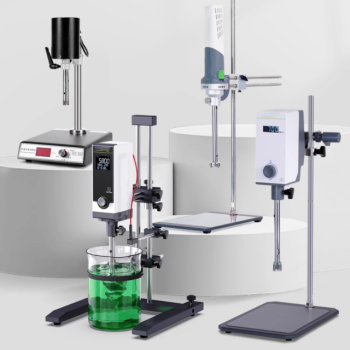
- High Shear Homogenizer for Pharmaceutical and Cosmetic Applications
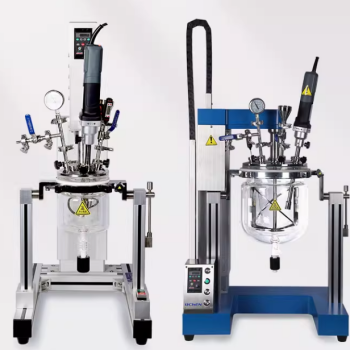
- High Performance Lab Homogenizer for Pharma Cosmetics and Food R&D
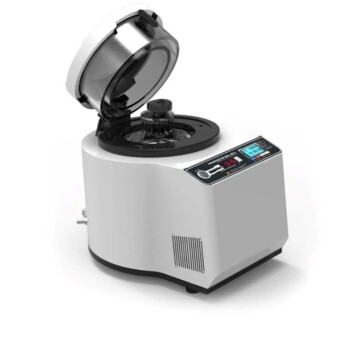
- Lab Sterile Slapping Type Homogenizer for Tissue Mashing and Dispersing
- Laboratory High Throughput Tissue Grinding Mill Grinder
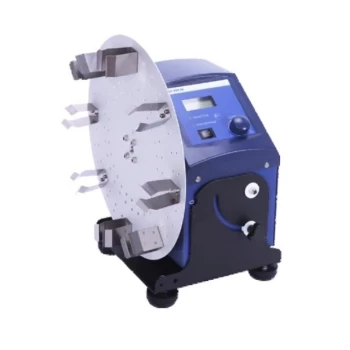
- Laboratory Disc Rotary Mixer for Efficient Sample Mixing and Homogenization
People Also Ask
- Why Use a High Shear Homogenizer for Cathode Slurries? Optimize Double-Layer Solid-State Battery Production
- What is the function of high-shear dispersion equipment in corona-resistant nanocomposites? Elevate Your Insulation
- What is the necessity of using an industrial-grade high-shear homogenizer for biomass washing? Ensure Process Efficiency
- What are the advantages of using a high-shear homogenizer for BED/GMA coatings? Achieve Superior Nano-Dispersion
- What role does a high-shear homogenizer play in ODC catalyst suspensions? Unlock Superior Electrochemical Efficiency